What are the main components of the integumentary system?
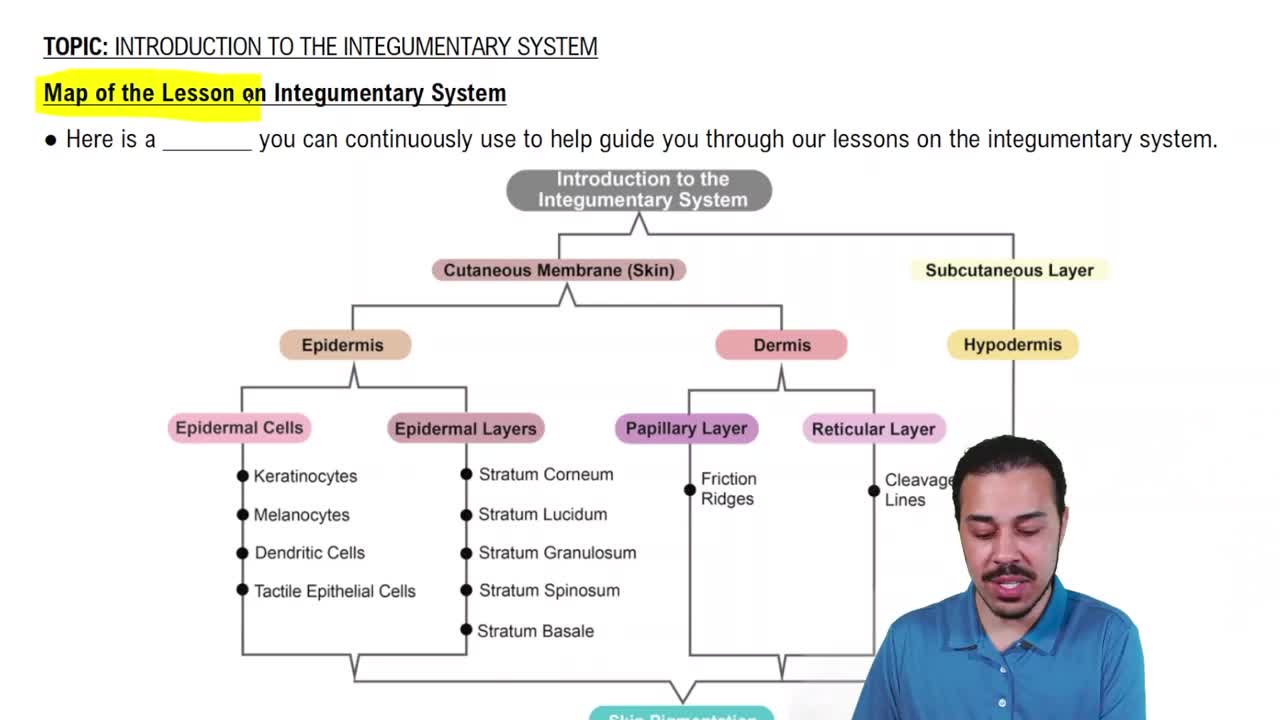
Skin, sweat glands, oil glands, hair, nails, and subcutaneous tissue.
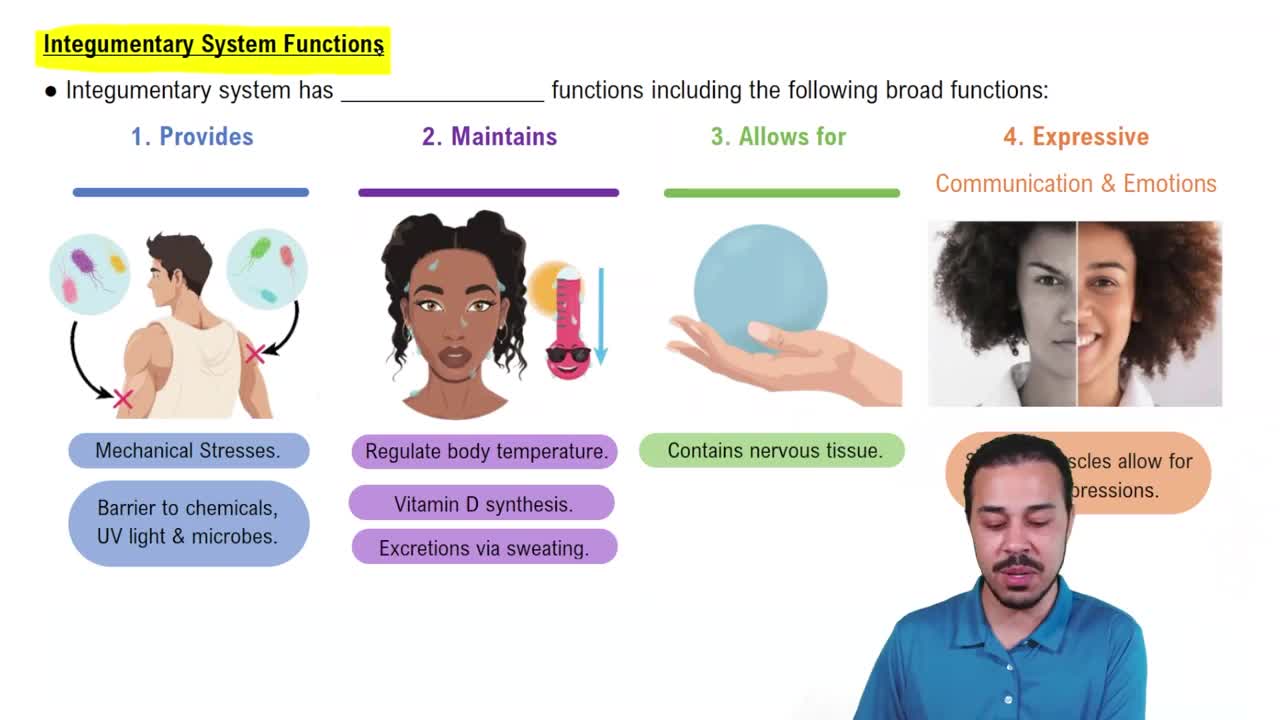
What are the primary functions of the integumentary system?
Protection, sensation, temperature regulation, and metabolic functions.
Name the two primary layers of the skin.
Epidermis and dermis.
What is the subcutaneous tissue and its function?
A layer beneath the skin composed mostly of adipose tissue; provides insulation, shock absorption, and anchors skin.
List the four main cell types in the epidermis.
Keratinocytes, melanocytes, dendritic (Langerhans) cells, and tactile (Merkel) cells.
What is the role of keratinocytes?
Produce keratin, providing strength and waterproofing; they are the most abundant epidermal cells.
Which epidermal layer contains mitotically active stem cells and melanocytes?
Stratum basale.
What is the stratum corneum?
The outermost epidermal layer with 20–30 layers of dead, keratinized cells that protect and prevent water loss.
What distinguishes thick skin from thin skin?
Thick skin has all five epidermal layers including stratum lucidum; thin skin lacks the stratum lucidum.
Describe the dermis and its two layers.
A vascular connective tissue layer beneath the epidermis; includes the papillary dermis (areolar tissue with capillaries) and reticular dermis (dense irregular connective tissue).
What are friction ridges and their function?
Raised patterns formed by dermal papillae that enhance grip and create fingerprints.
Which pigments determine skin color?
Melanin, carotene, and hemoglobin.
What is the function of melanocytes?
Produce melanin pigment that protects DNA from UV radiation.
What are the three layers of the hair shaft?
Medulla (core), cortex (middle), and cuticle (outer).
What is the arrector pili muscle?
A smooth muscle attached to hair follicles that causes 'goose bumps' when contracted.
Differentiate between vellus and terminal hair.
Vellus hair is fine, pale body hair; terminal hair is coarse, long hair found on scalp, eyebrows, and other regions.
What are the parts of a nail?
Root (embedded), nail plate (visible), free edge, nail bed, and nail matrix (growth zone).
What are eccrine sweat glands and their function?
Most numerous sweat glands that secrete watery sweat for thermoregulation; found on palms, soles, and forehead.
What distinguishes apocrine sweat glands?
Located in axillary and anogenital areas; secrete viscous sweat starting at puberty; may act as scent glands.
What is sebum and which glands produce it?
An oily substance that lubricates and waterproofs skin and hair; produced by sebaceous glands.
Name the three types of skin cancer and their origins.
 Back
Back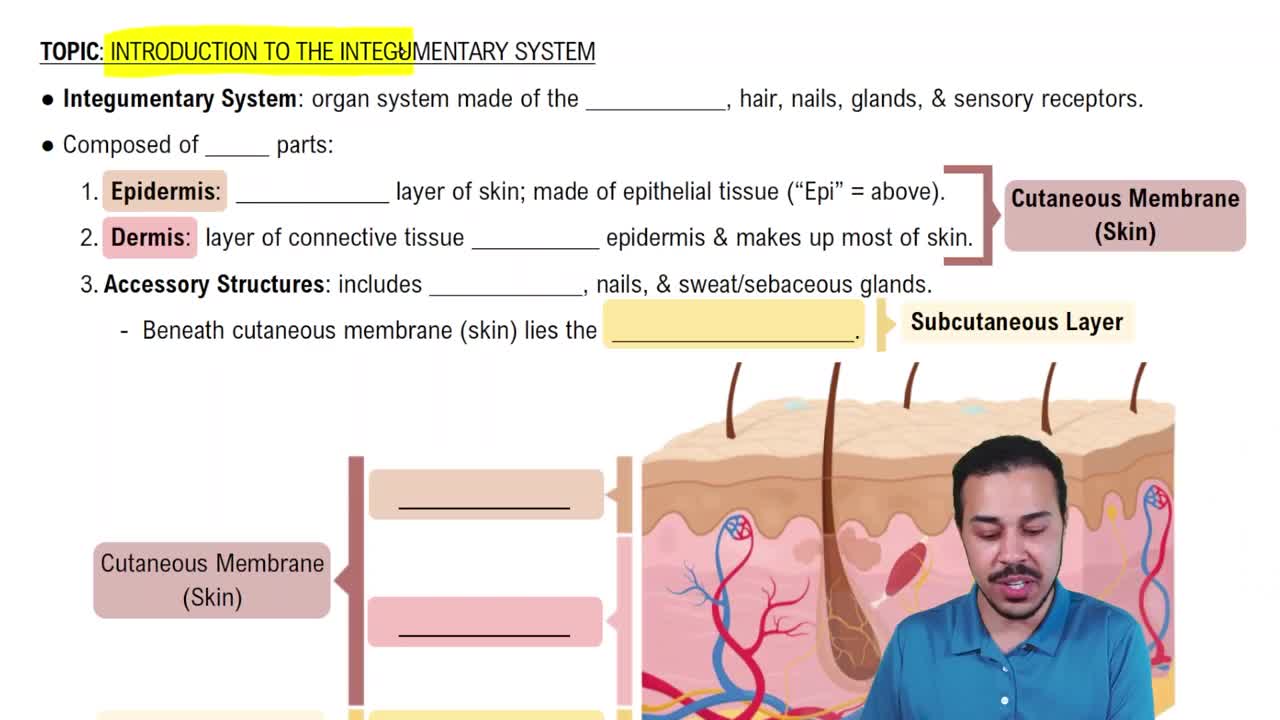
 06:54
06:54