Cover surfaces, line body cavities, form protective sheets around organs, and are often lubricated.
Name the two main types of body membranes.
Epithelial membranes (cutaneous, mucous, serous) and connective tissue membranes (synovial).
What characterizes the cutaneous membrane?
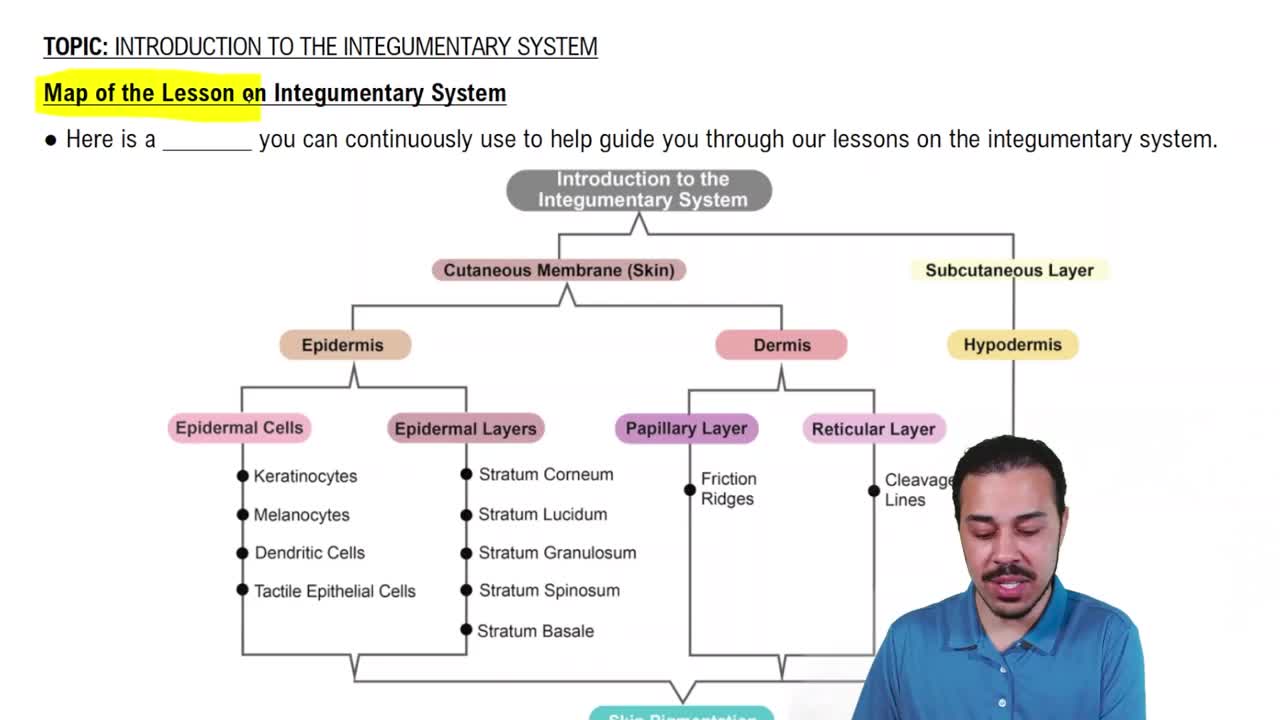
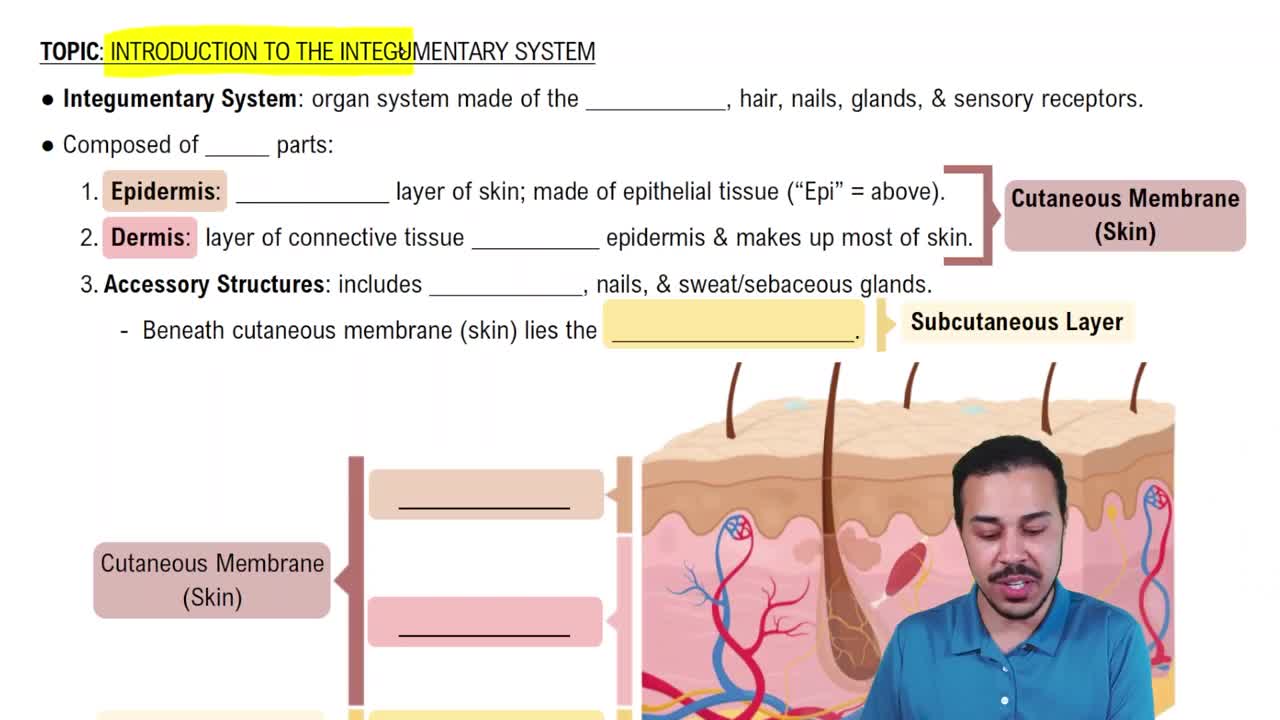
It is the skin, composed of a superficial stratified squamous epithelium and an underlying dense connective tissue dermis; it is a dry membrane exposed to air.
Where are mucous membranes found and what is their function?
Line body cavities open to the exterior (respiratory, digestive, urinary, reproductive tracts); they are moist, secrete mucus, and are adapted for absorption and secretion.
Describe serous membranes and their function.
Line body cavities closed to the exterior; consist of simple squamous epithelium resting on areolar connective tissue; occur in pairs with serous fluid between layers to reduce friction.
What is the role of synovial membranes?
Line joint capsules, bursae, and tendon sheaths; composed of areolar connective tissue without epithelial cells; provide smooth surfaces and secrete lubricating fluid.
What is keratin and its role in the integumentary system?
A fibrous protein that toughens and waterproofs the epidermis, making it a protective layer.
List the main functions of the skin.
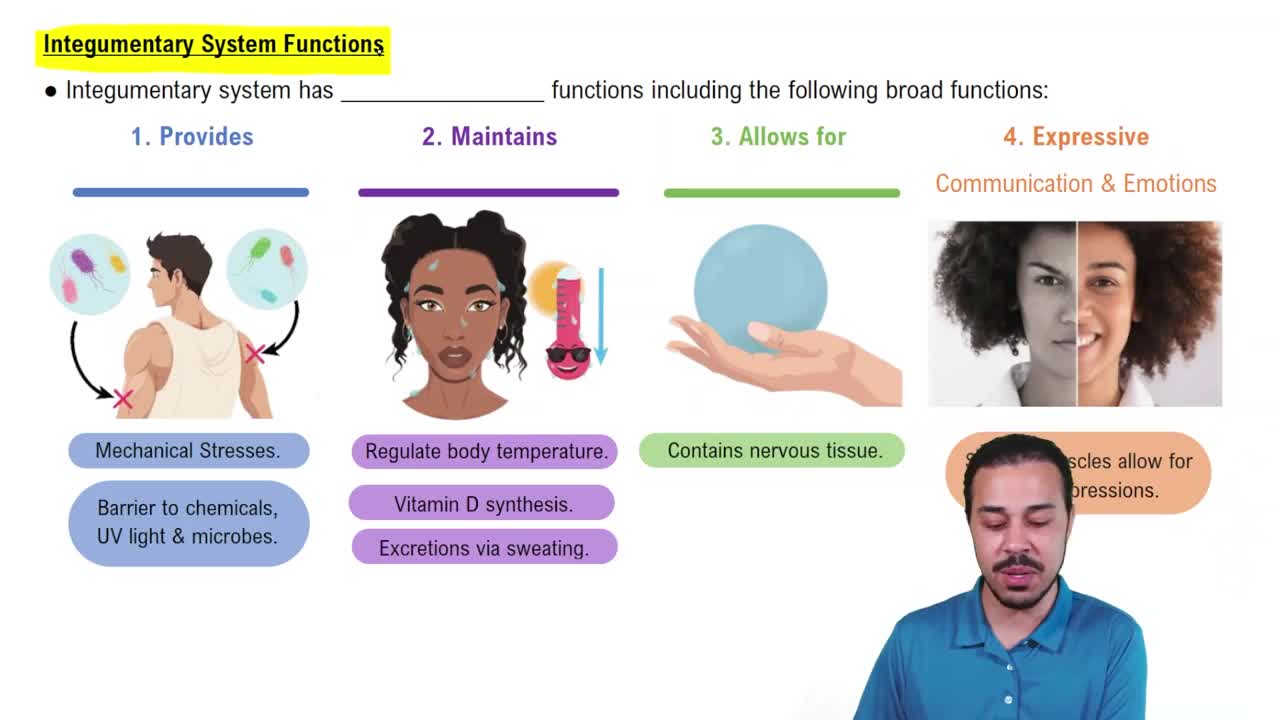
Protection, insulation, cushioning, heat regulation, excretion, protein manufacture for immunity, vitamin D synthesis, and housing sensory receptors.
What causes blister formation in the skin?
Separation of the epidermis and dermis due to burn or friction allows interstitial fluid to accumulate, forming a blister.
Name the five layers (strata) of the epidermis from deepest to most superficial.
Stratum basale, stratum spinosum, stratum granulosum, stratum lucidum (only in thick skin), and stratum corneum.
What is the function of melanin in the skin?
Melanin is a pigment produced in the stratum basale that protects DNA from UV radiation and determines skin color.
Describe the dermis and its components.
Dense connective tissue layer beneath the epidermis containing blood vessels, collagen, elastic fibers, nerve endings, sweat and oil glands.
What is the papillary layer of the dermis?
The upper dermis region with fingerlike projections called papillae containing capillary loops and sensory receptors; forms fingerprints.
What is the hypodermis and its function?
A layer of adipose tissue beneath the dermis that anchors skin to underlying organs, acts as a shock absorber, and insulates against temperature changes.
What pigments contribute to skin color?
Melanin (yellow to black), carotene (orange-yellow), and hemoglobin (red from oxygenated blood).
What are sebaceous glands and their function?
Oil glands found everywhere except palms and soles; secrete sebum to lubricate skin and hair and kill bacteria.
Differentiate between eccrine and apocrine sweat glands.
Eccrine glands are numerous, produce watery sweat for temperature regulation; apocrine glands are in axillary/genital areas, produce milky sweat that causes odor.
What are the main parts of a hair follicle?
Hair root (enclosed in follicle), hair shaft (projects from skin), hair bulb (base where melanin is produced).
What is the function of the arrector pili muscle?
Smooth muscle attached to hair follicles that contracts to pull hair upright, causing 'goose bumps' when cold or frightened.
Describe the structure of a nail.
A scalelike modification of the epidermis with a free edge, body (visible part), root (embedded in skin), cuticle, nail bed, nail matrix (growth area), and lunula (white crescent).
 Back
 06:54