 Back
Integumentary System - Anatomy & Physiology
 06:54

Terms in this set (24)
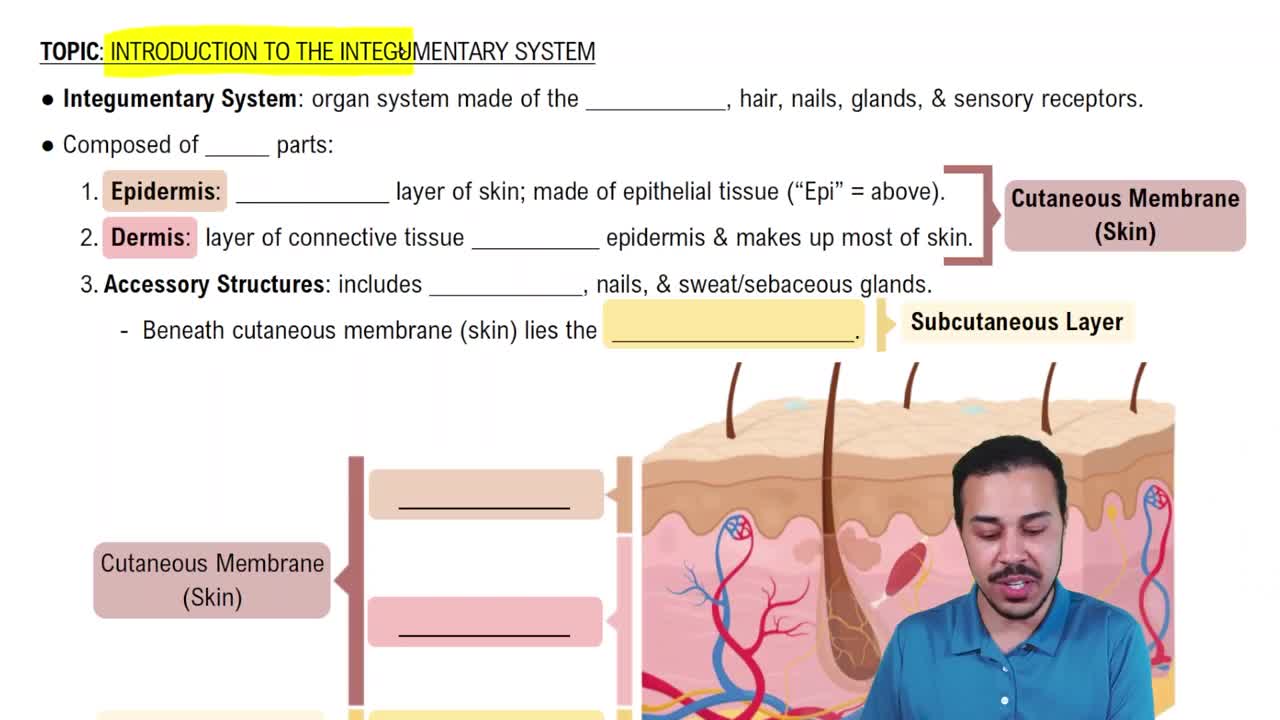
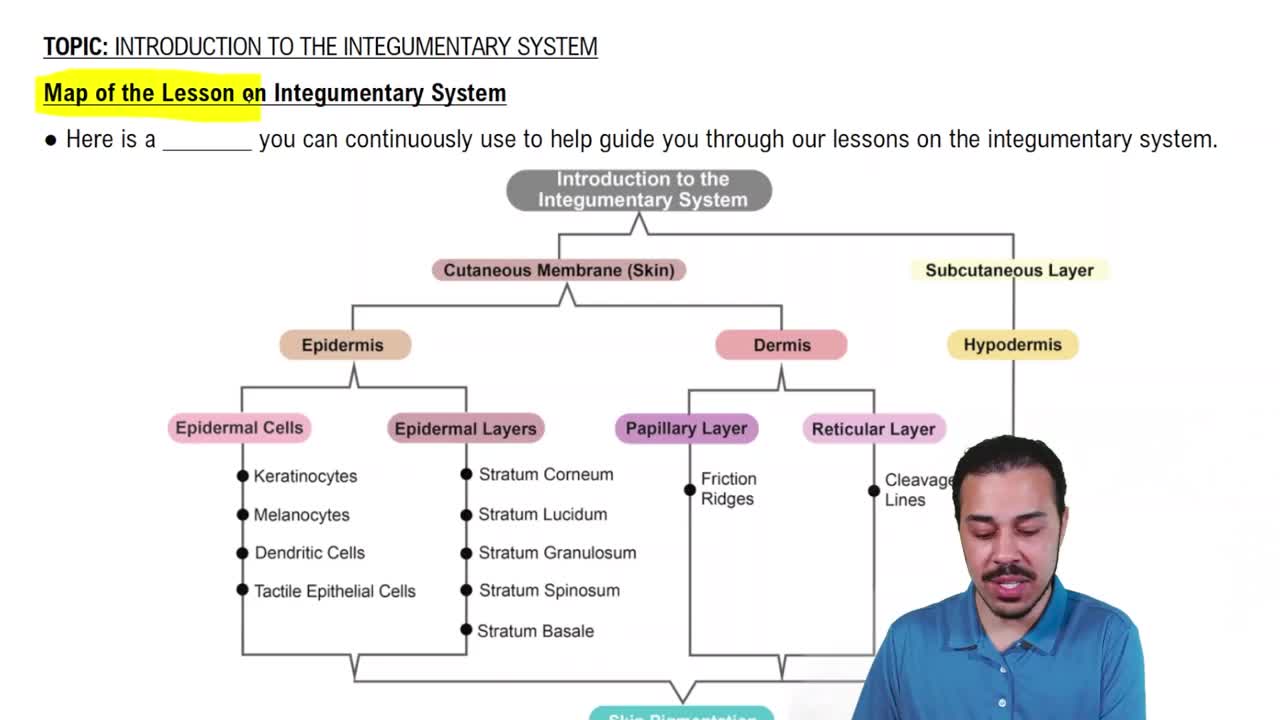
The skin has two main layers: the epidermis (keratinized stratified squamous epithelium) and the dermis (connective tissue, vascularized).
Keratinocytes (produce keratin), melanocytes (produce melanin), dendritic cells (immune macrophages), and tactile (Merkel) cells (touch receptors).
To produce keratin, a fibrous protein that provides protection and waterproofing.
Approximately 25-45 days from basal layer to shedding.
They produce melanin, which protects against UV damage by absorbing harmful rays.
Stratum basale, stratum spinosum, stratum granulosum, stratum lucidum (only in thick skin), and stratum corneum.
A clear, thin layer of dead keratinocytes found only in thick skin such as palms and soles.
The papillary layer (areolar connective tissue with capillaries and nerve endings) and the reticular layer (dense irregular connective tissue with collagen and elastin fibers).
They are tension lines in the dermis formed by collagen fiber orientation, important for surgical incisions to minimize scarring.
Deep creases in the skin at joints (e.g., palms, fingers) where the dermis is tightly secured to underlying structures.
A layer beneath the skin composed of areolar connective tissue and adipose tissue; it anchors skin to underlying structures and provides insulation and shock absorption.
Melanin (brown to black), carotene (yellow to orange), and hemoglobin (pinkish hue from blood).
Sensory detection, protection from trauma, heat loss, sun, and filtering particles from inhaled air.
Medulla (core), cortex (pigmented layers), and cuticle (outer protective layer).
Loss of melanin production and replacement with colorless air bubbles in the hair shaft.
Round follicles produce straight hair; oval or flattened follicles produce wavy or curly hair.
A small muscle attached to hair follicles that contracts to raise hair and create goosebumps.
They secrete sebum, an oily substance that lubricates and waterproofs skin and hair.
Eccrine glands produce watery sweat for temperature control; apocrine glands produce sweat with fatty substances, found in axillary and genital areas, and are activated by stress.
Modified apocrine glands in the ear canal that produce earwax (cerumen) for protection.
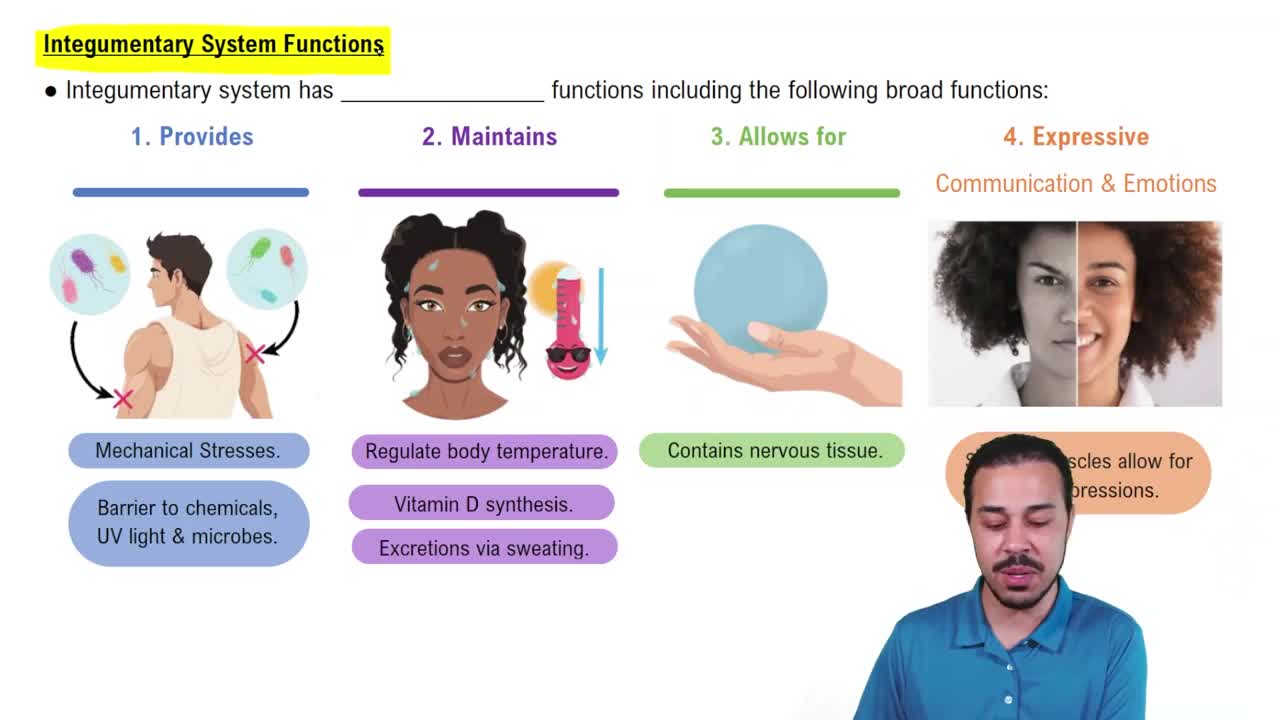
Protection, body temperature regulation, cutaneous sensation, metabolic functions (e.g., vitamin D synthesis), blood reservoir, and excretion.
Chemical (acid mantle, antimicrobial secretions), physical (waterproofing, keratin), and biological (immune cells like dendritic cells and macrophages).
First degree: epidermis only; second degree: epidermis and superficial dermis; third degree: full thickness of skin.
A method to estimate the percentage of body surface area affected by burns for treatment planning.