 Back
Integumentary System Chapter 5: Anatomy & Physiology
 06:54

Terms in this set (20)
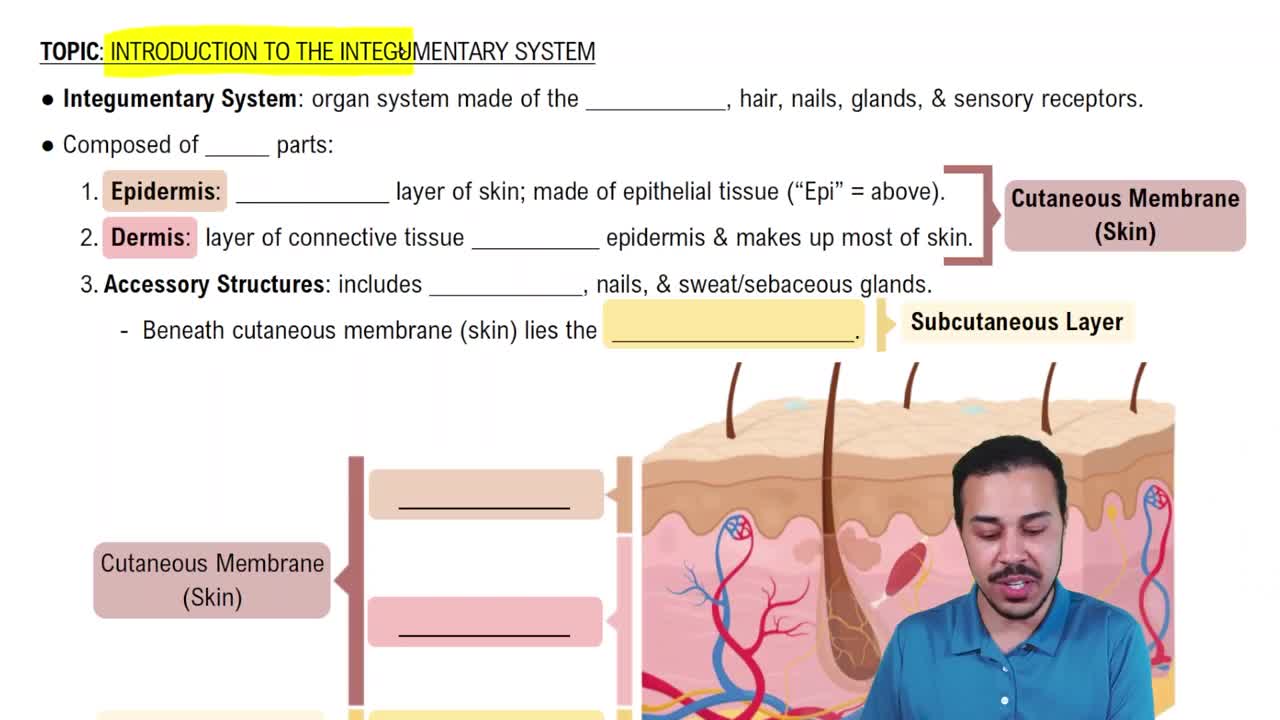
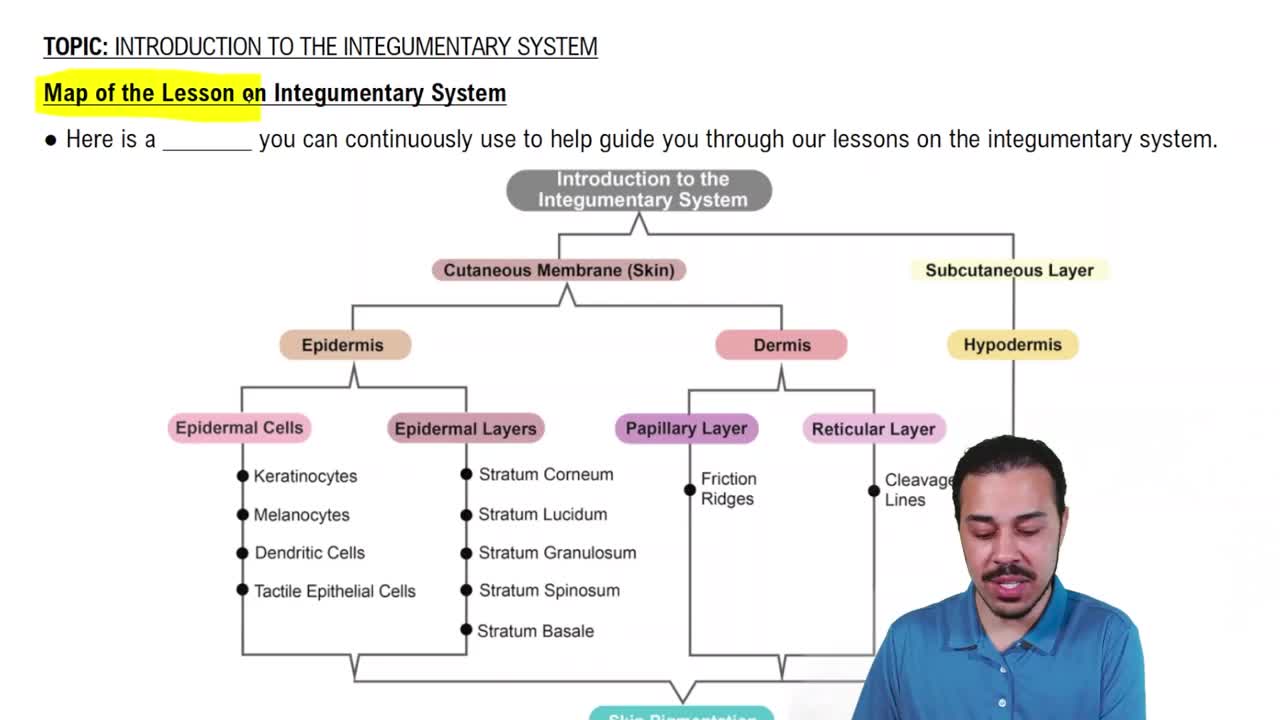
The skin consists of the epidermis, dermis, and hypodermis.
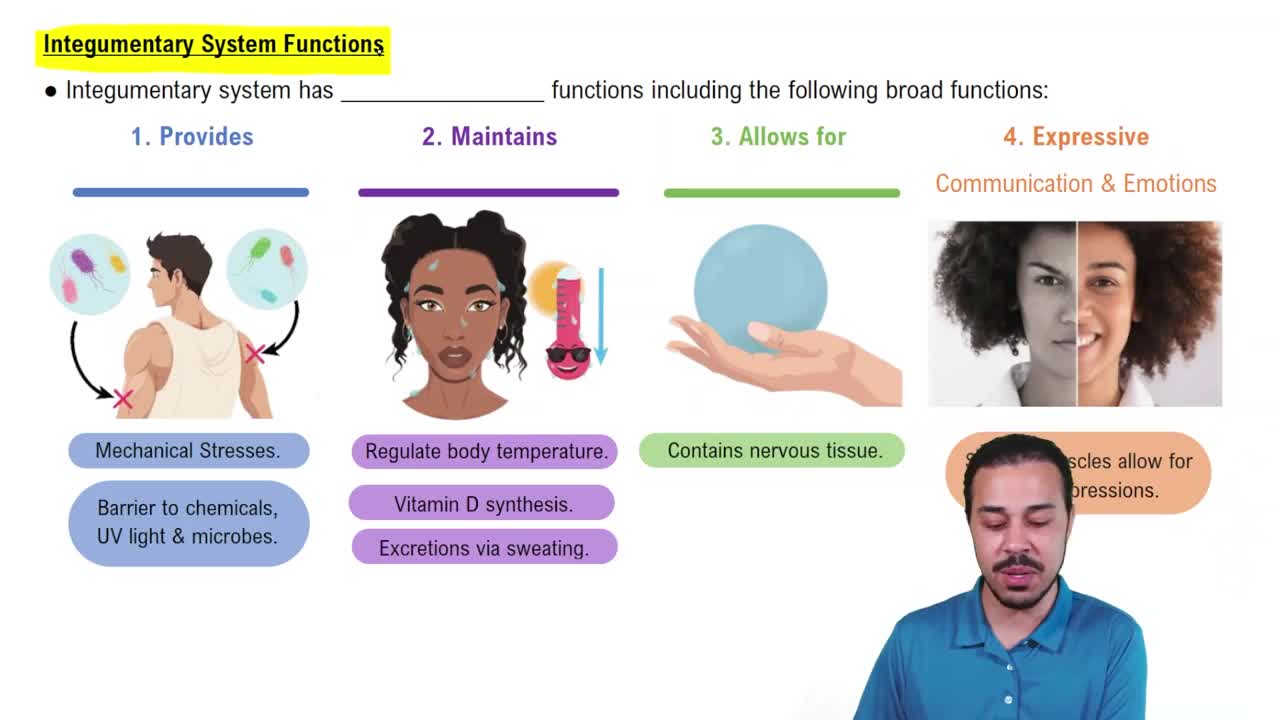
The stratum basale produces melanin which provides radiation protection.
The stratum granulosum produces keratin, which makes the skin waterproof.
Insensible perspiration is water loss without awareness; sensible perspiration is sweat that can be felt.
Skin color is also influenced by blood and carotene pigments.
The dermis contains the vascular supply and nerves for the skin.
The hypodermis is made of connective tissue and provides insulation and cushioning.
Hair consists of compact squamous cells, with parts including the root, shaft, papilla, and matrix.
The arrector pili muscle causes goose bumps by contracting and pulling hair upright.
Sebaceous glands produce oil that lubricates skin and hair; they can cause pimples if blocked.
Apocrine glands are linked to secondary sex characteristics, while merocrine (eccrine) glands regulate temperature.
Mammary glands produce milk; ceruminous glands produce ear wax.
Nails are made of compact squamous cells, with growth occurring at the root via mitotic division.
Injury repair involves bleeding and sealing, migration of macrophages, fibroblasts, and epithelial stem cells, fiber construction, and possible scar formation.
The papilla contains blood vessels and nerves that nourish the hair follicle.
The matrix is the site of mitotic cell division producing new hair cells.
The hair shaft is composed of compact squamous cells that are exposed above the skin surface.
Keratin provides waterproofing and structural strength to the skin.
Melanin absorbs and protects against ultraviolet radiation.
The root is the internal part of hair below the skin; the shaft is the visible, exposed part.