 Back
BackIntroduction to Anatomy & Physiology
 3:06
3:06
Terms in this set (20)
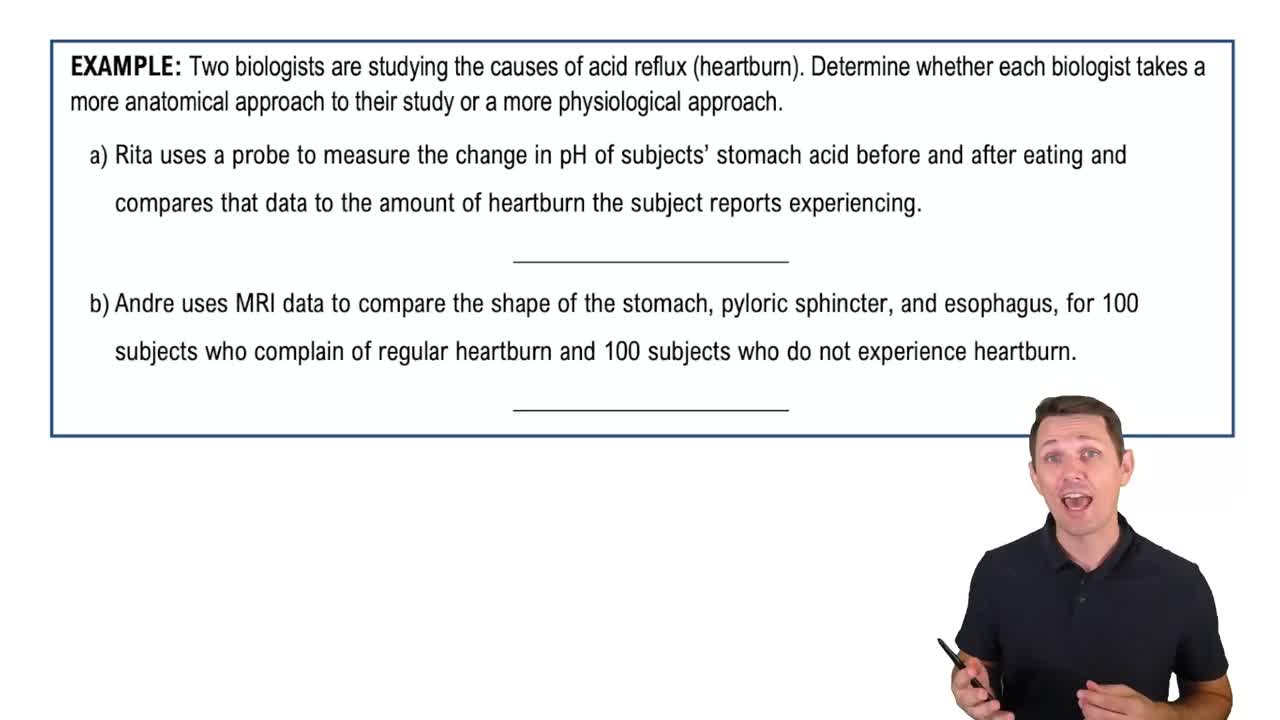
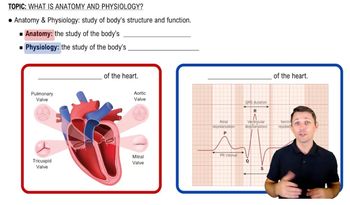
Human Anatomy is the study of the structure or form of the human body.
Human Physiology is the study of the body’s functions.
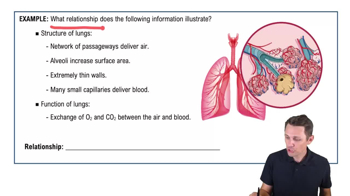
The body’s structure and function are closely related; the form of a structure best suits its function.
Homeostasis is the condition in which the body maintains a relatively stable internal environment.
Living organisms share cellular composition, metabolism, growth, excretion, responsiveness, movement, and reproduction.
Chemical, Cellular, Tissue, Organ, Organ System, Organism levels.
The human body has 11 organ systems that work together to maintain life (not all named here).
The body is standing upright, feet shoulder-width apart, upper limbs at sides, head and palms facing forward.
Anterior means toward the front; Posterior means toward the back.
Superior means toward the head; Inferior means toward the tail or lower part of the body.
Proximal means closer to the point of origin; Distal means farther from the point of origin (used for limbs).
Sagittal (right and left), Frontal (anterior and posterior), and Transverse (superior and inferior) planes.
A feedback loop that opposes the initial change and reduces the output to maintain homeostasis.
Stimulus, receptor, control center, effector, and response to return variable to normal range.
A feedback loop that reinforces the initial change and increases the output, often leading to a quick response.
Childbirth: uterine contractions increase until delivery, then the loop stops.
The form of a structure is such that it best suits its function at all levels of organization.
Gradients drive many physiological processes by moving substances from areas of higher to lower concentration or pressure.
Cells use electrical signals and chemical messengers to coordinate body functions.
Serous membranes form double layers with fluid to lubricate organs and reduce friction.