 Back
BackIntroduction to Anatomy & Physiology - Core Concepts and Terminology
 3:06
3:06
Terms in this set (20)
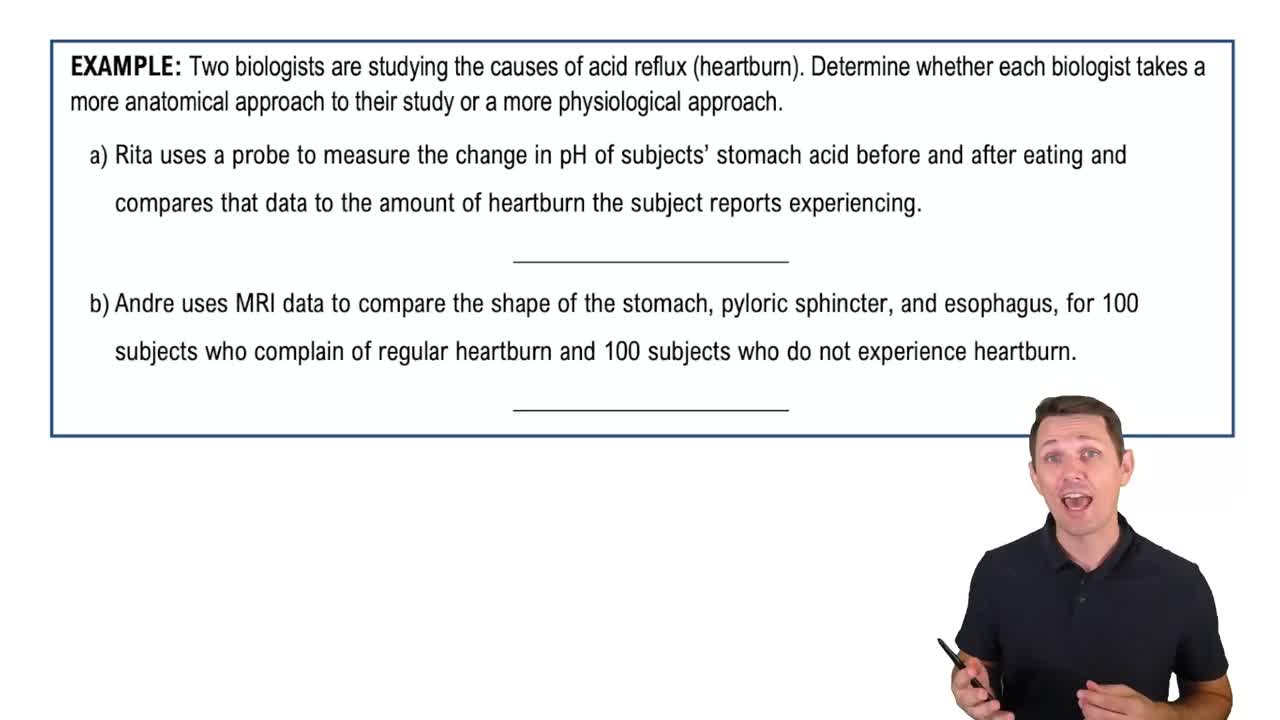
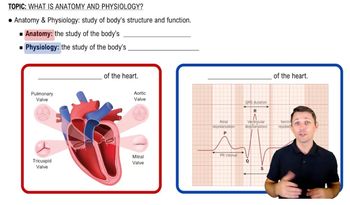
Human Anatomy is the study of the structure or form of the human body.
Human Physiology is the study of the body’s functions and how its parts work.
Bring It Back, Space It Out, and Mix It Up to improve memory consolidation and understanding.
Homeostasis is the condition in which the body maintains a relatively stable internal environment.
Chemical, Cellular, Tissue, Organ, Organ System, and Organism levels.
Includes systems such as the digestive, respiratory, cardiovascular, nervous, muscular, skeletal, endocrine, lymphatic, urinary, reproductive, and integumentary systems.
Body standing upright, feet shoulder-width apart, upper limbs at sides, head and palms facing forward.
Anterior means toward the front; Posterior means toward the back of the body or body part.
Superior means toward the head; Inferior means toward the tail or lower part of the body.
Proximal means closer to the point of origin; Distal means farther from the point of origin, used for limbs.
Right Upper Quadrant (RUQ), Left Upper Quadrant (LUQ), Right Lower Quadrant (RLQ), Left Lower Quadrant (LLQ).
The thoracic cavity is superior to the diaphragm and contains lungs and heart; the abdominopelvic cavity is inferior and contains digestive, urinary, and reproductive organs.
Thin double-layered membranes with visceral layer contacting organs and parietal layer attaching to surrounding structures, filled with lubricating serous fluid.
Negative feedback opposes changes to maintain stability; Positive feedback reinforces changes to amplify a response.
Stimulus, Receptor, Control Center, Effector, Response to return variable to normal range.
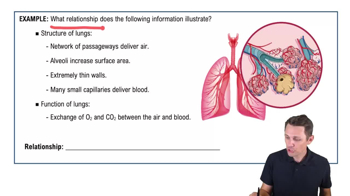
The form of a structure is such that it best suits its function at all levels of organization.
Gradients exist when more of something is in one area than another; they drive many physiological processes like diffusion and blood flow.
Cells use electrical signals and chemical messengers to coordinate body functions and maintain homeostasis.
Sagittal plane divides body into right and left; Frontal plane divides into anterior and posterior; Transverse plane divides into superior and inferior sections.
Cerebrospinal fluid bathes and cushions the brain and spinal cord within the cranial and spinal cavities.