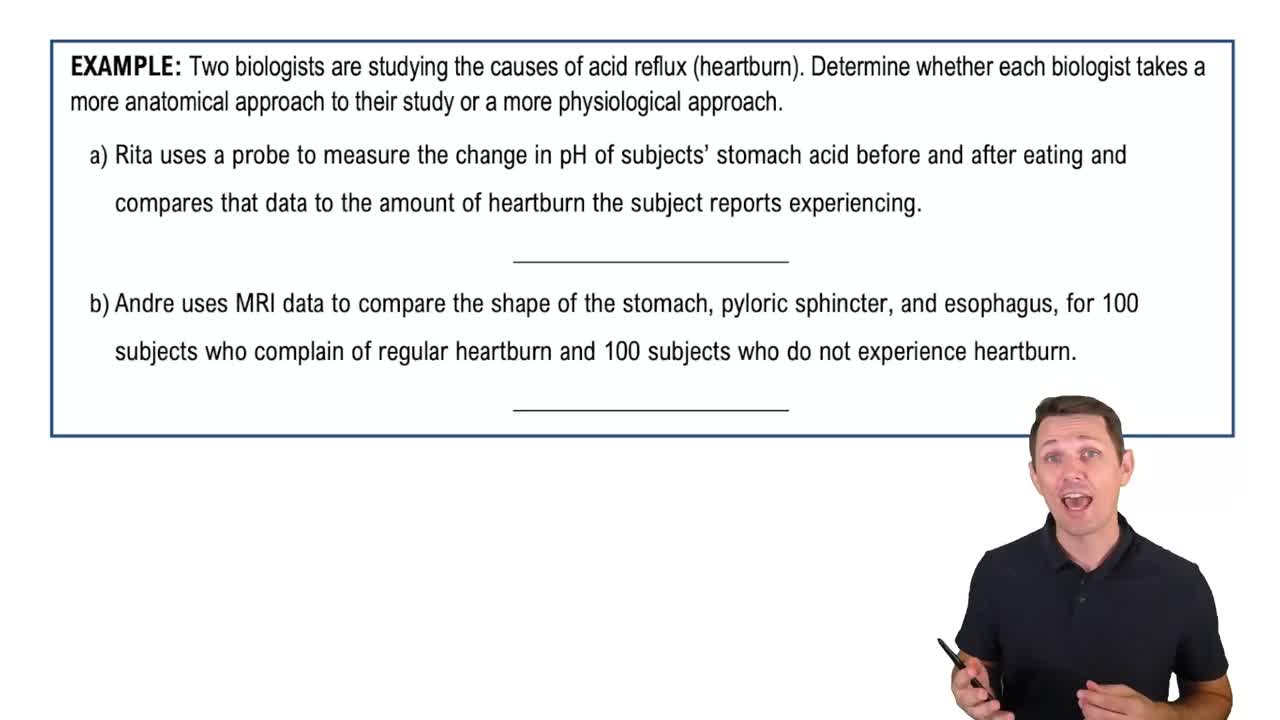
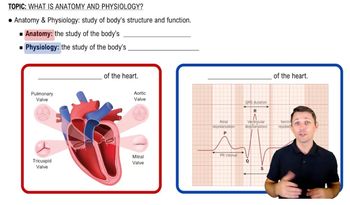
Anatomy studies the structure of body parts and their relationships to one another.
What does Physiology concern?
Physiology concerns the function of the body, explaining how body parts work and carry out life-sustaining activities.
Name the levels of structural organization in the body.
Chemical, Cellular, Tissue, Organ, Organ system, and Organismal levels.
Give examples of tissues in the body.
Examples include blood, muscle, and nerves.
What is the chemical level of structural organization?
The chemical level includes atoms and molecules essential for life.
What is the cellular level of structural organization?
The cellular level consists of cells, the smallest living units in the body.
What is the organ level of structural organization?
The organ level consists of structures made of two or more tissue types performing specific functions.
What is the organismal level of structural organization?
The organismal level is the highest level, representing the whole living individual.
What is the importance of maintaining boundaries in life functions?
Maintaining boundaries separates internal from external environments, such as plasma membranes for cells and skin for the organism.
How does the body achieve movement as a necessary life function?
Movement occurs via the muscular system: skeletal muscles move body parts, cardiac muscle moves blood, and smooth muscle moves substances through organs.
What is responsiveness in the context of life functions?
Responsiveness is the ability to sense and respond to stimuli, like withdrawal reflexes and adjusting breathing rate.
Define digestion as a necessary life function.
Digestion is the breakdown of ingested food and absorption of simple molecules into the blood.
What does metabolism include?
Metabolism includes all chemical reactions in body cells, combining catabolism (breakdown) and anabolism (synthesis).
What is excretion in life functions?
Excretion is the removal of metabolic wastes like urea, carbon dioxide, and feces.
Describe reproduction at the cellular and organismal levels.
Cellular reproduction is cell division for growth or repair; organismal reproduction is producing offspring.
What is growth in terms of life functions?
Growth is the increase in size of a body part or the entire organism.
Why are organ systems important for multicellular organisms?
Organ systems keep individual cells alive by meeting their survival needs.
 Back
Back
 3:06
3:06