 Back
Layers of the Skin and Accessory Structures
 06:54

Terms in this set (20)
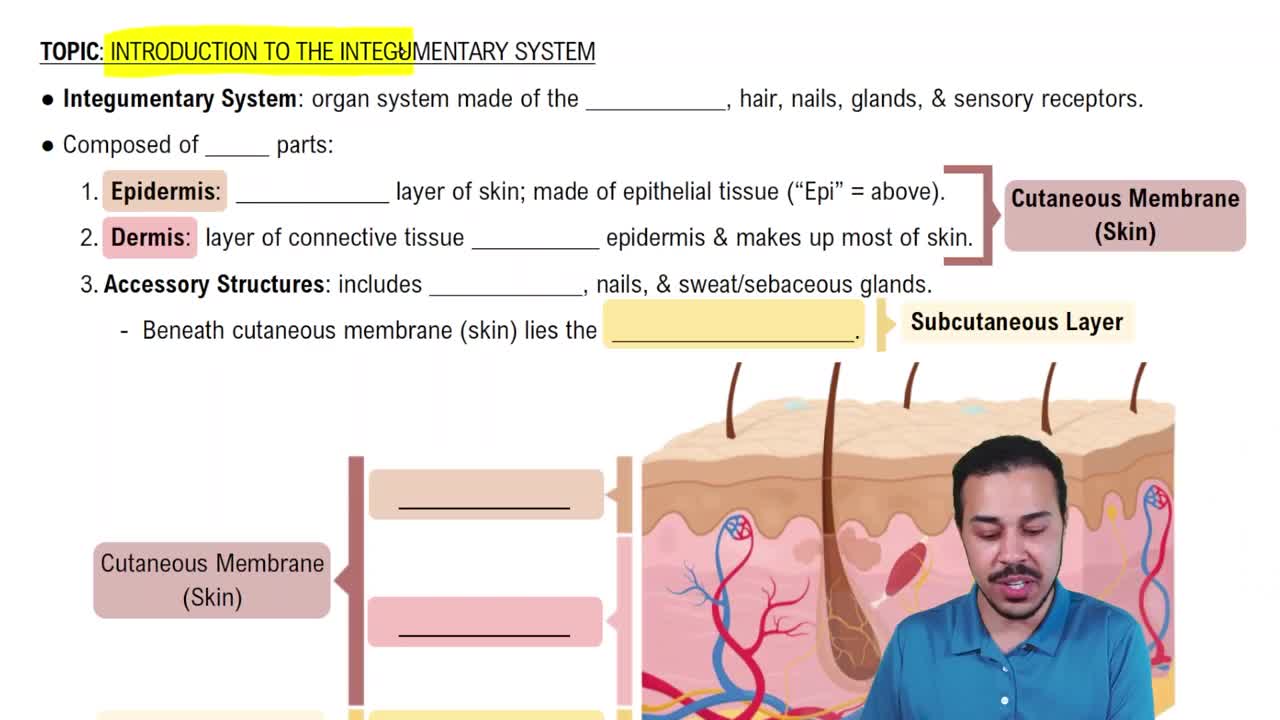
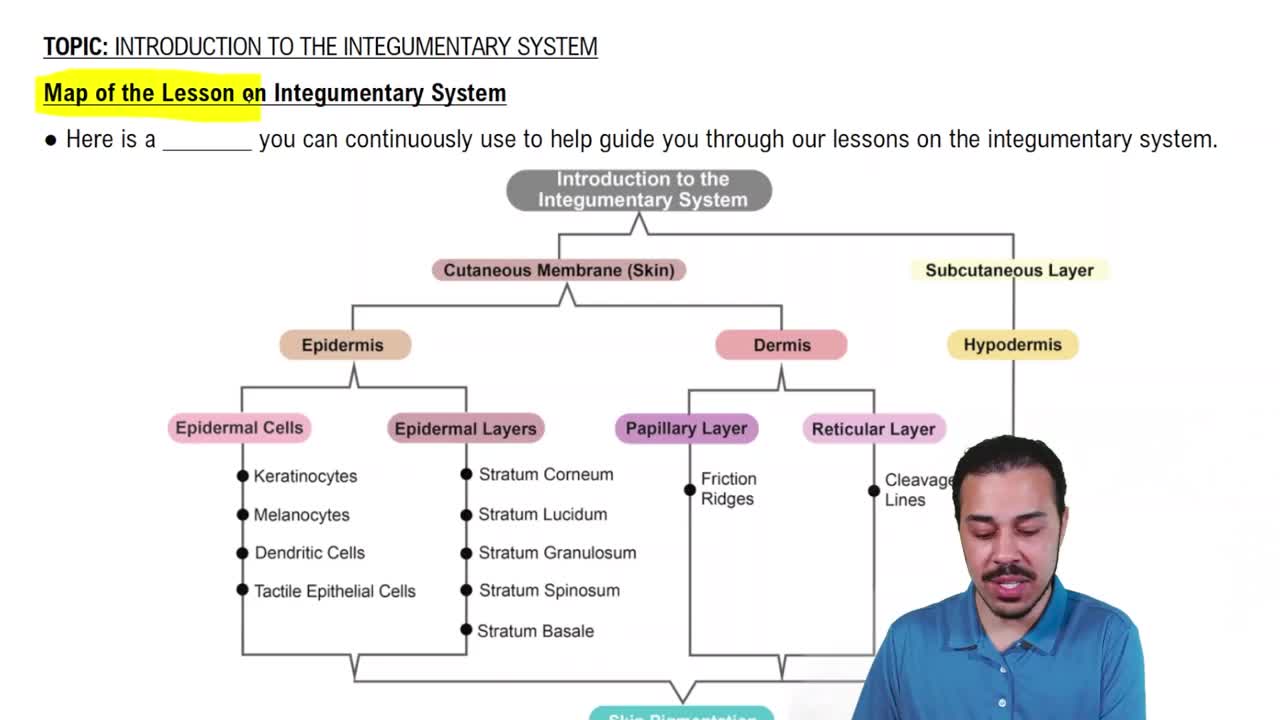
The epidermis, dermis, and hypodermis (subcutaneous layer).
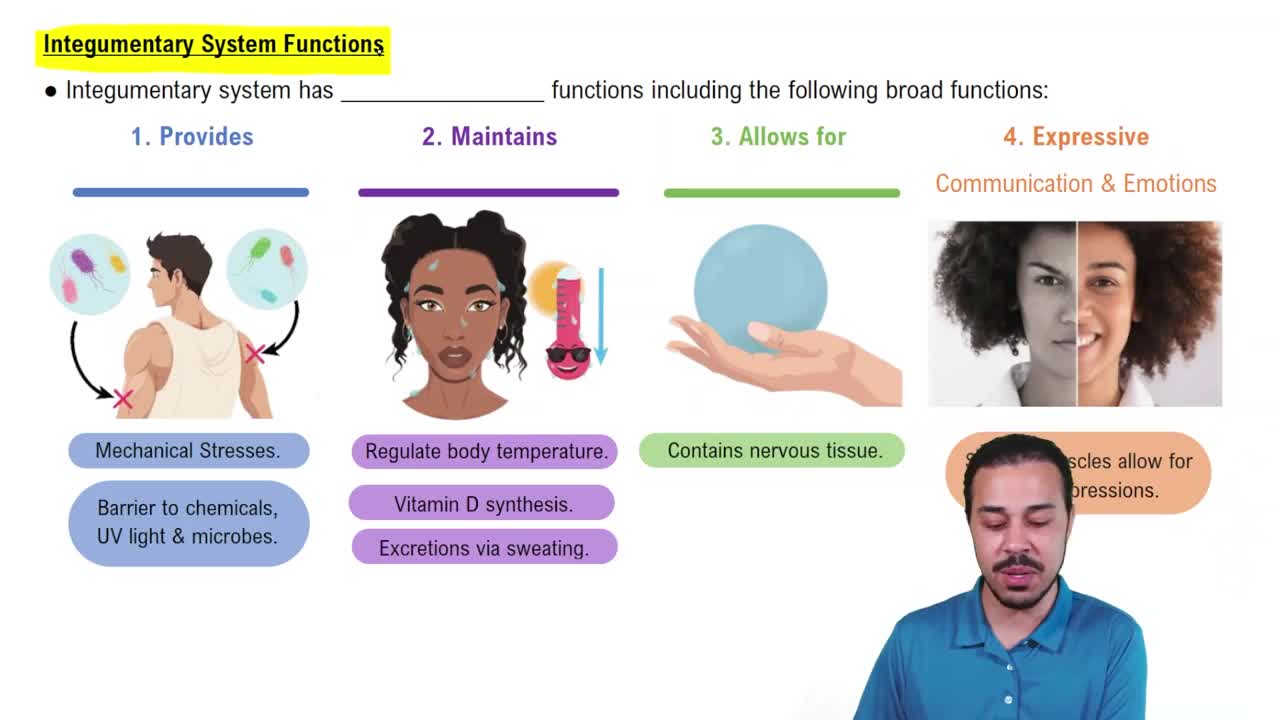
Provides a protective barrier against environmental damage, pathogens, and water loss.
Stratum corneum, stratum lucidum, stratum granulosum, stratum spinosum, stratum basale.
The stratum corneum.
Keratinocytes, which produce keratin for strength and waterproofing.
Produce melanin pigment to protect against UV radiation.
The stratum basale, where new keratinocytes are generated.
Act as immune cells that detect and present pathogens to the immune system.
The papillary layer (superficial) and the reticular layer (deep).
Dense irregular connective tissue with collagen and elastin fibers.
Hair follicles, sweat glands, and sebaceous (oil) glands.
Secrete sebum to lubricate and waterproof the skin and hair.
Produce sweat to help regulate body temperature and excrete waste.
Eccrine sweat glands; they regulate body temperature through sweat evaporation.
Composed mainly of adipose tissue; provides insulation, energy storage, and cushioning.
Provides protection, sensory input, and helps regulate body temperature.
Keratinocytes.
Supports and nourishes the epidermis; contains capillaries and sensory neurons.
Provides strength and elasticity to the skin through dense collagen fibers.
Acts as a physical barrier, prevents water loss, protects against pathogens, and regulates temperature.