 Back
Lymphatic System Structures and Functions
 1:20

Terms in this set (22)
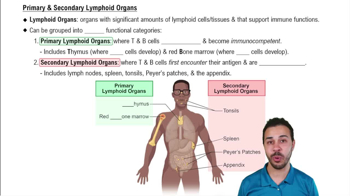
The three tonsils are the pharyngeal tonsil (in the nasopharynx), palatine tonsils (on each side of the oropharynx), and lingual tonsils (at the base of the tongue).
Tonsillitis is the inflammation or infection of the tonsils, often causing sore throat and difficulty swallowing.
Appendicitis is the inflammation of the appendix, a lymphatic structure attached to the large intestine, often requiring surgical removal.
Lymph nodes are small, bean-shaped structures that filter lymph and house lymphocytes to help fight infection.
The lymph node in the armpit is called the axillary lymph node.
The lymph node in the neck is called the cervical lymph node.
The lymph node in the groin area is called the inguinal lymph node.
The lymph node in the abdominal cavity is called the mesenteric lymph node.
They are called trabeculae, which provide internal support within the lymph node.
T cells are primarily found where the cortex meets the medulla in the lymph node.
The medullary cords contain B cells, plasma cells, and macrophages.
Afferent lymphatic vessels bring lymph into the lymph node.
Efferent lymphatic vessels drain lymph out of the lymph node.
Lymph flows from afferent vessels into the node, through sinuses, and exits via efferent vessels.
The spleen is the largest lymphoid organ, located in the upper left abdomen near the stomach.
The red pulp contains red blood cells, macrophages, and platelets.
The white pulp contains mainly lymphocytes, including T cells and B cells.
The white pulp surrounds the central arteries.
The thymus is located in the mediastinum and functions to mature T lymphocytes for immune defense.
The thymus is gradually replaced by adipose (fat) tissue with age.
Yes, immune function generally declines with age due to thymus involution and other factors.
Thymic lobules are structural units of the thymus containing cortex and medulla; Hassall's corpuscles are concentric epithelial structures found in the medulla.