Skip to main content
Anatomy & Physiology
My Course
Learn
Exam Prep
AI Tutor
Study Guides
Textbook Solutions
Flashcards
Explore
Try the app
My Course
Learn
Exam Prep
AI Tutor
Study Guides
Textbook Solutions
Flashcards
Explore
Try the app
Back
Major Arteries and Veins in Human Anatomy
You can tap to flip the card.
Aorta
You can tap to flip the card.
👆
Aorta
The largest artery in the body that carries oxygenated blood from the left ventricle to the systemic circulation.
Track progress
Control buttons has been changed to "navigation" mode.
1/29
Recommended videos
Guided course
3:38
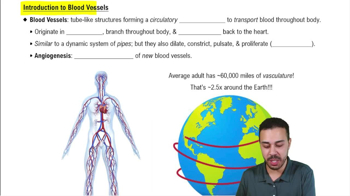
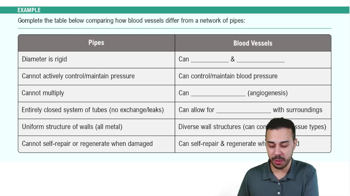
Introduction to Blood Vessels Example 1
6816
views
137
rank
Guided course
4:59
Blood Vessels
9791
views
219
rank
2
comments
Guided course
2:04
Map of the Lesson on Blood Vessels
6999
views
219
rank
1
comments
Terms in this set (29)
Hide definitions
Aorta
The largest artery in the body that carries oxygenated blood from the left ventricle to the systemic circulation.
Ascending aorta
The first section of the aorta that rises from the heart and supplies blood to the coronary arteries.
Aortic arch
The curved portion of the aorta that gives rise to major arteries supplying the head, neck, and upper limbs.
Descending aorta
The part of the aorta that travels downward through the thorax and abdomen, supplying blood to the lower body.
Thoracic aorta
The section of the descending aorta located in the chest cavity.
Abdominal aorta
The continuation of the descending aorta in the abdomen that supplies blood to abdominal organs and lower limbs.
Left coronary artery
An artery branching from the ascending aorta that supplies oxygenated blood to the left side of the heart.
Right coronary artery
An artery branching from the ascending aorta that supplies oxygenated blood to the right side of the heart.
Brachiocephalic artery
A major artery branching from the aortic arch that supplies blood to the right arm and head.
Left common carotid artery
An artery arising from the aortic arch that supplies blood to the left side of the head and neck.
Left subclavian artery
An artery branching from the aortic arch that supplies blood to the left upper limb.
Right common carotid artery
An artery branching from the brachiocephalic artery that supplies blood to the right side of the head and neck.
Right subclavian artery
An artery branching from the brachiocephalic artery that supplies blood to the right upper limb.
Axillary artery
The continuation of the subclavian artery in the armpit region supplying blood to the upper limb.
Brachial artery
The major artery of the upper arm, continuation of the axillary artery.
Radial artery
A branch of the brachial artery running along the lateral forearm, commonly used to measure pulse.
Ulnar artery
A branch of the brachial artery running along the medial forearm supplying blood to the hand.
Celiac trunk
A major artery branching from the abdominal aorta that supplies blood to the stomach, spleen, liver, and other organs.
Superior mesenteric artery
An artery branching from the abdominal aorta that supplies blood to most of the small intestine and part of the large intestine.
Renal arteries
Paired arteries branching from the abdominal aorta that supply blood to the kidneys.
Inferior mesenteric artery
An artery branching from the abdominal aorta that supplies blood to the distal part of the large intestine.
Common iliac artery
The terminal branches of the abdominal aorta that supply blood to the pelvis and lower limbs.
Internal iliac artery
A branch of the common iliac artery supplying blood to the pelvic organs.
External iliac artery
A branch of the common iliac artery that continues into the lower limb as the femoral artery.
Femoral artery
The main artery supplying blood to the thigh and leg, continuation of the external iliac artery.
Popliteal artery
The continuation of the femoral artery behind the knee supplying blood to the lower leg.
Anterior tibial artery
A branch of the popliteal artery supplying blood to the anterior compartment of the leg.
Posterior tibial artery
A branch of the popliteal artery supplying blood to the posterior compartment of the leg and foot.
Dorsalis pedis artery
A continuation of the anterior tibial artery on the dorsum of the foot, used to check peripheral circulation.
 BackBack
 3:38