Skip to main content
Anatomy & Physiology
My Course
Learn
Exam Prep
AI Tutor
Study Guides
Textbook Solutions
Flashcards
Explore
Try the app
My Course
Learn
Exam Prep
AI Tutor
Study Guides
Textbook Solutions
Flashcards
Explore
Try the app
Back
Major Bones of the Human Body & Their Functions
You can tap to flip the card.
How many bones make up the human skeleton?
You can tap to flip the card.
👆
How many bones make up the human skeleton?
The human skeleton is made up of
206 bones
.
Track progress
Control buttons has been changed to "navigation" mode.
1/17
Recommended videos
3:56
What is Bone?
26666
views
850
rank
2
comments
3:00
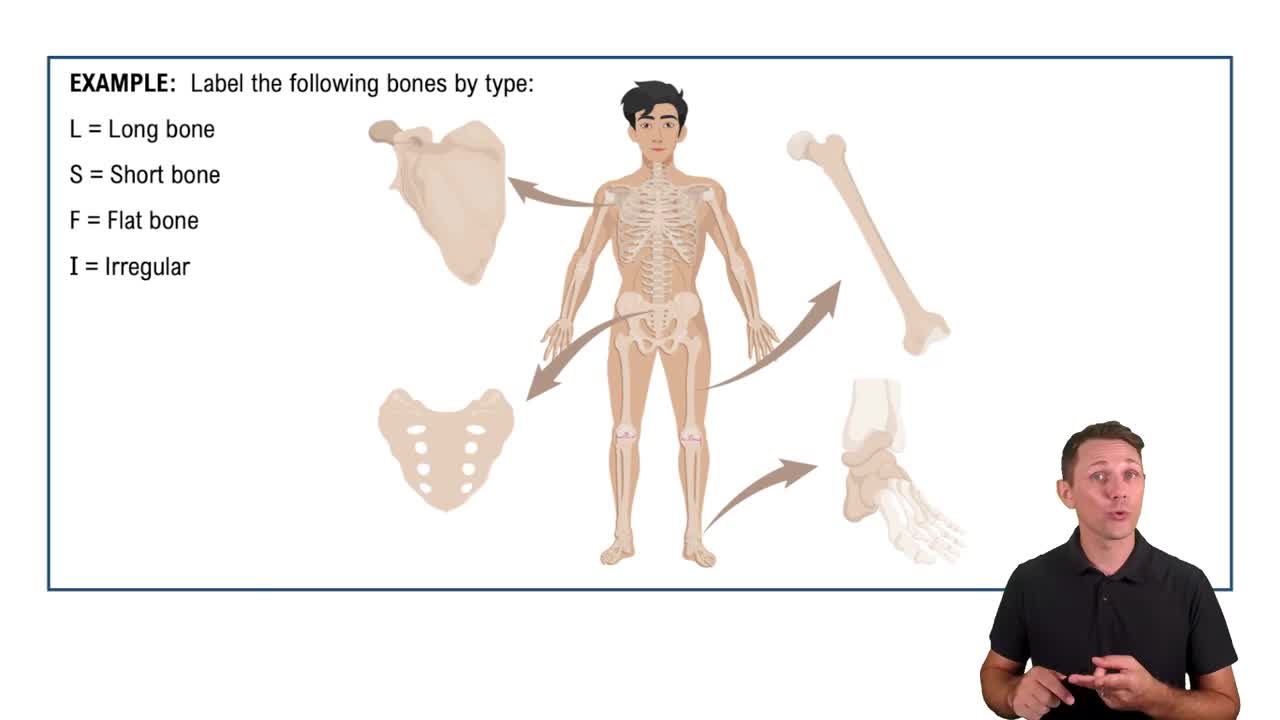
An Introduction to Bone and Skeletal Tissue Example 2
14819
views
321
rank
1
comments
4:14
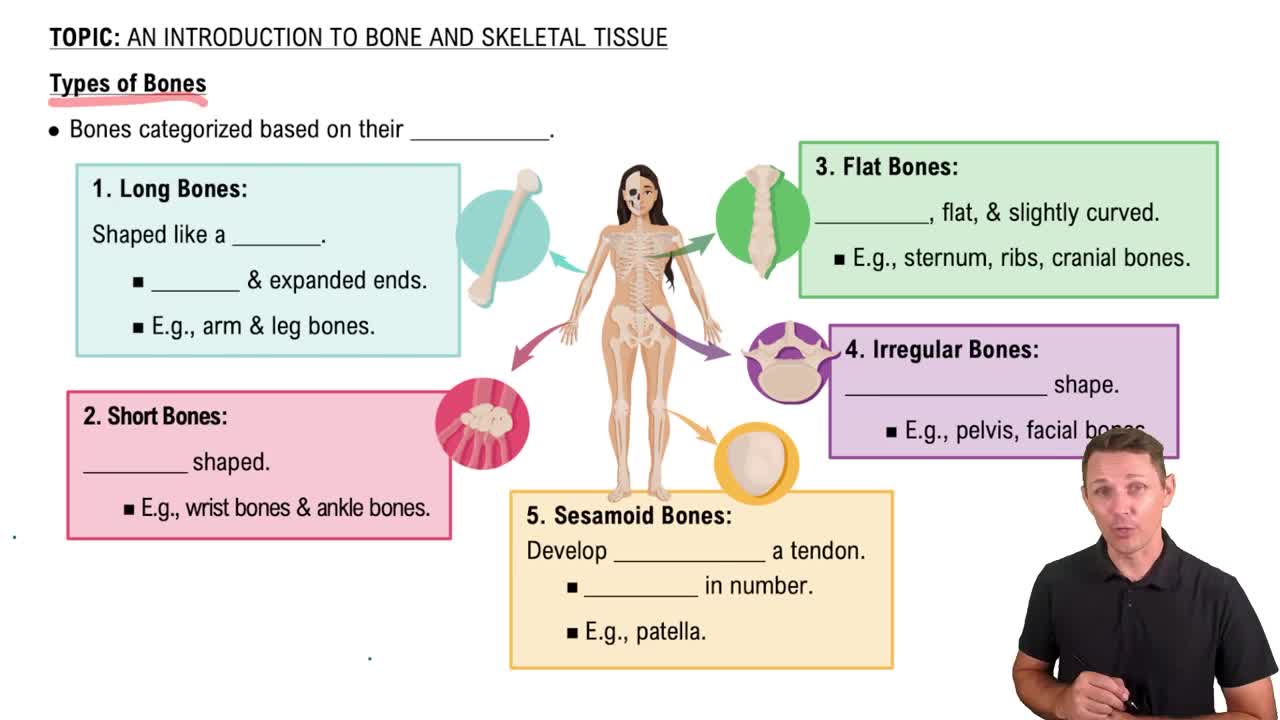
Types of Bones
17631
views
457
rank
1
comments
Terms in this set (17)
Hide definitions
How many bones make up the human skeleton?
The human skeleton is made up of
206 bones
.
What are the two main parts of the human skeleton?
The skeleton is divided into the
axial skeleton
and the
appendicular skeleton
.
What bones make up the axial skeleton?
The axial skeleton includes the
skull
,
vertebral column
, and
rib cage
.
What is the function of the skull in the axial skeleton?
The skull protects the brain and forms the structure of the face.
What is the role of the vertebral column?
The vertebral column supports the body, protects the spinal cord, and allows flexible movement.
What does the rib cage protect?
The rib cage protects the heart and lungs.
Which bones connect the arms to the trunk in the appendicular skeleton?
The clavicle (collarbone) and scapula (shoulder blade) connect the arms to the trunk.
What are the main arm bones and their function?
The humerus, radius, and ulna enable lifting, holding, and manipulating objects.
Which bones allow fine motor skills and dexterity in the hand?
The carpals, metacarpals, and phalanges allow fine motor skills and dexterity.
What is the function of the pelvic girdle?
The pelvic girdle supports the weight of the upper body and protects pelvic organs.
Name the main leg bones and their function.
The femur, tibia, fibula, and patella support body weight and allow walking, running, and jumping.
Which bones provide balance and movement in the foot?
The tarsals, metatarsals, and phalanges provide balance and movement.
What is the general function of bones related to support?
Bones provide a framework that supports the body.
How do bones protect vital organs?
Bones shield vital organs, such as the skull protecting the brain.
How do bones assist in movement?
Bones act as levers for muscles to pull on, enabling movement.
Where does blood cell production occur in bones?
Blood cell production occurs in the bone marrow, a process called hematopoiesis.
What minerals are stored in bones?
Bones store calcium and phosphorus.
 BackBack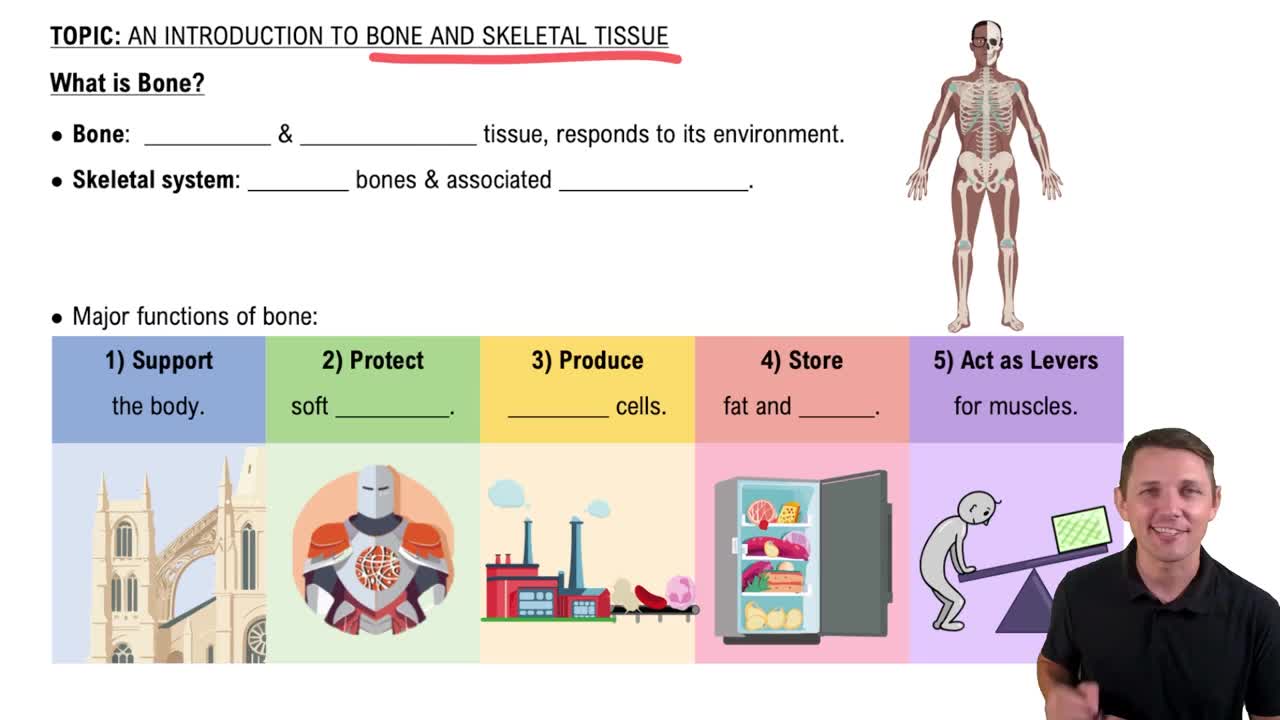
 3:56
3:56