The resting membrane potential is the electrical potential difference across the cell membrane when the neuron is not transmitting a signal, typically around -80 mV.
Which ion primarily sets the resting membrane potential?
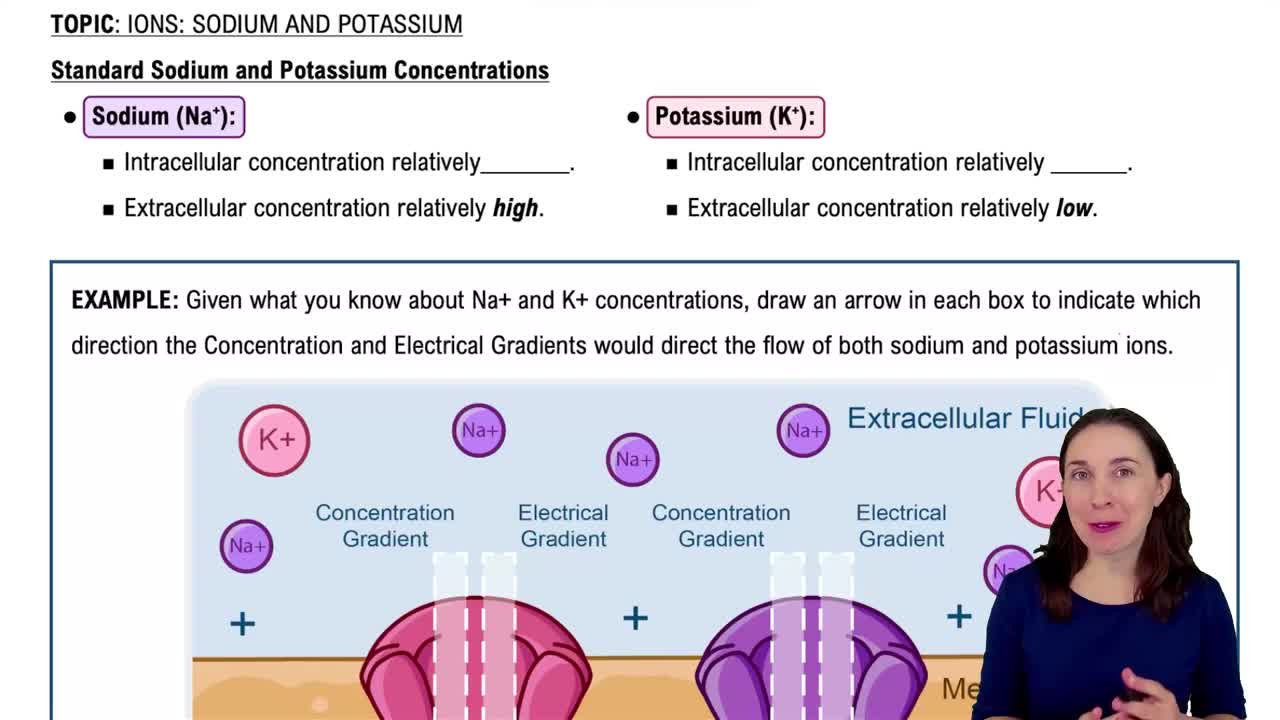
Potassium ions (K+) set the resting membrane potential by moving out of the cell through leaky K+ channels, making the inside of the cell more negative.
How are ion concentration differences across the cell membrane generated?
Ion concentration differences are generated by the low permeability of the membrane, selective ion channels, and the sodium-potassium pump.
What is the role of the sodium-potassium pump?
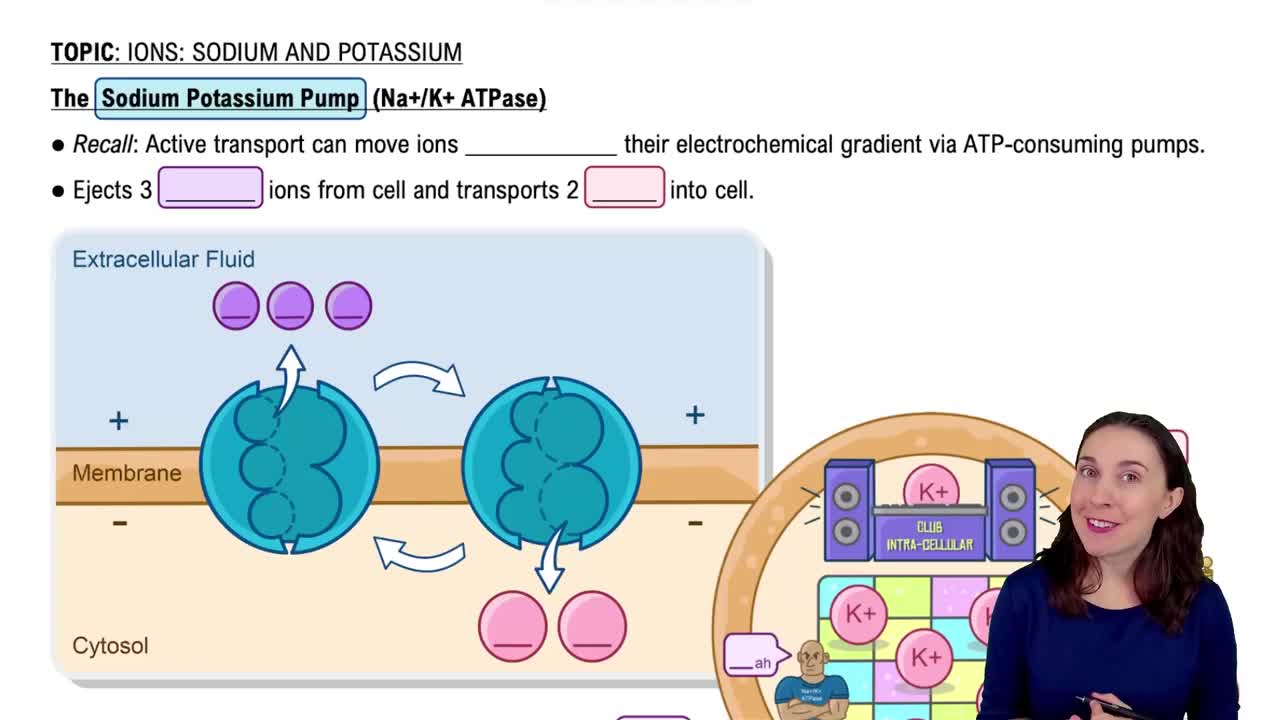
The sodium-potassium pump uses ATP to transport 3 Na+ ions out and 2 K+ ions into the cell, maintaining ion gradients essential for neuronal activity.
What happens during depolarisation of the membrane potential?
During depolarisation, the membrane potential becomes less negative (more positive), moving closer to the threshold for an action potential.
What is hyperpolarisation?
Hyperpolarisation is when the membrane potential becomes more negative than the resting potential, making the neuron less likely to fire an action potential.
What are voltage-gated ion channels?
Voltage-gated ion channels open or close in response to changes in membrane potential and are critical for generating action potentials.
Describe the phases of an action potential.
Phases include: resting membrane potential, threshold, depolarisation (Na+ influx), repolarisation (K+ efflux), hyperpolarisation, and return to resting potential.
What causes the rising phase of the action potential?
The rising phase is caused by the opening of voltage-gated Na+ channels, allowing Na+ to enter the cell and depolarise the membrane.
What causes the falling phase of the action potential?
The falling phase is caused by the opening of voltage-gated K+ channels, allowing K+ to leave the cell and repolarise the membrane.
What is the absolute refractory period?
The absolute refractory period is when Na+ channels are inactivated and no new action potential can be generated.
What is the relative refractory period?
The relative refractory period follows the absolute period; Na+ channels reset but K+ channels remain open, requiring a stronger stimulus to generate an action potential.
What is the function of ligand-gated ion channels at synapses?
Ligand-gated ion channels open in response to neurotransmitter binding, allowing ions to flow and generate postsynaptic potentials.
What is an excitatory postsynaptic potential (EPSP)?
An EPSP is a depolarisation caused by Na+ influx through ligand-gated channels, increasing the likelihood of an action potential.
What is an inhibitory postsynaptic potential (IPSP)?
An IPSP is a hyperpolarisation caused by Cl- influx or K+ efflux, decreasing the likelihood of an action potential.
How do neurons integrate synaptic inputs?
Neurons integrate inputs by summing EPSPs and IPSPs spatially (different locations) and temporally (over time) to determine if threshold is reached.
What is the difference between continuous and saltatory conduction?
Continuous conduction occurs in unmyelinated axons with sequential channel opening; saltatory conduction occurs in myelinated axons with action potentials jumping between nodes of Ranvier.
Why is the sodium-potassium pump important despite not generating the RMP directly?
It maintains the Na+ and K+ concentration gradients that are essential for generating the resting membrane potential and action potentials.
What happens to neuronal excitability if extracellular K+ increases?
Increased extracellular K+ depolarises the neuron, making it more excitable and closer to firing an action potential.
Name a clinical condition related to failure of the sodium-potassium pump.
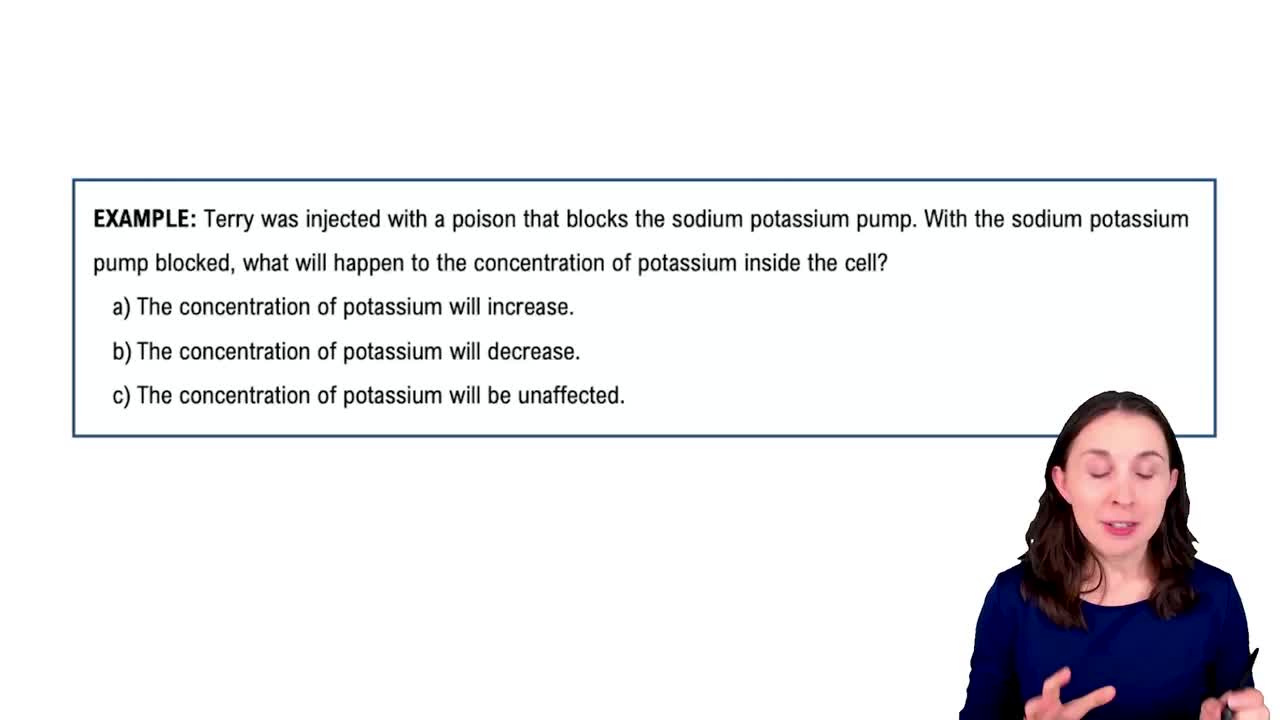
Ischemia, such as stroke, causes pump failure due to lack of oxygen, leading to loss of ion gradients and neuronal activity.
What is a channelopathy?
A channelopathy is a disorder caused by dysfunction of ion channels, affecting neuronal excitability and leading to diseases like epilepsy.
How do local anaesthetics affect action potentials?
Local anaesthetics like lidocaine block voltage-gated Na+ channels, preventing action potentials and thus blocking nerve signals.
What is the role of calcium channels in neurons?
Voltage-gated Ca2+ channels open at the axon terminal to trigger neurotransmitter release into the synaptic cleft.
 Back
 03:35