 Back
BackSkeletal System and Bone Tissue - Anatomy & Physiology
 3:56
3:56
Terms in this set (18)
An organ is a structure composed of two or more tissue types that work together to perform specific functions.
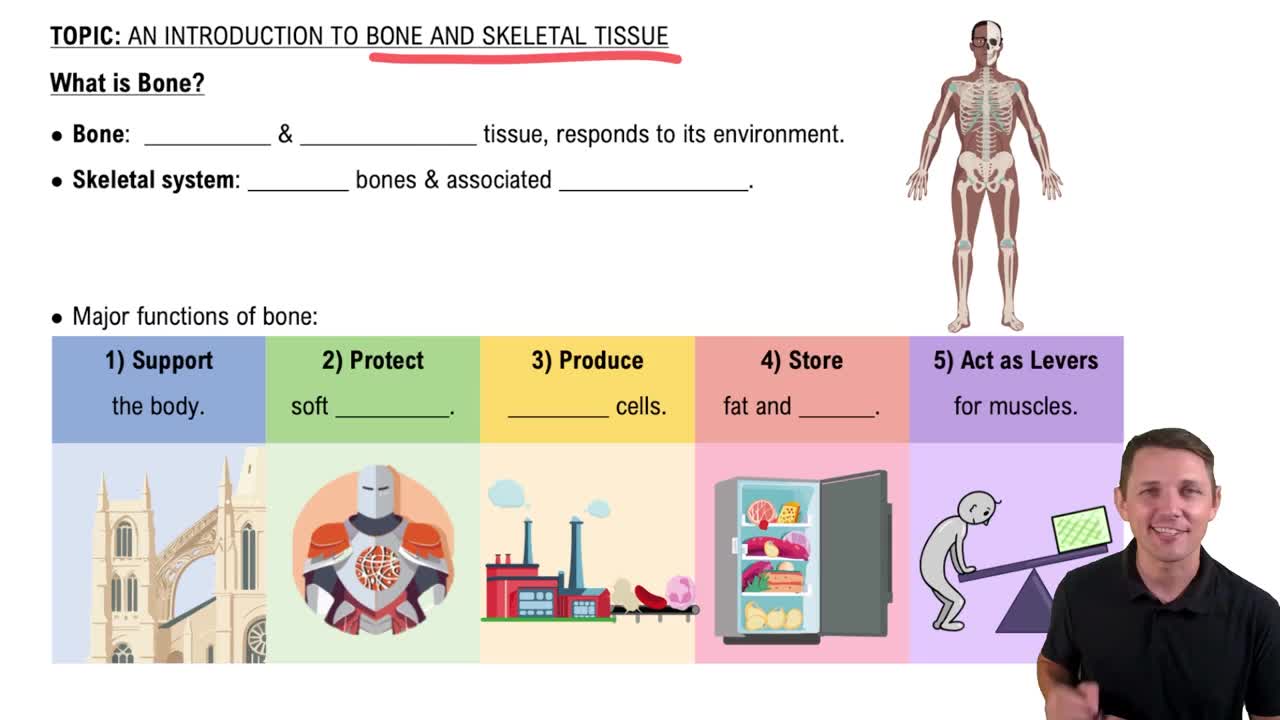
The bones make up the skeletal system.
The skeletal system is made up of bone tissue, cartilage, dense connective tissue, blood, and nervous tissue.
Supports the body, protects organs, provides levers for movement, stores minerals and lipids, and houses blood-forming tissue.
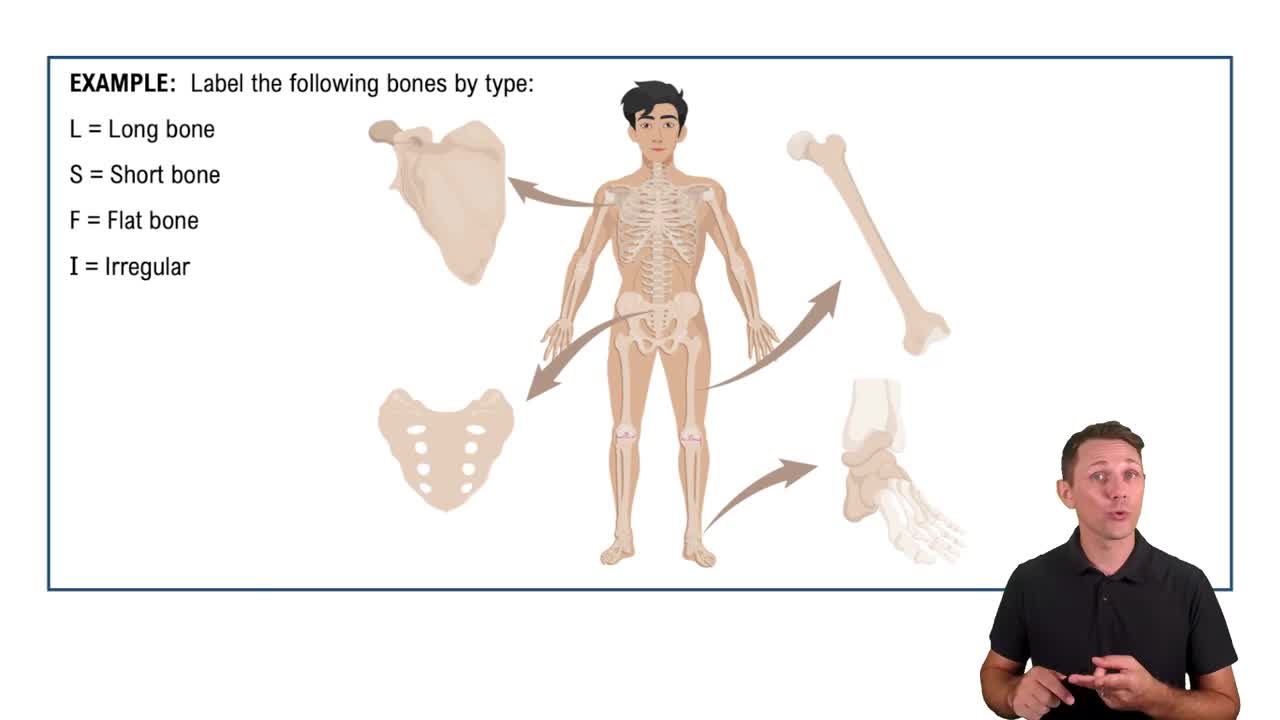
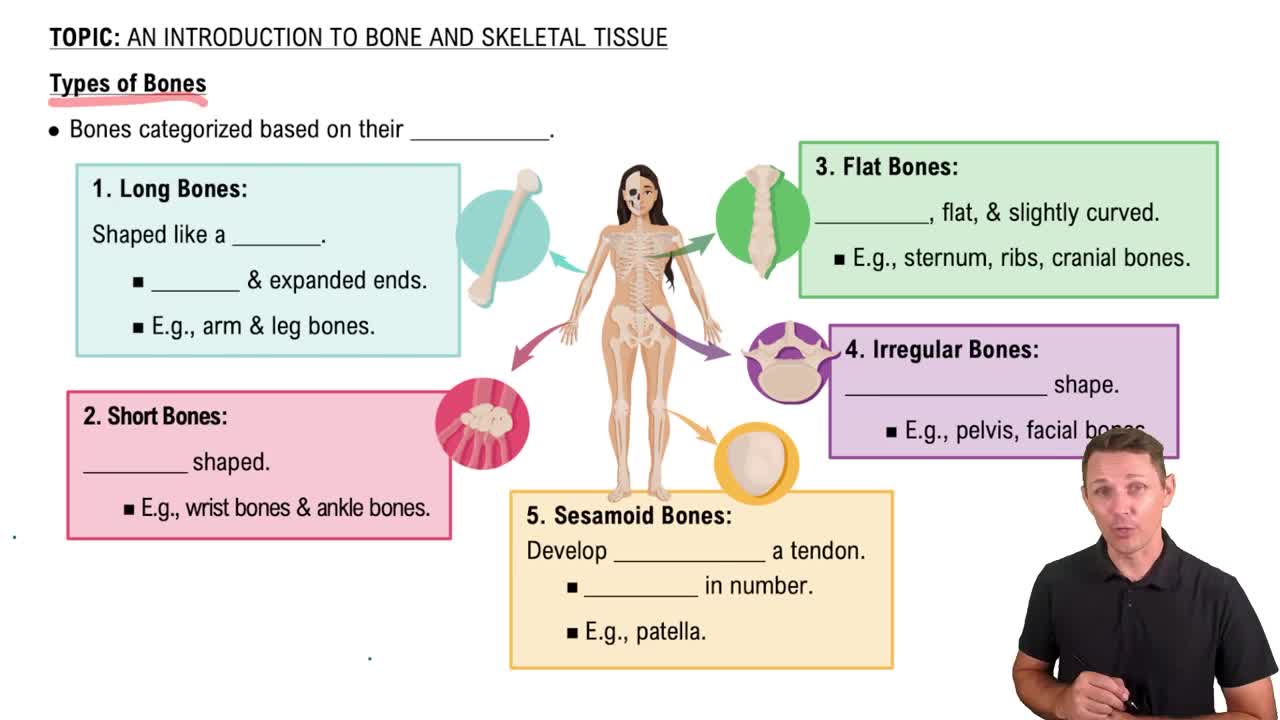
Long bones (e.g., femur), short bones (e.g., carpals), flat bones (e.g., sternum), irregular bones (e.g., vertebrae), and sesamoid bones (e.g., patella).
Diaphysis: shaft for support; epiphysis: ends for articulation; metaphysis: growth zone; medullary cavity: marrow storage; periosteum: protection and repair.
Compact bone is dense and forms the outer layer; spongy bone is porous and found inside, containing trabeculae and marrow.
Red marrow produces blood cells; yellow marrow stores fat.
Inorganic: mainly hydroxyapatite for hardness; organic: collagen fibers for flexibility and tensile strength.
Osteoblasts: build bone; osteocytes: maintain bone; osteoclasts: resorb bone; osteogenic cells: stem cells for bone formation.
Intramembranous ossification: bone forms directly from mesenchyme; endochondral ossification: bone replaces cartilage template.
Primary ossification center is in the diaphysis; secondary ossification centers are in the epiphyses.
Length grows by endochondral ossification at the epiphyseal plate; thickness grows by appositional growth via osteoblasts in periosteum.
Primary bone is immature, formed quickly; secondary bone is mature, remodeled with organized structure.
Physical stress, hormones like growth hormone and sex steroids, and nutrients like calcium and vitamin D affect bone growth and remodeling.
Wolf’s Law states that bone grows and remodels in response to the mechanical stresses placed on it.
Bone repair involves hematoma formation, fibrocartilaginous callus formation, bony callus formation, and bone remodeling.
Parathyroid hormone increases blood calcium by stimulating osteoclasts; calcitonin decreases blood calcium by inhibiting osteoclasts.