 Back
Study Guide: Articulations 1/2
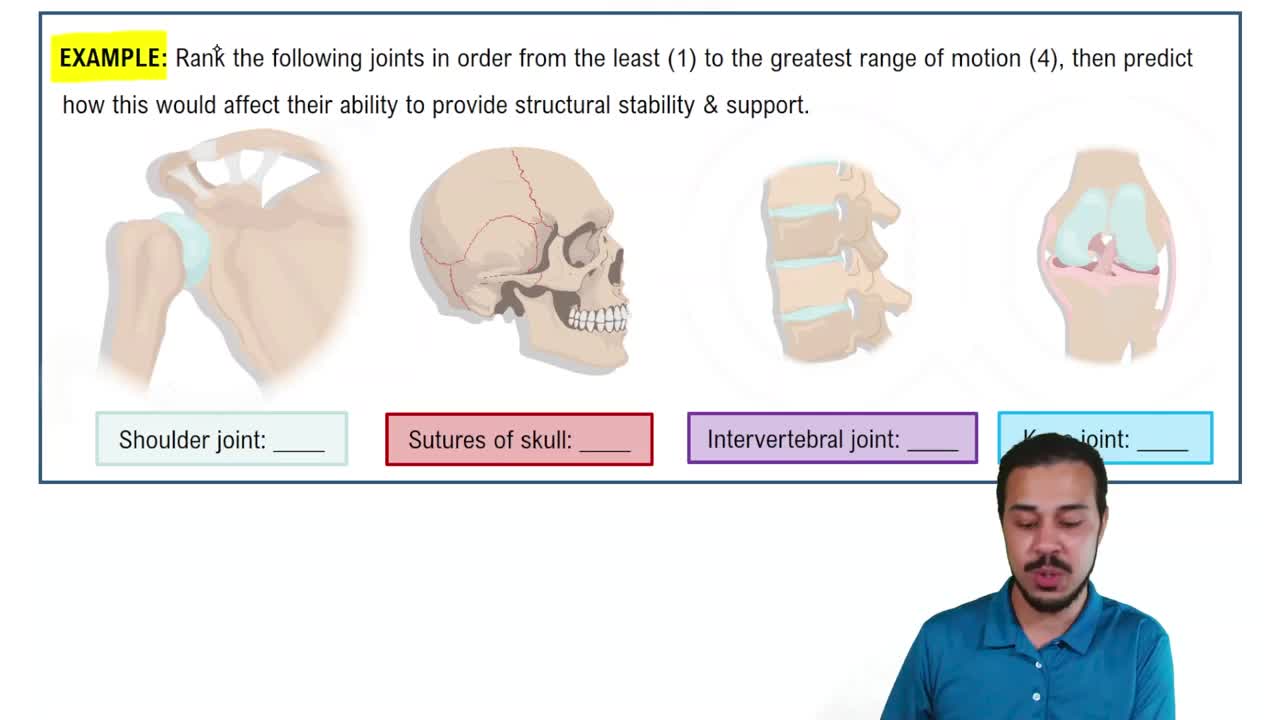
 04:06

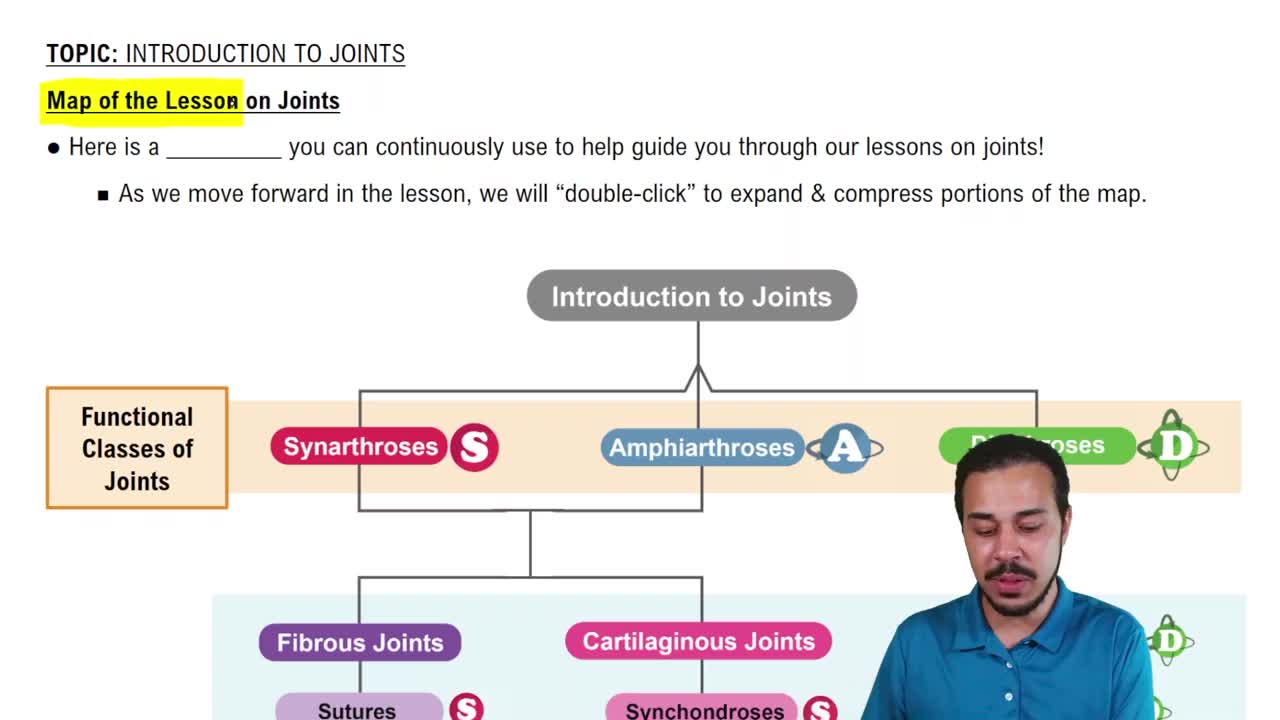
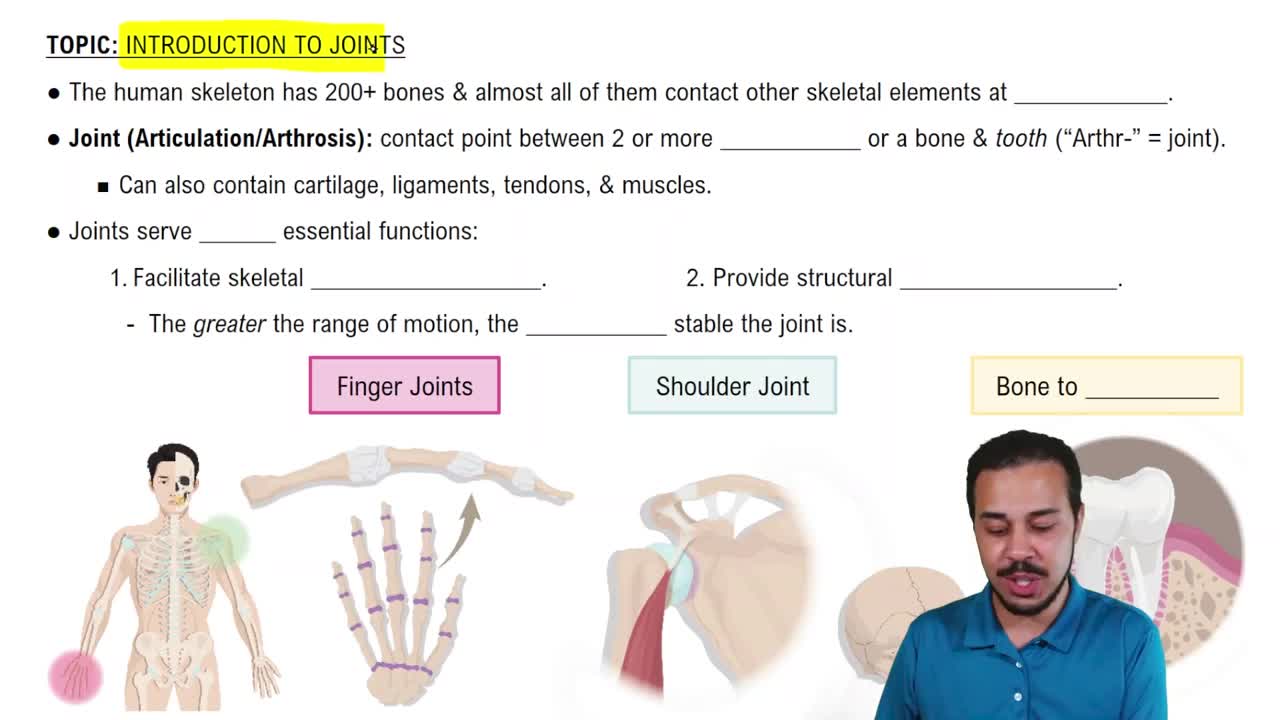
Terms in this set (22)
A joint where two or more bones meet, allowing movement or providing stability.
Another term for a joint, often used to describe degenerative joint disease.
A joint connected by dense connective tissue with no joint cavity, typically immovable.
A joint where bones are connected by cartilage, allowing limited movement.
A freely movable joint with a fluid-filled cavity called the synovial cavity.
An immovable joint, such as sutures in the skull.
A slightly movable joint, like the pubic symphysis.
A freely movable joint, typically a synovial joint.
A type of fibrous joint found only between skull bones, immovable.
A fibrous joint where bones are connected by a ligament, allowing slight movement.
A fibrous joint where a tooth fits into its socket, held by periodontal ligament.
A cartilaginous joint where bones are joined by hyaline cartilage, usually immovable.
A cartilaginous joint where bones are joined by fibrocartilage, allowing slight movement.
The protrusion of an organ or tissue through an abnormal opening, often referring to a disc in the spine.
Hyaline cartilage covering the ends of bones in synovial joints to reduce friction.
A double-layered structure enclosing a synovial joint, consisting of fibrous and synovial membranes.
The inner layer of the articular capsule that produces synovial fluid for lubrication.
A band of dense connective tissue connecting bone to bone, providing joint stability.
A fluid-filled sac that reduces friction between tissues, such as between bone and tendon.
A tubular bursa that surrounds a tendon, reducing friction during movement.
A crescent-shaped fibrocartilage structure in some synovial joints that improves fit and absorbs shock.
Tendon
Band of dense fibrous connective tissue connecting muscle to bone, transmitting force to create movement