 Back
The Cell
 04:57

Terms in this set (32)
DNA is the molecule that stores genetic information in cells, encoding instructions for protein synthesis and heredity.
RNA is a nucleic acid involved in protein synthesis, acting as a messenger and functional molecule in cells.
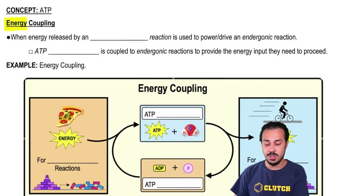
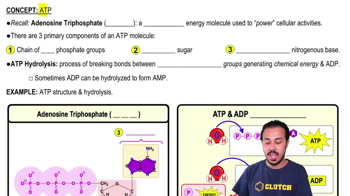
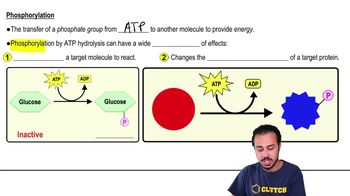
ATP is the primary energy carrier in cells, providing energy for metabolic processes.
The phospholipid bilayer forms the basic structure of cell membranes, with hydrophilic heads and hydrophobic tails creating a selective barrier.
Integral proteins are embedded within the phospholipid bilayer and often function as channels or receptors.
Peripheral proteins attach to the membrane surface and assist in signaling or structural support.
The glycocalyx is a carbohydrate-rich coating on the cell surface that aids in protection and cell recognition.
Tight junctions seal adjacent cells together to prevent leakage of substances between them.
Desmosomes are anchoring junctions that provide mechanical strength by linking cytoskeletons of adjacent cells.
Gap junctions allow direct communication between cells through channels that permit passage of ions and small molecules.
The nucleus houses the cell's DNA and controls cellular activities by regulating gene expression.
The nucleolus is a dense region within the nucleus where ribosomal RNA is synthesized.
Chromatin is the complex of DNA and proteins in the nucleus, existing in a relaxed form during interphase.
Chromosomes are condensed chromatin structures visible during cell division, carrying genetic information.
A chromatid is one of two identical halves of a duplicated chromosome.
Cytoplasm is the jelly-like fluid inside the cell that contains organelles and is the site of many cellular processes.
The rough ER has ribosomes on its surface and synthesizes proteins destined for membranes or secretion.
The smooth ER lacks ribosomes and is involved in lipid synthesis and detoxification.
The Golgi apparatus modifies, sorts, and packages proteins and lipids for transport within or outside the cell.
Mitochondria are the cell's powerhouses, generating ATP through cellular respiration.
Centrioles organize the mitotic spindle and help in chromosome movement during cell division.
The mitotic spindle is a structure of microtubules that separates chromosomes during mitosis.
Cilia are short, hair-like projections that move substances across the cell surface.
A flagellum is a long, whip-like structure that propels the cell, such as a sperm cell.
Microvilli are tiny projections that increase the surface area of the cell for absorption.
Interphase is the cell cycle phase where the cell grows and DNA replicates before mitosis.
Early prophase is the first stage of mitosis where chromatin condenses and the mitotic spindle begins to form.
Late prophase involves nuclear envelope breakdown and spindle fibers attaching to chromosomes.
Metaphase is the mitosis stage where chromosomes align at the cell's equator.
Anaphase is when sister chromatids separate and move toward opposite poles of the cell.
Telophase is the final mitosis stage where nuclear envelopes reform and chromosomes decondense.
Cytokinesis is the division of the cytoplasm, resulting in two separate daughter cells.