Skip to main content
Anatomy & Physiology
My Course
Learn
Exam Prep
AI Tutor
Study Guides
Textbook Solutions
Flashcards
Explore
Try the app
My Course
Learn
Exam Prep
AI Tutor
Study Guides
Textbook Solutions
Flashcards
Explore
Try the app
Back
The Twelve Cranial Nerves
You can tap to flip the card.
What is the function of the Olfactory nerve (Cranial Nerve I)?
You can tap to flip the card.
👆
What is the function of the Olfactory nerve (Cranial Nerve I)?
The Olfactory nerve is responsible for the sense of smell.
Track progress
Control buttons has been changed to "navigation" mode.
1/12
Recommended videos
Guided course
1:06
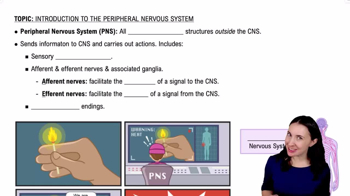
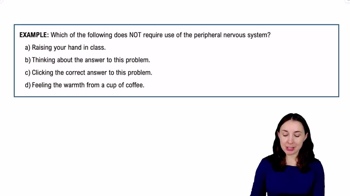
Introduction to the Peripheral Nervous System Example 1
9490
views
224
rank
Guided course
3:33
Peripheral Nervous System
13611
views
346
rank
1
comments
Terms in this set (12)
Hide definitions
What is the function of the Olfactory nerve (Cranial Nerve I)?
The Olfactory nerve is responsible for the sense of smell.
What is the main role of the Optic nerve (Cranial Nerve II)?
The Optic nerve transmits visual information from the retina to the brain.
What functions does the Oculomotor nerve (Cranial Nerve III) control?
It controls most eye movements, eyelid elevation, and pupil constriction.
What is the function of the Trochlear nerve (Cranial Nerve IV)?
The Trochlear nerve controls the superior oblique muscle, enabling downward and inward eye movement.
What are the three branches of the Trigeminal nerve (Cranial Nerve V)?
Ophthalmic, Maxillary, and Mandibular branches, responsible for facial sensation and chewing muscles.
What is the function of the Abducens nerve (Cranial Nerve VI)?
It controls the lateral rectus muscle, allowing lateral eye movement.
What does the Facial nerve (Cranial Nerve VII) control?
It controls facial expressions, taste from the anterior two-thirds of the tongue, and some salivary glands.
What is the role of the Vestibulocochlear nerve (Cranial Nerve VIII)?
It is responsible for hearing and balance.
What functions does the Glossopharyngeal nerve (Cranial Nerve IX) serve?
It controls taste from the posterior one-third of the tongue, swallowing, and some salivary glands.
What is the function of the Vagus nerve (Cranial Nerve X)?
It controls parasympathetic functions of the heart, lungs, digestive tract, and also contributes to swallowing and speech.
What does the Accessory nerve (Cranial Nerve XI) control?
It controls the sternocleidomastoid and trapezius muscles, aiding head movement and shoulder elevation.
What is the function of the Hypoglossal nerve (Cranial Nerve XII)?
It controls tongue movements essential for speech and swallowing.
 BackBack
 1:06