Carbohydrates quiz #2 Flashcards

Carbohydrates quiz #2
Control buttons has been changed to "navigation" mode.
1/40
  • What is the function of the pentose sugar in nucleotides?
    The pentose sugar forms the backbone of nucleic acids by linking to phosphate groups and nitrogenous bases.
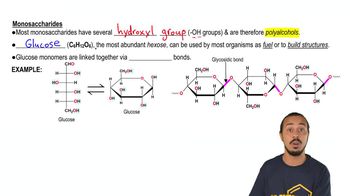
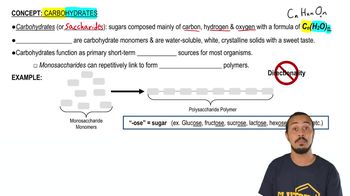
  • What is the difference between a monosaccharide and a polysaccharide?
    A monosaccharide is a single sugar unit, while a polysaccharide is a polymer of many monosaccharide units.
  • What is the significance of the crystalline nature of monosaccharides?
    The crystalline nature reflects their solid, ordered structure at room temperature.
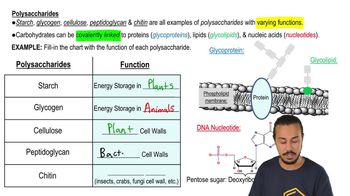
  • What is the main function of starch in plants?
    Starch stores energy for later use in plants.
  • What is the main function of glycogen in animals?
    Glycogen stores energy for later use in animals.
  • What is the main function of cellulose in plants?
    Cellulose provides rigidity and structural support to plant cell walls.
  • What is the main function of chitin in fungi?
    Chitin provides structural support in fungal cell walls.
  • What is the main function of chitin in arthropods?
    Chitin forms the hard exoskeleton of arthropods.
  • What is the main function of peptidoglycan in bacteria?
    Peptidoglycan provides structural integrity to bacterial cell walls.
  • What is the main function of glycoproteins in cells?
    Glycoproteins are involved in cell recognition, signaling, and structural functions.
  • What is the main function of glycolipids in cells?
    Glycolipids play roles in cell recognition and membrane stability.
  • What is the main function of carbohydrates in nucleotides?
    Carbohydrates provide the sugar backbone for nucleotides in nucleic acids.
  • What is the main function of carbohydrates in glycoproteins?
    Carbohydrates in glycoproteins aid in cell recognition and signaling.
  • What is the main function of carbohydrates in glycolipids?
    Carbohydrates in glycolipids contribute to cell recognition and membrane structure.
  • What is the main function of carbohydrates in energy metabolism?
    Carbohydrates are broken down to provide energy for cellular processes.
  • What is the main function of carbohydrates in structural support?
    Carbohydrates like cellulose, chitin, and peptidoglycan provide structural support in various organisms.
  • What is the main function of carbohydrates in cell signaling?
    Carbohydrates on cell surfaces participate in signaling and recognition events.
  • What is the main function of carbohydrates in cell membranes?
    Carbohydrates attached to proteins and lipids in membranes are involved in recognition and communication.
  • What is the main function of carbohydrates in nucleic acids?
    Carbohydrates form the sugar-phosphate backbone of nucleic acids.
  • What is the main function of carbohydrates in glycoproteins and glycolipids?
    They mediate cell-cell recognition and communication.
  • What is the main function of carbohydrates in the exoskeleton of arthropods?
    Chitin provides strength and protection.
  • What is the main function of carbohydrates in the cell wall of fungi?
    Chitin provides rigidity and structural support.
  • What is the main function of carbohydrates in the cell wall of bacteria?
    Peptidoglycan provides structural integrity and shape.
  • What is the main function of carbohydrates in the cell wall of plants?
    Cellulose provides rigidity and protection.
  • What is the main function of carbohydrates in the storage of energy?
    Carbohydrates like starch and glycogen store energy for later use.
  • What is the main function of carbohydrates in the recognition of cells?
    Carbohydrates on cell surfaces act as markers for cell recognition.
  • What is the main function of carbohydrates in the structure of glycoproteins?
    Carbohydrate chains contribute to the structure and function of glycoproteins.
  • What is the main function of carbohydrates in the structure of glycolipids?
    Carbohydrate chains contribute to the structure and function of glycolipids.
  • What is the main function of carbohydrates in the structure of nucleotides?
    Carbohydrates provide the sugar component of nucleotides.
  • What is the main function of carbohydrates in the structure of nucleic acids?
    Carbohydrates form the sugar-phosphate backbone of nucleic acids.
  • What is the main function of carbohydrates in the structure of cell walls?
    Carbohydrates like cellulose, chitin, and peptidoglycan provide structural support.
  • What is the main function of carbohydrates in the structure of exoskeletons?
    Chitin provides strength and protection in exoskeletons.
  • What is the main function of carbohydrates in the structure of plant cells?
    Cellulose provides rigidity and support to plant cells.
  • What is the main function of carbohydrates in the structure of fungal cells?
    Chitin provides rigidity and support to fungal cells.
  • What is the main function of carbohydrates in the structure of bacterial cells?
    Peptidoglycan provides rigidity and support to bacterial cells.
  • What is the main function of carbohydrates in the structure of animal cells?
    Carbohydrates on glycoproteins and glycolipids contribute to cell recognition and signaling.
  • What is the main function of carbohydrates in the structure of membranes?
    Carbohydrates on glycoproteins and glycolipids contribute to membrane structure and function.
  • What is the main function of carbohydrates in the structure of proteins?
    Carbohydrates attached to proteins (glycoproteins) affect protein folding, stability, and function.
  • What is the main function of carbohydrates in the structure of lipids?
    Carbohydrates attached to lipids (glycolipids) contribute to membrane structure and cell recognition.
  • What is the main function of carbohydrates in the structure of DNA?
    Deoxyribose sugar forms part of the DNA backbone.