Pearson+ LogoPearson+ Logo

Proteins quiz #5 Flashcards

Back
Proteins quiz #5
Control buttons has been changed to "navigation" mode.
1/10
  • What is an example of a complementary protein?

    Rice and beans together provide a complementary protein.
  • How do you calculate the RDA for protein for a person weighing 50 kg?

    Multiply body weight in kilograms by 0.8 grams to get the RDA for protein. For 50 kg: 50 x 0.8 = 40 grams per day.
  • What is the function of the protein melanin?

    Melanin is a pigment protein that provides color to skin, hair, and eyes and protects against UV radiation.
  • What range reflects the RDA for protein?

    The RDA for protein is 0.8 grams per kilogram of body weight per day for adults.
  • What does the N-terminal of a protein refer to?

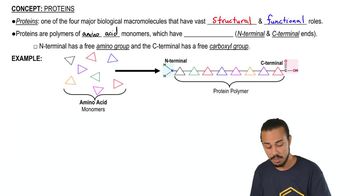
    The N-terminal refers to the end of a protein chain with a free amino group containing nitrogen. It is chemically distinct from the C-terminal end, which has a carboxyl group.
  • How are amino acids grouped together in biochemistry?

    Amino acids are grouped based on the properties of their unique R groups. These properties influence how amino acids interact and contribute to protein structure.
  • What structural feature distinguishes tertiary protein structure from secondary structure?

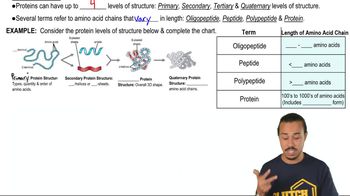
    Tertiary structure refers to the overall three-dimensional shape of a protein, including interactions between alpha helices and beta sheets. Secondary structure only involves the formation of alpha helices and beta pleated sheets.
  • What is the main difference between a polypeptide and a protein?

    A polypeptide is simply a chain of amino acids, while a protein is a polypeptide in its functional form. Proteins can contain one or more polypeptide chains and perform biological functions.
  • What happens to substrates when they bind to an enzyme's active site?

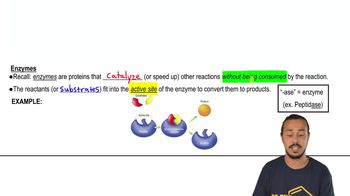
    Substrates fit perfectly into the enzyme's active site, forming an enzyme-substrate complex. The enzyme then converts the substrates into products without being consumed.
  • What suffix is commonly found in the names of enzymes?

    Enzyme names typically end with the suffix 'ase.' For example, peptidase is an enzyme that breaks down peptides.