Pearson+ LogoPearson+ Logo

Oxidative Phosphorylation 1 quiz #1 Flashcards

Back
Oxidative Phosphorylation 1 quiz #1
Control buttons has been changed to "navigation" mode.
1/40
  • Which process in cellular respiration produces the most ATP?

    Oxidative phosphorylation produces the most ATP in cellular respiration.
  • From which compartment do protons move through ATP synthase during oxidative phosphorylation?

    Protons move from the intermembrane space into the mitochondrial matrix through ATP synthase.
  • Which energy pathway yields the greatest amount of ATP?

    The electron transport chain and oxidative phosphorylation yield the greatest amount of ATP.
  • What is the role of ATP synthase in cellular respiration?

    ATP synthase synthesizes ATP from ADP and inorganic phosphate using the energy from the proton gradient.
  • Which type of respiration produces the most ATP energy?

    Aerobic respiration produces the most ATP energy.
  • Where is most of the ATP from metabolism produced?

    Most ATP is produced in the mitochondria during oxidative phosphorylation.
  • Which stage of cellular respiration produces the most ATP?

    Oxidative phosphorylation is the stage that produces the most ATP.
  • Which stage of glucose metabolism yields the most ATP?

    Oxidative phosphorylation yields the most ATP during glucose metabolism.
  • Which part of cellular respiration is responsible for producing the most ATP?

    The electron transport chain and oxidative phosphorylation are responsible for producing the most ATP.
  • What process produces the most ATP in cells?

    Oxidative phosphorylation produces the most ATP in cells.
  • What concentration gradient powers ATP synthase?

    The proton gradient across the mitochondrial membrane powers ATP synthase.
  • When NAD+ becomes NADH, what is happening to NAD+?

    NAD+ is being reduced to NADH.
  • What is the role of NADH in cellular respiration?

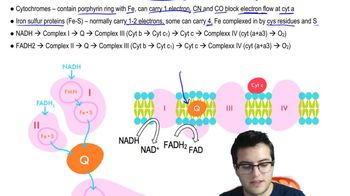
    NADH donates electrons to the electron transport chain, driving ATP production.
  • When NAD+ is ________, it becomes NADH.

    When NAD+ is reduced, it becomes NADH.
  • Which process produces the most ATP in metabolism?

    Oxidative phosphorylation produces the most ATP in metabolism.
  • What stage of cellular respiration produces the most ATP?

    Oxidative phosphorylation produces the most ATP.
  • Which process makes the most ATP in cells?

    Oxidative phosphorylation makes the most ATP in cells.
  • Which process produces the most ATP during cellular respiration?

    Oxidative phosphorylation produces the most ATP during cellular respiration.
  • What type of respiration produces the most ATP?

    Aerobic respiration produces the most ATP.
  • Cells produce ATP most efficiently in the presence of which molecule?

    Cells produce ATP most efficiently in the presence of oxygen.
  • What is the role of NADH in metabolism?

    NADH acts as an electron carrier, donating electrons to the electron transport chain for ATP production.
  • Does the electron transport chain require oxygen?

    Yes, the electron transport chain requires oxygen as the final electron acceptor.
  • What type of molecule is ATP synthase?

    ATP synthase is an enzyme and a protein complex.
  • Which stage produces the most ATP in cellular respiration?

    Oxidative phosphorylation produces the most ATP.
  • Which pathway produces the most ATP molecules?

    The electron transport chain and oxidative phosphorylation produce the most ATP molecules.
  • What is the function of the enzyme ATP synthase?

    ATP synthase catalyzes the formation of ATP from ADP and inorganic phosphate using the proton gradient.
  • Which process produces the most ATP per molecule of glucose?

    Oxidative phosphorylation produces the most ATP per molecule of glucose.
  • Which energy system produces the most ATP?

    The electron transport chain and oxidative phosphorylation system produce the most ATP.
  • Which metabolic pathway produces the most ATP?

    Oxidative phosphorylation is the metabolic pathway that produces the most ATP.
  • Which process creates the most ATP per glucose molecule metabolized?

    Oxidative phosphorylation creates the most ATP per glucose molecule metabolized.
  • Which energy pathway produces the most ATP?

    Oxidative phosphorylation produces the most ATP.
  • Which pathway generates the most ATP?

    The electron transport chain and oxidative phosphorylation generate the most ATP.
  • Which type of respiration produces the most ATP?

    Aerobic respiration produces the most ATP.
  • Which process creates energy used by ATP synthase?

    The electron transport chain creates the proton gradient used by ATP synthase.
  • Which process generates the most ATP in metabolism?

    Oxidative phosphorylation generates the most ATP in metabolism.
  • Which process yields the most ATP?

    Oxidative phosphorylation yields the most ATP.
  • Which process produces the most ATP in cells?

    Oxidative phosphorylation produces the most ATP in cells.
  • Which process creates the most ATP?

    Oxidative phosphorylation creates the most ATP.
  • Which stage of glucose metabolism produces the most ATP?

    Oxidative phosphorylation produces the most ATP during glucose metabolism.
  • Which process generates the most ATP in cellular respiration?

    Oxidative phosphorylation generates the most ATP in cellular respiration.