What does it mean when a cell is upregulated in terms of gene expression?
An upregulated cell has an increase in the expression of specific genes, leading to higher production of the corresponding gene products such as proteins and RNAs.
Approximately what percentage of genes are actively expressed in a differentiated cell?
In a differentiated cell, only a subset of genes is actively expressed—typically less than half—since most genes are selectively turned off except for housekeeping genes and those required for the cell's specialized function.
What process allows a cell to become specialized for a particular function?
Cell specialization is achieved through cell differentiation, which is directed by selective gene expression control, enabling cells to express only the genes necessary for their specific roles.
What is the role of multipotent hematopoietic stem cells in blood cell formation?
Multipotent hematopoietic stem cells can differentiate into all types of blood cells, including immune cells, platelets, and red blood cells. This differentiation is directed by selective gene expression unique to each cell type.
How can external signals influence gene expression in cells?
External signals such as hormones and environmental factors like temperature or sunlight can trigger cells to express specific genes. These signals may induce processes like the creation of sex cells or seasonal changes in cell function.
What is transcriptional control in the context of gene expression?
Transcriptional control determines whether a gene is transcribed into mRNA, often regulated by mechanisms like histone modification and DNA methylation. If transcription is blocked, the gene is not expressed.
How does differential RNA splicing contribute to gene expression diversity?
Differential RNA splicing allows cells to include or exclude specific exons in the mRNA, resulting in different protein products from the same gene. This process enables cells to produce proteins tailored to their specialized functions.
Why is the location of mRNA translation important for cellular function?
The site of mRNA translation, such as the cytoplasm or rough endoplasmic reticulum, affects where the resulting protein will function or be transported. This spatial control helps direct proteins to their correct cellular destinations.
What happens to gene expression if mRNA is degraded before translation?
If mRNA is degraded before translation, the corresponding protein product is not made, meaning the gene is not functionally expressed. This is an example of translational control in gene expression regulation.
How do histone modifications affect gene expression?
Histone modifications can alter the accessibility of DNA to transcription machinery, either promoting or inhibiting gene transcription. This epigenetic regulation is a key mechanism in controlling which genes are expressed in a cell.
 Back
Back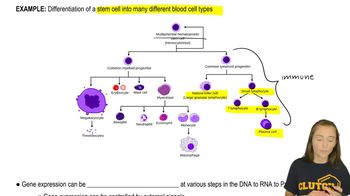
 11:23
11:23