What is the main function of the chloroplast in the biosphere?
The chloroplast supports life on Earth by producing oxygen and organic compounds through photosynthesis.
What are the three main components of the chloroplast's double membrane system?
The chloroplast's double membrane system consists of the outer membrane, inner membrane, and the intermembrane space. These components are similar to those found in mitochondria.
Where in the chloroplast does photosynthesis primarily take place?
Photosynthesis primarily occurs in the thylakoids within the chloroplast. Thylakoids are flat discs found in the stroma.
What is a granum in the context of chloroplast structure?
A granum is a stack of thylakoids within the chloroplast. Multiple thylakoids are organized together to form a granum.
How can thylakoids within a chloroplast be structurally connected?
Thylakoids can be connected together to form a single large compartment within the chloroplast. This connectivity allows for efficient photosynthetic processes.
What is the stroma in a chloroplast and what does it contain?
The stroma is the internal space of the chloroplast. It contains thylakoids and is the site where various metabolic reactions occur.
From what precursor do all plastids, including chloroplasts, originate?
All plastids originate from proplastids, which are undifferentiated organelles found in rapidly dividing plant cells. Proplastids can differentiate into various types of plastids.
Name two other types of plastids besides chloroplasts and their functions.
Chromoplasts contain light-absorbing pigments, while amyloplasts store starch. Both are differentiated forms of plastids.
What is the relationship between plastids and proplastids in plant cells?
Plastids are specialized organelles that develop from proplastids. Proplastids serve as the undifferentiated precursors to all plastid types.
Why is the chloroplast considered unique among plant organelles?
The chloroplast is unique because it belongs to the plastid family and is specialized for photosynthesis. Its structure and function distinguish it from other plastids.
 Back
Back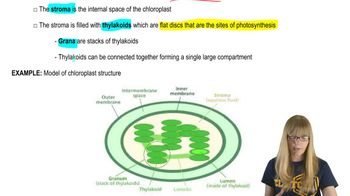
 03:11
03:11