Where in the cell does the Krebs cycle (Citric Acid Cycle) take place?
The Krebs cycle takes place in the mitochondria of the cell.
What is the specific organelle where the Citric Acid Cycle occurs?
The Citric Acid Cycle occurs in the mitochondria.
In which part of the cell does the Krebs cycle operate?
The Krebs cycle operates in the mitochondria.
What is the cellular location of the Citric Acid Cycle?
The Citric Acid Cycle is located in the mitochondria.
Where does the Krebs cycle occur within a eukaryotic cell?
Within a eukaryotic cell, the Krebs cycle occurs in the mitochondria.
Which organelle is responsible for hosting the reactions of the Citric Acid Cycle?
The mitochondria is responsible for hosting the reactions of the Citric Acid Cycle.
What is the site of the Krebs cycle in the cell?
The site of the Krebs cycle in the cell is the mitochondria.
What is the role of the pyruvate dehydrogenase complex in cellular respiration?
The pyruvate dehydrogenase complex converts pyruvate into Acetyl CoA, which is the starting molecule for the Citric Acid Cycle. This process also produces CO2 as a byproduct.
How many oxidation steps occur during one turn of the Citric Acid Cycle, and what is produced in these steps?
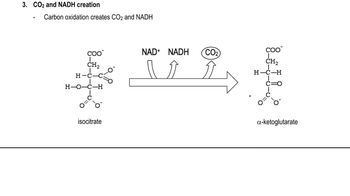
There are four oxidation steps in the Citric Acid Cycle. These steps produce NADH, FADH2, and CO2 as energy carriers and byproducts.
Why is the Citric Acid Cycle considered an aerobic process even though it does not directly use oxygen?
The Citric Acid Cycle is considered aerobic because it requires NAD+ regeneration, which depends on oxygen. Without oxygen, NAD+ cannot be regenerated, and the cycle cannot continue.
 Back
Back
 02:56
02:56