What two organelles are found only in a plant cell?
Chloroplasts and cell walls are found only in plant cells.
What is the function of nuclear pores in the nuclear envelope of eukaryotic cells?
Nuclear pores allow transport of molecules between the nucleus and the cytoplasm. This enables communication and exchange of materials necessary for cell function.
How do rough and smooth endoplasmic reticulum differ in appearance and function?
Rough ER appears uneven due to ribosomes and is involved in protein synthesis, while smooth ER lacks ribosomes and is responsible for lipid synthesis. Their structural differences reflect their specialized roles in the cell.
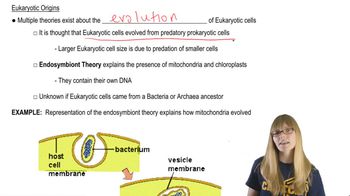
What unique feature do mitochondria and chloroplasts share that supports the endosymbiont theory?
Both mitochondria and chloroplasts contain their own DNA and ribosomes. This suggests they originated from independent prokaryotic cells engulfed by larger cells.
What is the main role of lysosomes in eukaryotic cells?
Lysosomes are responsible for intracellular digestion by breaking down cellular waste and macromolecules. They help maintain cellular health by removing unwanted materials.
How do microtubules contribute to eukaryotic cell structure and function?
Microtubules are hollow cylindrical proteins that provide motility, organization, and shape to the cell. They also serve as tracks for internal transport of vesicles and organelles.
Why is the separation of transcription and translation important in eukaryotic cells?
Transcription occurs in the nucleus and translation in the cytoplasm, allowing tight control over gene expression. This compartmentalization prevents unwanted protein synthesis.
What is the difference between cytosol and cytoplasm in eukaryotic cells?
Cytosol is the gel-like material outside organelles, while cytoplasm includes both cytosol and the contents inside organelles. This distinction is important for understanding cellular processes.
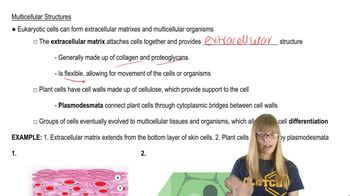
What structural feature allows plant cells to connect and communicate with each other?
Plasmodesmata are cytoplasmic bridges that form tunnels between plant cell walls. They enable direct communication and transport of materials between adjacent cells.
What is the primary function of the extracellular matrix (ECM) in animal cells?
The ECM attaches cells together and provides structural support while remaining flexible. This flexibility allows for movement and coordination of multicellular organisms.
 Back
Back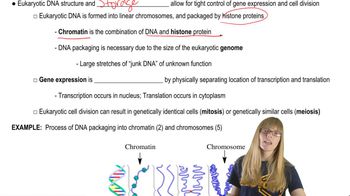
 03:05
03:05