What are cell surface markers involved in immune reactions, and what roles do they play in antigen presentation?
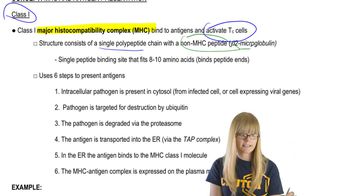
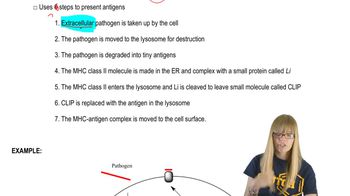
Cell surface markers involved in immune reactions include MHC class I and MHC class II molecules. MHC class I molecules present intracellular antigens to cytotoxic T cells, while MHC class II molecules present extracellular antigens to T helper and T regulatory cells. These markers are essential for activating specific immune responses by displaying antigen fragments on the cell surface.
Which types of cells function as antigen-presenting cells in the immune system?
Antigen-presenting cells (APCs) include cells that express MHC class II molecules, such as dendritic cells, macrophages, and B cells. These cells internalize extracellular pathogens, process them, and present antigen fragments on their surface to activate T helper and T regulatory cells.
Where are MHC molecules located on a cell?
MHC molecules are located on the cell surface (plasma membrane), where they display antigen fragments to T cells and facilitate immune activation.
What structural components make up the MHC class I molecule?
MHC class I consists of a single polypeptide chain attached to a Beta 2 microglobulin. Together, they form a peptide binding site for 8-10 amino acid antigen fragments.
Which cellular pathway is responsible for degrading intracellular pathogens for MHC class I presentation?
The ubiquitin-proteasome pathway degrades intracellular pathogens into small peptide fragments. These fragments are then transported into the ER for loading onto MHC class I molecules.
What is the role of the TAP complex in antigen presentation by MHC class I?
The TAP complex transports antigen fragments from the cytosol into the endoplasmic reticulum. This allows the fragments to bind to MHC class I molecules before surface expression.
How does the peptide binding site of MHC class II differ from that of MHC class I?
MHC class II has a longer peptide binding site that accommodates 12-20 amino acid sequences. In contrast, MHC class I binds shorter peptides of 8-10 amino acids.
What is the function of the CLIP protein in MHC class II antigen presentation?
CLIP temporarily occupies the peptide binding site of MHC class II in the lysosome. It is later replaced by the antigen fragment before the complex is expressed on the cell surface.
Where does degradation of extracellular pathogens occur for MHC class II presentation?
Degradation of extracellular pathogens for MHC class II presentation occurs in the lysosome. The resulting antigen fragments are then loaded onto MHC class II molecules.
Which types of T cells are activated by MHC class II molecules?
MHC class II molecules activate T helper and T regulatory cells. This is in contrast to MHC class I, which activates cytotoxic T cells.