Squamous cell carcinoma arises from which type of cells?
Squamous cell carcinoma arises from epithelial cells.
What is the difference between benign and malignant tumors?
Benign tumors remain confined to their original location, while malignant tumors invade surrounding tissues and can metastasize to distant organs. Malignant tumors are more dangerous due to their ability to spread.
Which scientific field studies the causes of cancer in human populations?
Epidemiology is the scientific field that studies diseases, including cancer, in human populations. It helps identify carcinogens and risk factors for cancer.
What percentage of cancers are associated with tobacco use?
Tobacco is associated with about 30% of all cancers. Eliminating tobacco could significantly reduce cancer incidence.
What is a proto-oncogene and how does it relate to cancer development?
A proto-oncogene is a normal gene that can become an oncogene if it acquires mutations. Once mutated, it promotes uncontrolled cell growth leading to cancer.
How do tumor suppressor genes contribute to cancer when mutated?
Tumor suppressor genes normally inhibit cell growth, but when mutated, they lose this function. This loss can result in unchecked cell division and tumor formation.
Why are tumor cells described as genetically unstable?
Tumor cells are genetically unstable because they accumulate mutations at a rapid rate. This instability contributes to their abnormal growth and progression.
What is contact inhibition and how is it altered in cancer cells?
Contact inhibition is the process where normal cells stop dividing when surrounded by other cells. Cancer cells lose contact inhibition and continue to divide even when crowded.
What role does angiogenesis play in tumor growth?
Angiogenesis is the formation of new blood vessels to supply nutrients and oxygen to tumors. This process supports the continued growth and survival of cancer cells.
How do defects in apoptosis contribute to tumor formation?
Defects in apoptosis prevent normal cell death, allowing cancer cells to survive and accumulate. This contributes to the growth and persistence of tumors.
 Back
Back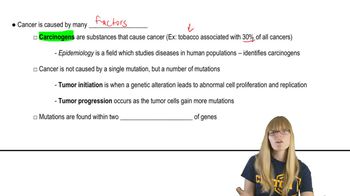
 08:30
08:30