Complex Numbers definitions Flashcards

Complex Numbers definitions
Control buttons has been changed to "navigation" mode.
1/14
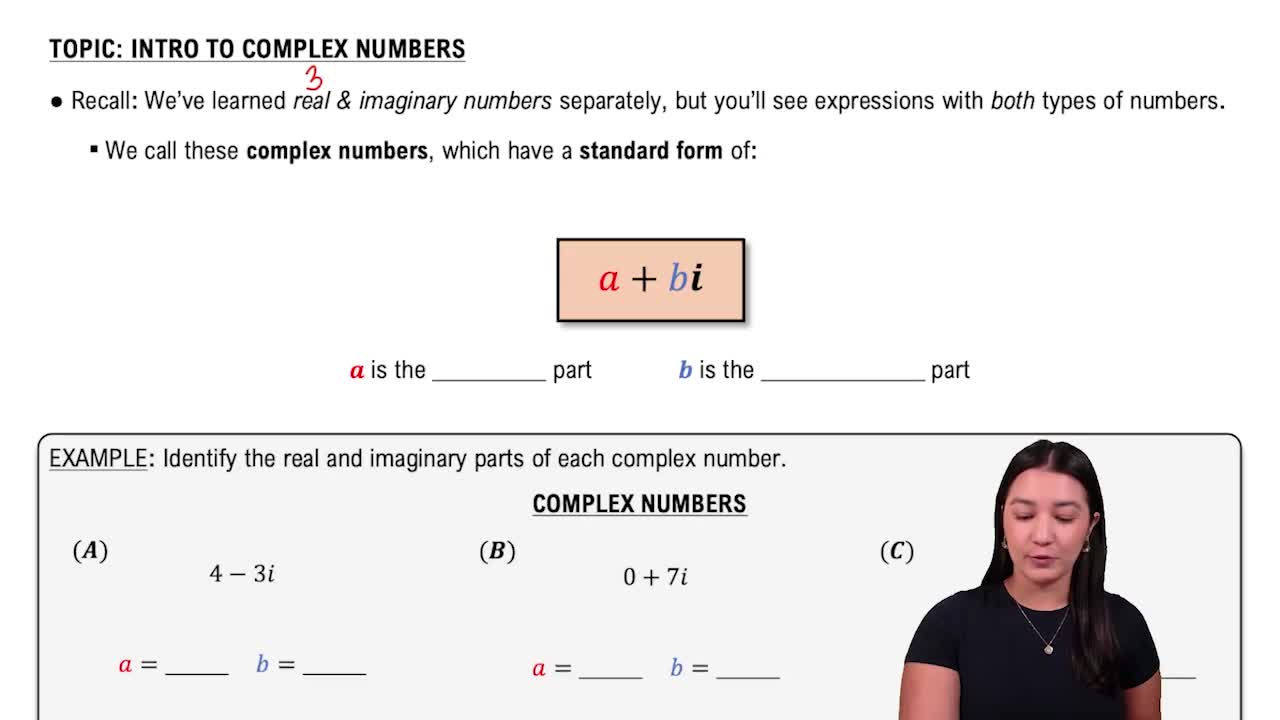
  • Complex Number
    An expression in the form a+bi, combining a real part and an imaginary part multiplied by the imaginary unit.
  • Real Part
    The component 'a' in a+bi, representing the value not multiplied by the imaginary unit.
  • Imaginary Part
    The coefficient 'b' in a+bi, representing the value multiplied by the imaginary unit.
  • Imaginary Unit
    A mathematical constant denoted as 'i', defined by the property that its square equals negative one.
  • Standard Form
    The arrangement of a complex number as a+bi, with the real part first and the imaginary part second.
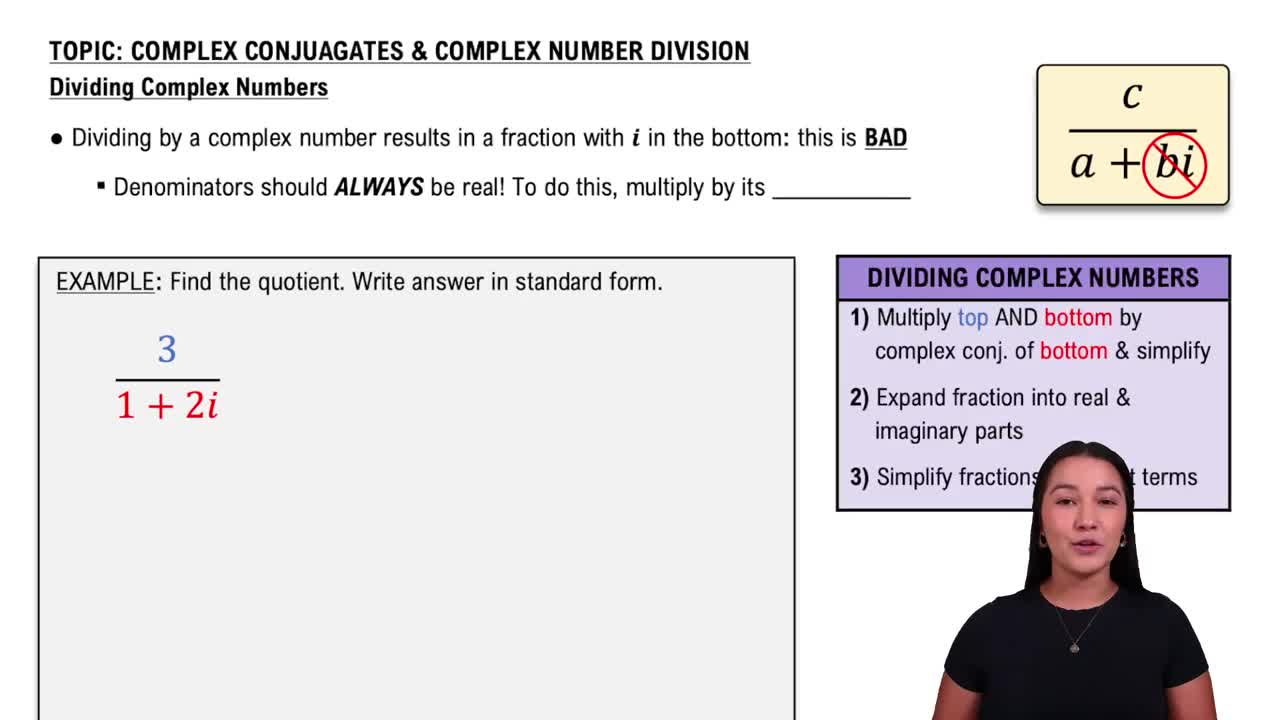
  • Complex Conjugate
    A related complex number formed by reversing the sign of the imaginary part in a+bi.
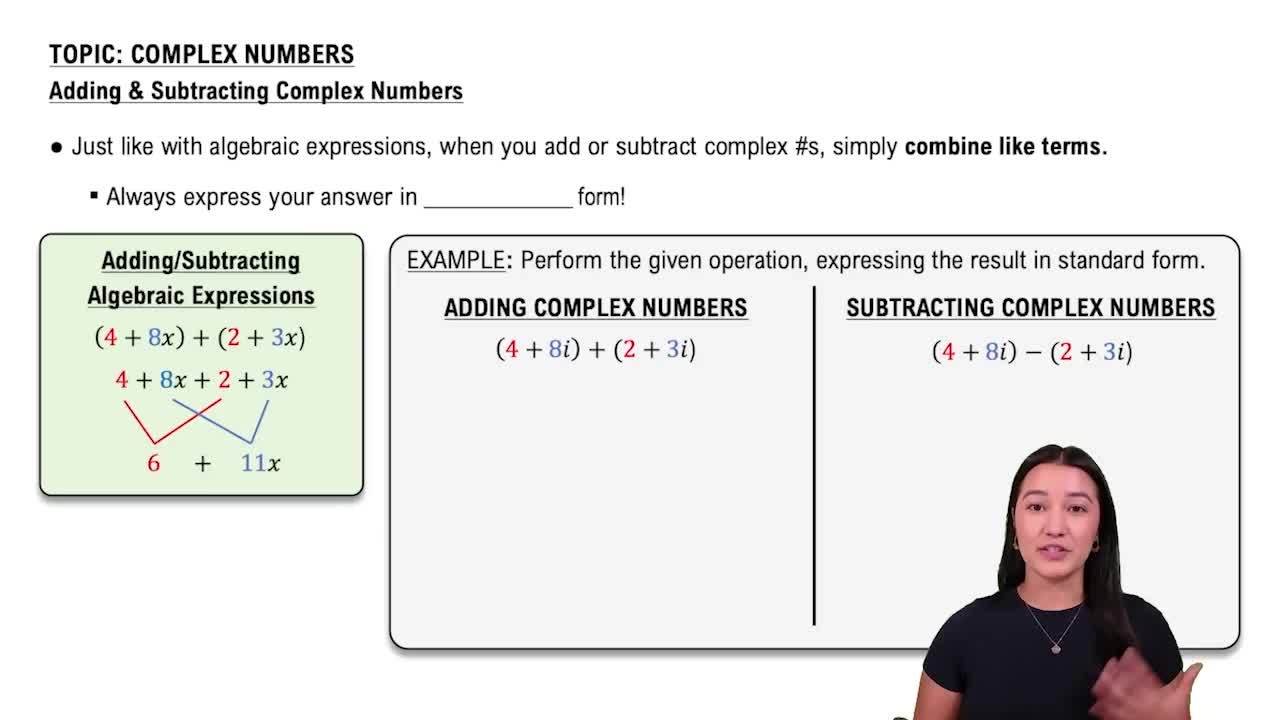
  • Addition
    An operation on complex numbers involving combining real parts and imaginary parts separately.
  • Subtraction
    An operation on complex numbers involving subtracting real parts and imaginary parts separately.
  • Multiplication
    An operation on complex numbers using distribution or FOIL, with simplification using i squared equals negative one.
  • Division
    A process involving multiplying numerator and denominator by the conjugate to eliminate the imaginary unit from the denominator.
  • FOIL Method
    A technique for multiplying two binomials, applied to complex numbers to expand expressions.
  • Like Terms
    Terms in a complex expression that share the same variable part, such as real parts or imaginary parts.
  • Quotient
    The result of dividing one complex number by another, often expressed in standard form.
  • a Squared Plus b Squared
    The sum obtained when multiplying a complex number by its conjugate, resulting in a real number.