 Back
College Algebra Homework Key Concepts Cheat Sheet
 02:16

Terms in this set (17)
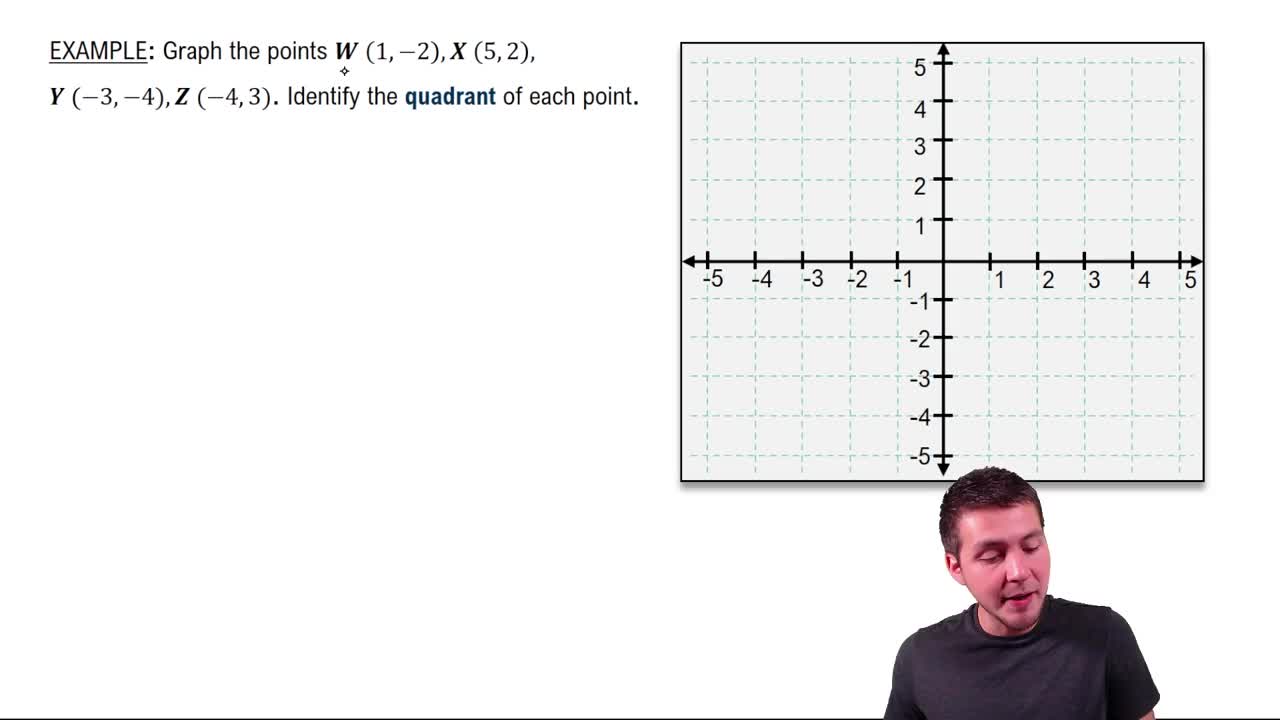
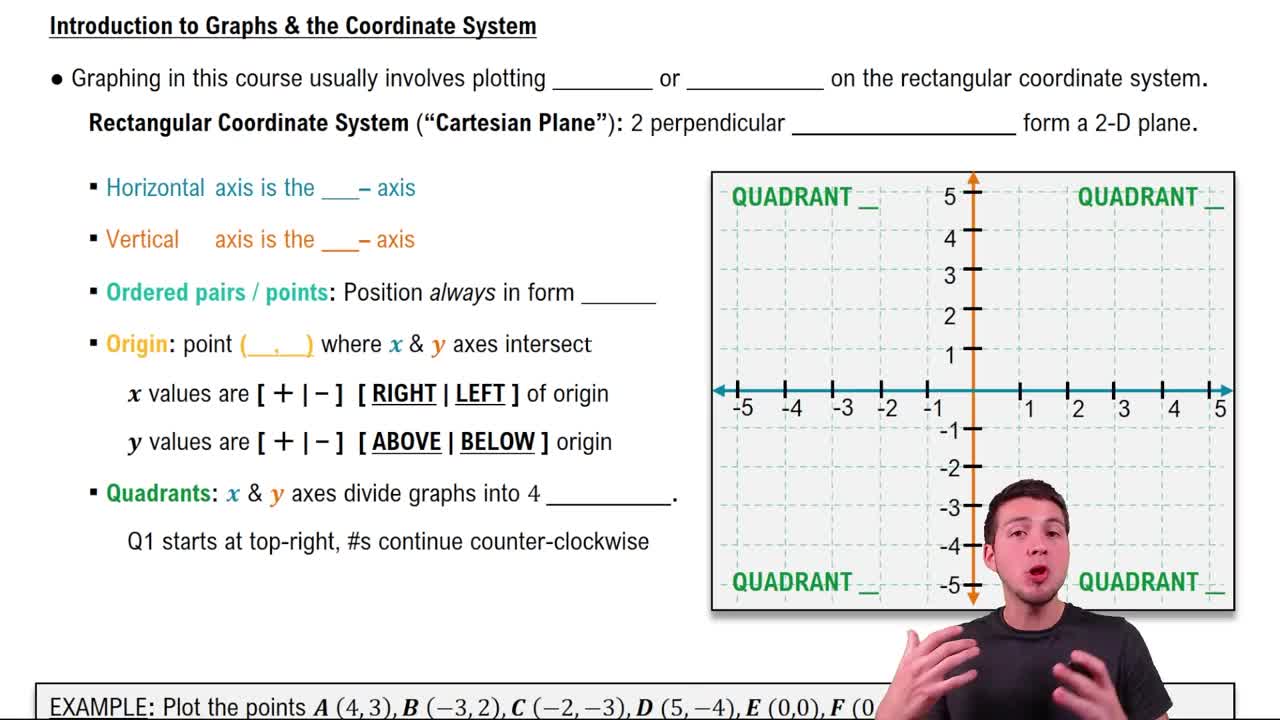
Graphs represent equations visually. Utilities include tools like graphing calculators to analyze functions and equations.
Linear equations have the form \(ax + b = 0\). Rational equations involve ratios of polynomials.
Use algebraic models to represent real-world problems and solve applications using equations and functions.
Complex numbers are numbers in the form \(a + bi\), where i is the imaginary unit with \(i^2 = -1\).
Quadratic equations have the form \(ax^2 + bx + c = 0\). Solutions can be found by factoring, completing the square, or the quadratic formula.
Includes polynomial, radical, exponential, and logarithmic equations, each requiring specific solving techniques.
Linear inequalities use <, >, ≤, ≥ to compare expressions. Absolute value inequalities involve expressions like \(|x| < a\) or \(|x| > a\).
A function assigns exactly one output to each input. Graphs show the relationship between input (x) and output (f(x)).
Includes domain, range, and behavior of functions such as increasing, decreasing, and symmetry.
Slope measures the steepness of a line: \(m = \frac{y_2 - y_1}{x_2 - x_1}\). Linear equations can be written in slope-intercept form \(y = mx + b\).
Includes parallel lines (equal slopes) and perpendicular lines (slopes are negative reciprocals).
Function graphs can be shifted, reflected, stretched, or compressed by modifying the function's equation.
Combination involves adding, subtracting, multiplying, or dividing functions. Composite functions are formed by applying one function to the result of another: \((f \circ g)(x) = f(g(x))\).
An inverse function reverses the effect of the original function, satisfying \(f(f^{-1}(x)) = x\).
Distance formula: \(d = \sqrt{(x_2 - x_1)^2 + (y_2 - y_1)^2}\). Midpoint formula: \(\left( \frac{x_1 + x_2}{2}, \frac{y_1 + y_2}{2} \right)\). Circle equation: \((x - h)^2 + (y - k)^2 = r^2\).
Solving two linear equations with two variables by substitution, elimination, or graphing to find the point of intersection.
Solving three linear equations with three variables using substitution or elimination to find the common solution.