Skip to main content
Financial Accounting
My Course
Learn
Exam Prep
AI Tutor
Study Guides
Flashcards
Explore
Try the app
My Course
Learn
Exam Prep
AI Tutor
Study Guides
Flashcards
Explore
Try the app
Back
Accounting Flow Intuition: BASE Formula definitions
You can tap to flip the card.
Base Formula
You can tap to flip the card.
👆
Base Formula
A calculation tool in accounting: beginning balance plus additions minus subtractions equals ending balance, used to track changes in any account.
Track progress
Control buttons has been changed to "navigation" mode.
1/15
Related flashcards
Related practice
Recommended videos
Accounting Flow Intuition: BASE Formula quiz #1
Accounting Flow Intuition: BASE Formula
10 Terms
Accounting Flow Intuition: BASE Formula
2. Transaction Analysis
10 problems
Topic
Journal Entries: Business Formation Example
2. Transaction Analysis
10 problems
Topic
2. Transaction Analysis
5 topics
15 problems
Chapter
Guided course
08:15
BASE Formula: Accounts Receivable
4759
views
98
rank
3
comments
Guided course
05:34
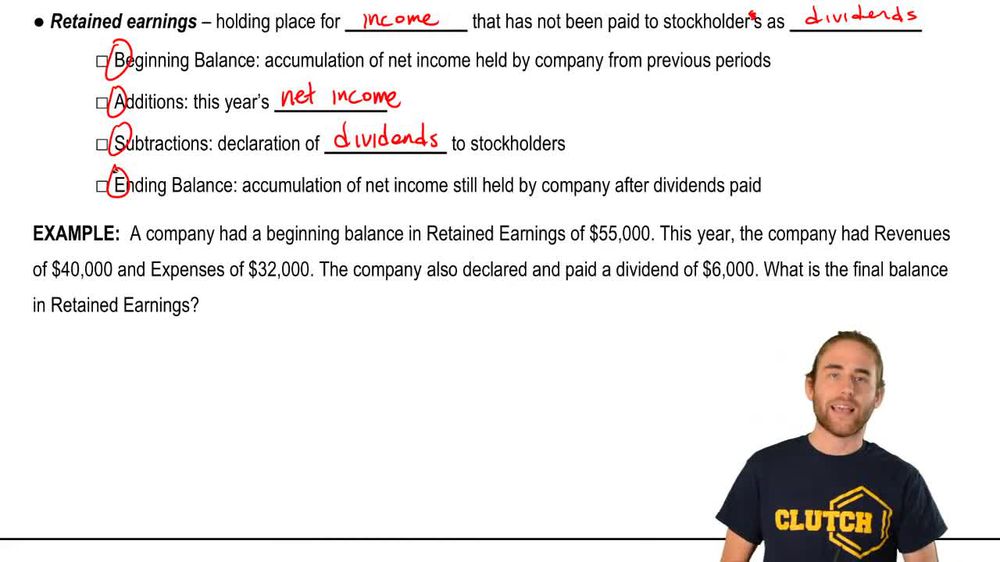
BASE Formula: Retained Earnings
3438
views
178
rank
Terms in this set (15)
Hide definitions
Base Formula
A calculation tool in accounting: beginning balance plus additions minus subtractions equals ending balance, used to track changes in any account.
Beginning Balance
The amount present in an account at the start of a period, reflecting what was carried over from previous periods.
Additions
Increases to an account during a period, such as credit sales for receivables or net income for retained earnings.
Subtractions
Reductions from an account, like cash collected from receivables or dividends paid from retained earnings.
Ending Balance
The final amount in an account after accounting for all additions and subtractions during a period.
Accounts Receivable
An asset account representing amounts owed by customers for sales made on credit, awaiting cash collection.
Credit Sales
Sales where payment is deferred, increasing accounts receivable rather than immediately increasing cash.
Cash Collected
Money received from customers, especially as payment for previously recorded accounts receivable.
Retained Earnings
An equity account holding accumulated net income not yet distributed to shareholders as dividends.
Net Income
The result of revenues minus expenses for a period, which increases retained earnings.
Dividends
Distributions of earnings to shareholders, reducing retained earnings but not considered an expense.
Equity Account
A category in accounting representing ownership interest, such as retained earnings, affected by net income and dividends.
Asset Account
A category in accounting for resources owned by a company, like accounts receivable, increased by additions and decreased by collections.
Algebra
A mathematical method used to solve for unknowns in the base formula when one variable is missing.
Income Statement
A financial report showing revenues and expenses, with the bottom line providing net income for the period.
 BackBack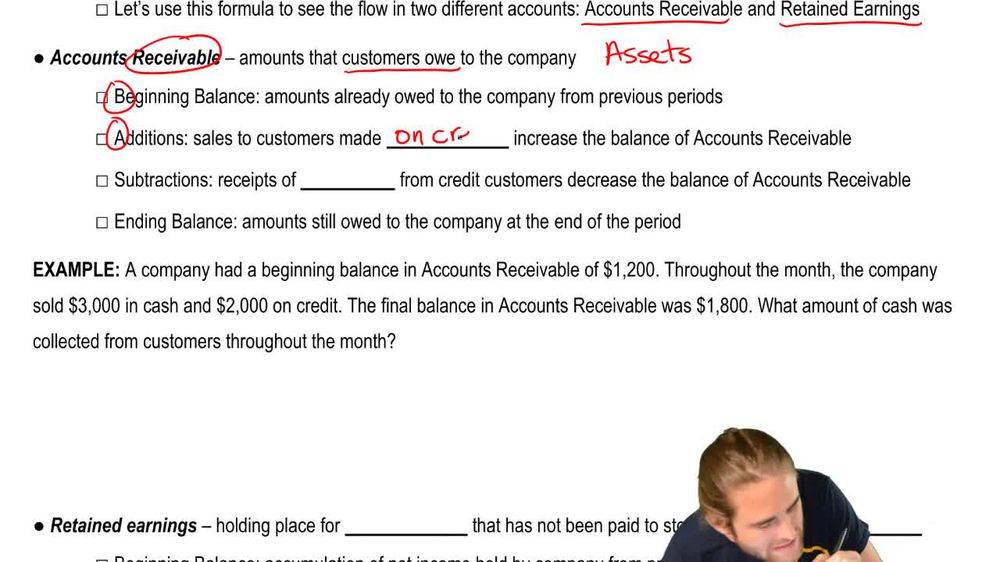
 08:15
08:15