Skip to main content
Financial Accounting
My Course
Learn
Exam Prep
AI Tutor
Study Guides
Flashcards
Explore
Try the app
My Course
Learn
Exam Prep
AI Tutor
Study Guides
Flashcards
Explore
Try the app
Back
Initial Cost of Long Lived Assets definitions
You can tap to flip the card.
Long-lived Assets
You can tap to flip the card.
👆
Long-lived Assets
Resources expected to provide economic benefits for multiple years, including land, land improvements, buildings, and machinery.
Track progress
Control buttons has been changed to "navigation" mode.
1/15
Related flashcards
Related practice
Recommended videos
Initial Cost of Long Lived Assets quiz
Initial Cost of Long Lived Assets
15 Terms
Initial Cost of Long Lived Assets
8. Long Lived Assets
10 problems
Topic
Basket (Lump-sum) Purchases
8. Long Lived Assets
10 problems
Topic
8. Long Lived Assets - Part 1 of 2
12 topics
13 problems
Chapter
8. Long Lived Assets - Part 2 of 2
1 topic
3 problems
Chapter
Guided course
11:36
Introduction to Plant Assets (Fixed Assets, PPE)
2170
views
54
rank
Guided course
02:00
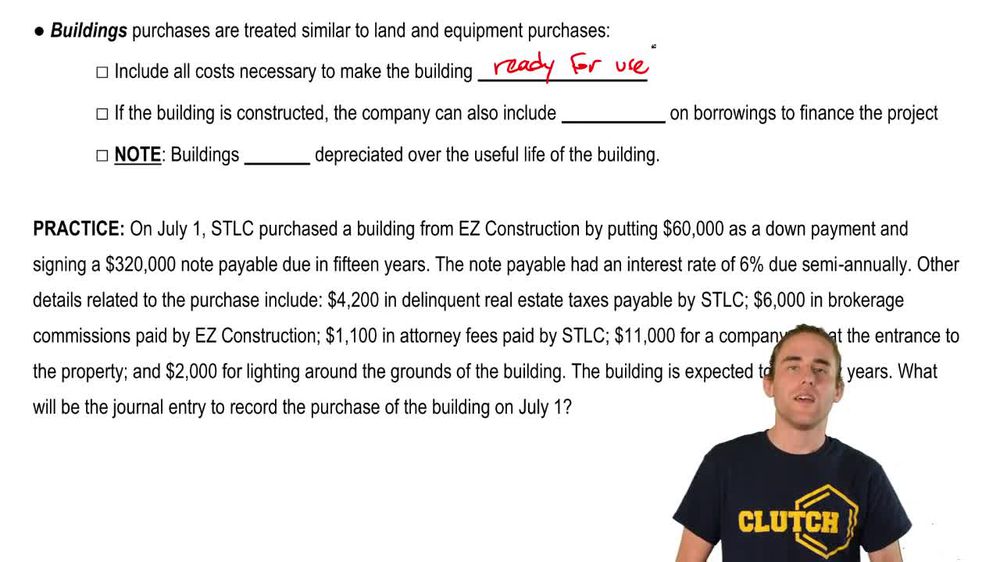
Initial Cost of Buildings
1014
views
9
rank
Guided course
09:26
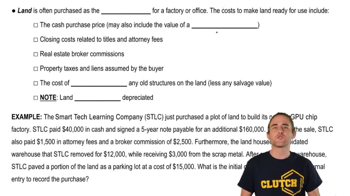
Initial Cost of Land
1290
views
29
rank
Terms in this set (15)
Hide definitions
Long-lived Assets
Resources expected to provide economic benefits for multiple years, including land, land improvements, buildings, and machinery.
Property, Plant, and Equipment
A balance sheet category encompassing tangible long-term assets used in business operations, often abbreviated as PPE.
Historical Cost Principle
Accounting guideline requiring assets to be recorded at the original purchase price plus necessary expenditures, not adjusted for market changes.
Land
A non-depreciable fixed asset representing the ground owned by a business, excluding any structures or improvements.
Land Improvements
Additions to land such as fences, parking lots, or lighting, which have limited useful lives and are subject to depreciation.
Leasehold Improvements
Alterations made to leased property by the lessee, depreciated over the shorter of the lease term or the improvement's useful life.
Buildings
Structures owned by a business, recorded at cost including purchase price and necessary expenditures, and depreciated over their useful lives.
Machinery
Tangible assets like equipment used in production, capitalized at all costs to make them operational, and depreciated over time.
Depreciation
Systematic allocation of an asset's cost over its useful life, reflecting wear and tear or obsolescence, except for land.
Useful Life
Estimated period over which a fixed asset is expected to contribute to business operations and generate revenue.
Accumulated Depreciation
Contra asset account representing the total depreciation expense charged against an asset since its acquisition.
Contra Asset
An account that offsets a related asset account on the balance sheet, such as accumulated depreciation reducing asset book value.
Necessary Expenditures
All costs required to acquire an asset and prepare it for intended use, including taxes, installation, and removal of old structures.
Salvage Value
Estimated residual value received from disposing of an asset or its components, deducted from initial cost calculations.
Capitalization
Process of recording expenditures as part of an asset's cost on the balance sheet, rather than expensing them immediately.
 BackBack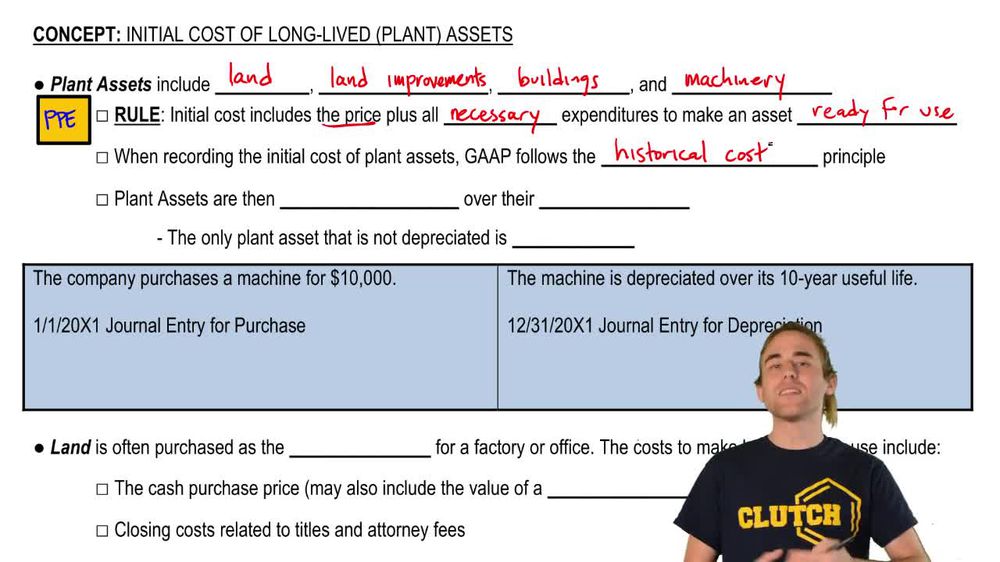
 11:36
11:36