Skip to main content
Financial Accounting
My Course
Learn
Exam Prep
AI Tutor
Study Guides
Flashcards
Explore
Try the app
My Course
Learn
Exam Prep
AI Tutor
Study Guides
Flashcards
Explore
Try the app
Back
Introduction to Bonds and Bond Characteristics definitions
You can tap to flip the card.
Bonds Payable
You can tap to flip the card.
👆
Bonds Payable
Liabilities representing amounts owed to multiple creditors, typically used to raise large sums by issuing debt securities to the public.
Track progress
Control buttons has been changed to "navigation" mode.
1/15
Related flashcards
Related practice
Recommended videos
Introduction to Bonds and Bond Characteristics quiz #1
Introduction to Bonds and Bond Characteristics
40 Terms
Introduction to Bonds and Bond Characteristics quiz #2
Introduction to Bonds and Bond Characteristics
29 Terms
Introduction to Bonds and Bond Characteristics
11. Long Term Liabilities
10 problems
Topic
Face Value Bonds
11. Long Term Liabilities
10 problems
Topic
11. Long Term Liabilities
8 topics
13 problems
Chapter
Guided course
06:26
Bond Payable Definitions
1794
views
50
rank
Guided course
09:08
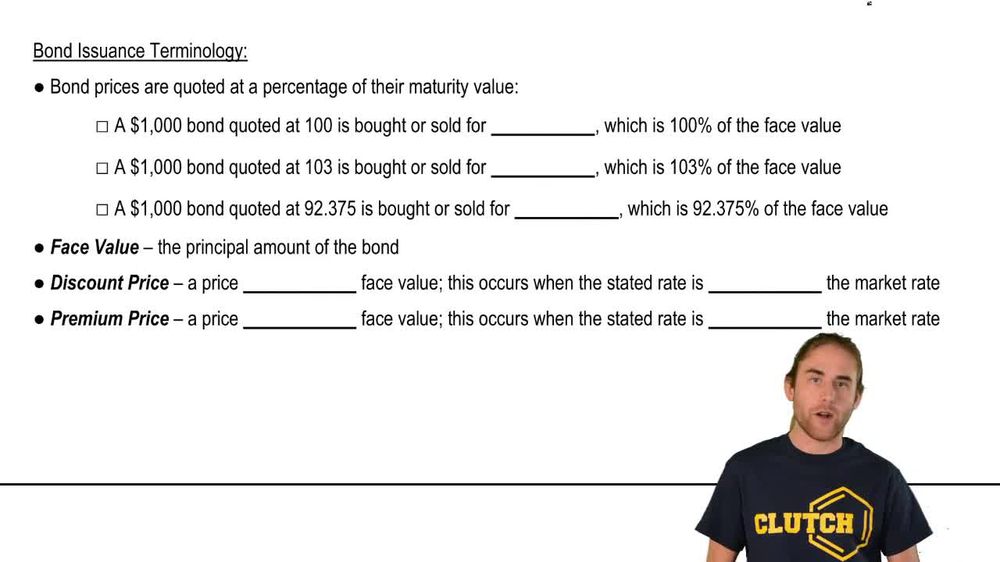
Bonds Payable:Bond Prices as a Percentage of Face Value
1268
views
73
rank
Terms in this set (15)
Hide definitions
Bonds Payable
Liabilities representing amounts owed to multiple creditors, typically used to raise large sums by issuing debt securities to the public.
Notes Payable
Liabilities involving a single lender, such as a bank, where funds are borrowed under a formal agreement.
Term Bonds
Debt instruments with a single maturity date, requiring repayment of the entire principal in one lump sum at the end.
Serial Bonds
Debt instruments with multiple maturity dates, allowing principal repayment in installments over time.
Secured Bonds
Debt securities backed by specific collateral, reducing risk for creditors by providing claim to assets if default occurs.
Debenture Bonds
Unsecured debt instruments relying solely on the issuer's creditworthiness, carrying higher risk due to lack of collateral.
Callable Bonds
Debt securities that can be redeemed by the issuer before maturity, often at a premium above face value.
Convertible Bonds
Debt instruments featuring a clause allowing holders to exchange them for shares of the issuing company's common stock.
Stated Rate
Interest percentage specified by the issuer, determining the cash interest paid to bondholders; also called coupon rate.
Market Rate
Prevailing interest percentage for similar bonds in the market, influencing the bond's selling price.
Face Value
Principal amount stated on a bond, representing the sum to be repaid to holders at maturity.
Discount
Situation where a bond sells below its face value, typically due to a stated rate lower than the market rate.
Premium
Situation where a bond sells above its face value, usually because the stated rate exceeds the market rate.
Coupon Rate
Alternative term for the stated rate, indicating the annual interest percentage paid to bondholders.
Maturity Date
Specified date when the principal amount of a bond becomes due and is repaid to the bondholder.
 BackBack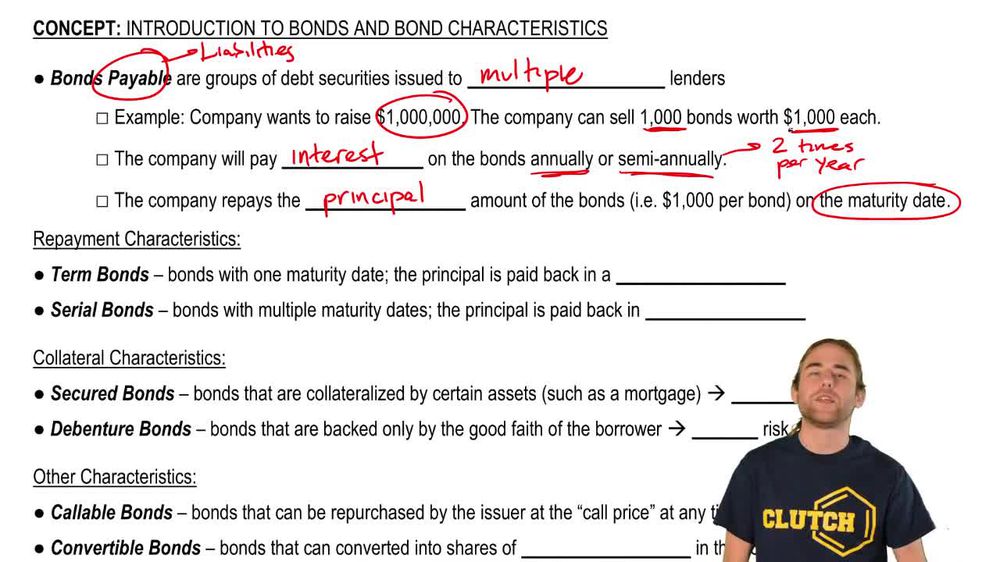
 06:26
06:26