Skip to main content
Financial Accounting
My Course
Learn
Exam Prep
AI Tutor
Study Guides
Flashcards
Explore
Try the app
My Course
Learn
Exam Prep
AI Tutor
Study Guides
Flashcards
Explore
Try the app
Back
Issuing Par Value Stock definitions
You can tap to flip the card.
Common Stock
You can tap to flip the card.
👆
Common Stock
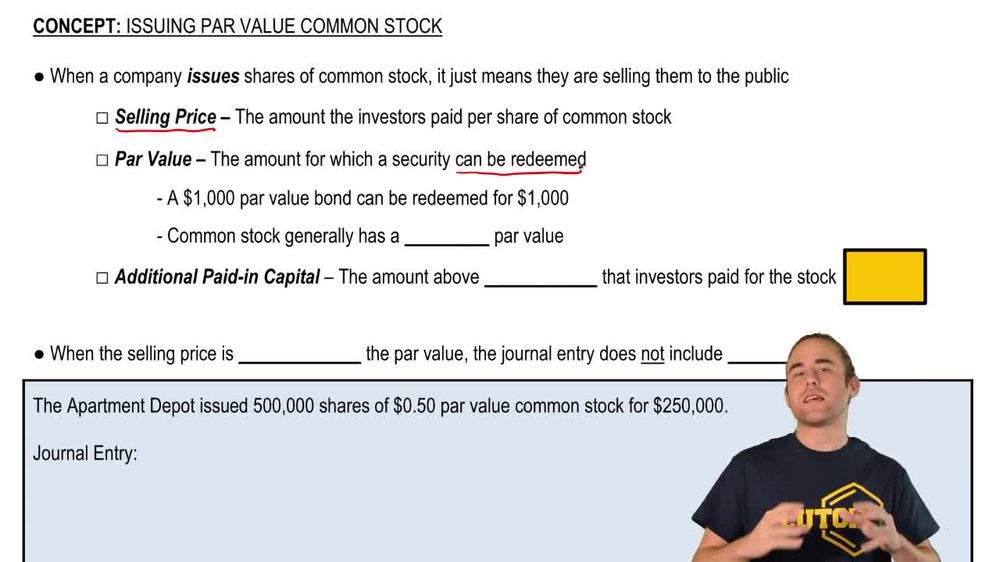
Equity account representing ownership in a company, credited with the par value of shares issued.
Track progress
Control buttons has been changed to "navigation" mode.
1/15
Related flashcards
Related practice
Recommended videos
Issuing Par Value Stock quiz
Issuing Par Value Stock
15 Terms
Issuing Par Value Stock
12. Stockholders' Equity
10 problems
Topic
Issuing No Par Value Stock
12. Stockholders' Equity
10 problems
Topic
12. Stockholders' Equity
12 topics
15 problems
Chapter
Guided course
05:26
Issuing Par Value Stock above Par Value
1079
views
47
rank
Guided course
03:10
Issuing Par Value Stock Definitions
1437
views
34
rank
Guided course
04:03
Issuing Par Value Stock at Par Value
1188
views
31
rank
Terms in this set (15)
Hide definitions
Common Stock
Equity account representing ownership in a company, credited with the par value of shares issued.
Par Value
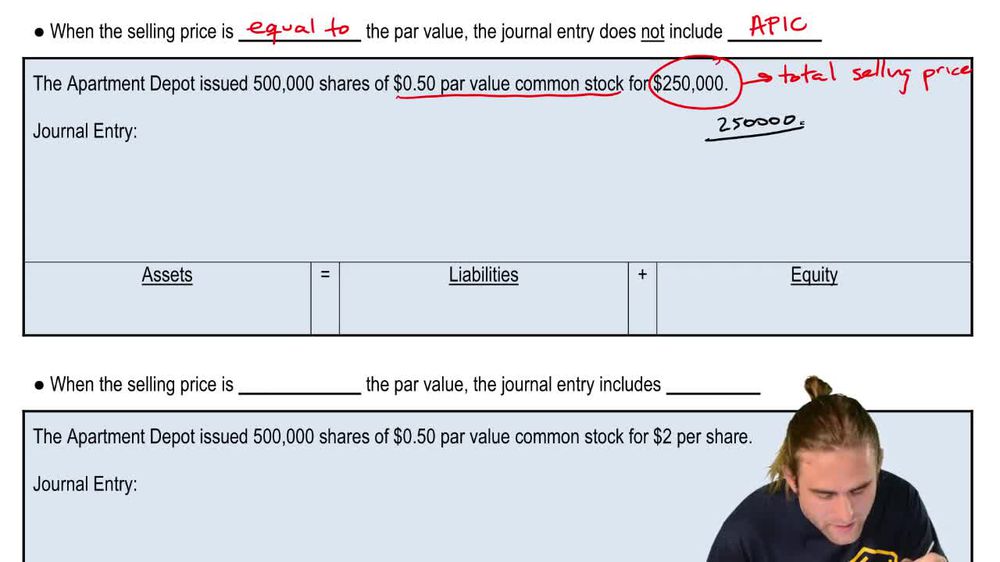
Nominal amount assigned to each share, typically low, used to allocate proceeds in equity accounts.
Additional Paid-In Capital
Equity account for amounts received from stock issuance above par value, often abbreviated as APIC.
Selling Price
Amount at which shares are sold to investors, can be stated per share or as a total for all shares.
Equity
Ownership interest in a company, increased by proceeds from issuing common stock.
Journal Entry
Accounting record showing debits and credits for transactions, such as stock issuance.
Cash
Asset account debited for the total amount received from selling stock.
Shares
Units of ownership in a corporation, each representing a portion of equity.
Credit Balance
Normal balance for equity accounts like common stock and APIC, increased by stock issuance.
Debit
Accounting entry that increases assets, such as cash received from stock sales.
Assets
Resources owned by a company, increased by cash from issuing stock.
Liabilities
Obligations of a company, unaffected directly by stock issuance but part of the accounting equation.
Accounting Equation
Fundamental relationship: assets equal liabilities plus equity, maintained during stock issuance.
Paid-In Capital in Excess of Par
Alternative term for APIC, representing amounts received above par value for issued shares.
Ownership
Stake in a company acquired by purchasing common stock, reflected in equity accounts.
 BackBack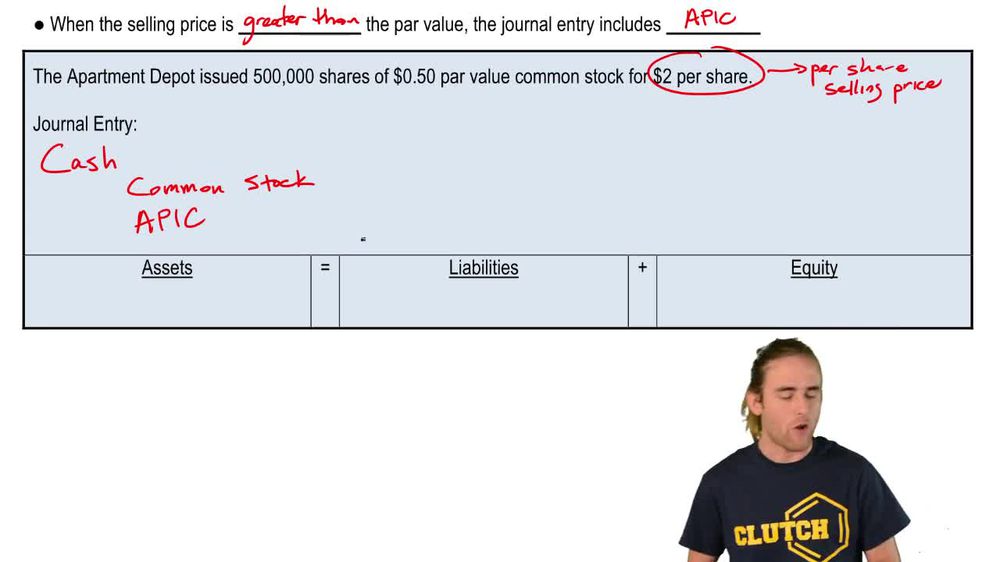
 05:26
05:26