Skip to main content
Financial Accounting
My Course
Learn
Exam Prep
AI Tutor
Study Guides
Flashcards
Explore
Try the app
My Course
Learn
Exam Prep
AI Tutor
Study Guides
Flashcards
Explore
Try the app
Back
Retirement of Plant Assets (No Proceeds) definitions
You can tap to flip the card.
Plant Asset
You can tap to flip the card.
👆
Plant Asset
Long-term tangible resource used in operations, such as equipment or machinery, subject to depreciation over its useful life.
Track progress
Control buttons has been changed to "navigation" mode.
1/15
Related flashcards
Related practice
Recommended videos
Retirement of Plant Assets (No Proceeds) quiz #1
Retirement of Plant Assets (No Proceeds)
10 Terms
Retirement of Plant Assets (No Proceeds)
8. Long Lived Assets
10 problems
Topic
Sale of Plant Assets
8. Long Lived Assets
10 problems
Topic
8. Long Lived Assets - Part 1 of 2
12 topics
13 problems
Chapter
8. Long Lived Assets - Part 2 of 2
1 topic
3 problems
Chapter
Guided course
05:50
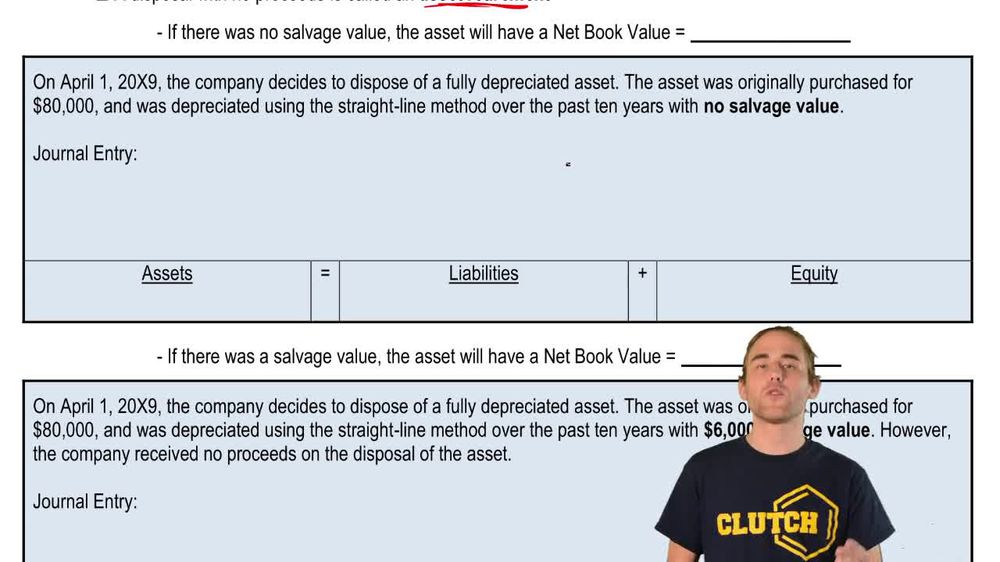
Retirement of Fixed Assets (with Salvage Value)
783
views
9
rank
Guided course
05:34
Retirement of Fixed Assets (No Salvage Value)
821
views
19
rank
Terms in this set (15)
Hide definitions
Plant Asset
Long-term tangible resource used in operations, such as equipment or machinery, subject to depreciation over its useful life.
Depreciation
Systematic allocation of an asset's cost over its estimated useful life, reflecting wear, usage, or obsolescence.
Accumulated Depreciation
Total amount of depreciation expense recorded against an asset since its acquisition, shown as a contra-asset on the balance sheet.
Net Book Value
Asset's original cost minus accumulated depreciation, representing its carrying amount on the books at a given time.
Salvage Value
Estimated residual amount expected to be recovered at the end of an asset's useful life, after full depreciation.
Useful Life
Estimated period over which an asset is expected to be productive and contribute to company operations.
Straight Line Method
Depreciation approach allocating equal expense amounts to each year of an asset's useful life.
Disposal
Process of removing an asset from company records, typically when it is no longer in use or has no future economic benefit.
Retirement
Permanent removal of a plant asset from service and the accounting records, often with no proceeds received.
Loss on Disposal
Amount recorded when an asset's net book value exceeds any proceeds received, reducing net income and equity.
Equipment Account
Ledger account tracking the historical cost of machinery or other plant assets owned by a company.
Journal Entry
Formal accounting record documenting the removal of an asset and related accounts during disposal or retirement.
Contra Account
Account used to offset a related asset account, such as accumulated depreciation reducing the equipment account balance.
Income Statement
Financial report where losses from asset disposals are recorded, impacting net income and ultimately equity.
Equity
Residual interest in company assets after liabilities, affected by losses recognized during asset retirement.
 BackBack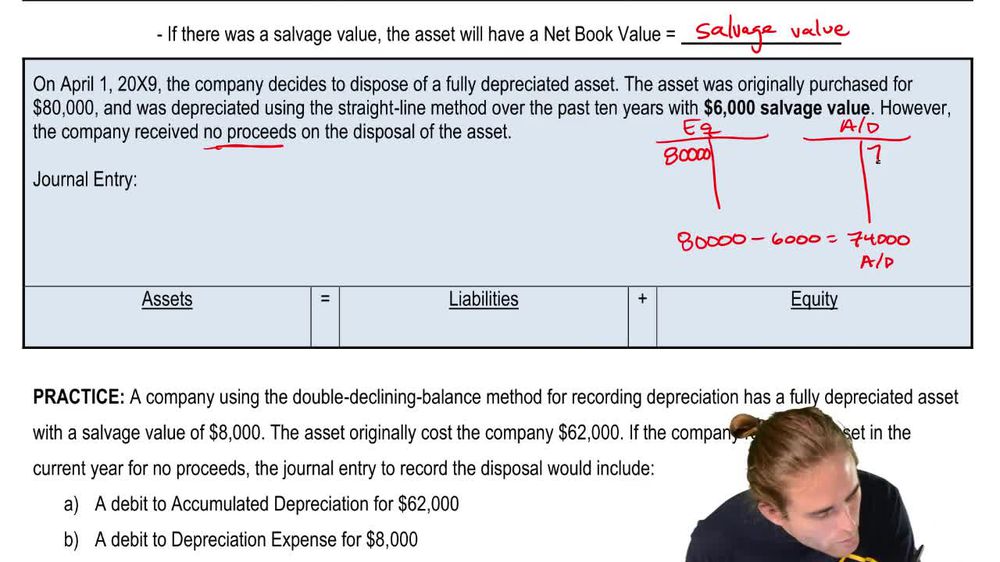
 05:50
05:50