Types of Receivables definitions Flashcards
Types of Receivables definitions
You can tap to flip the card.
Control buttons has been changed to "navigation" mode.
1/13
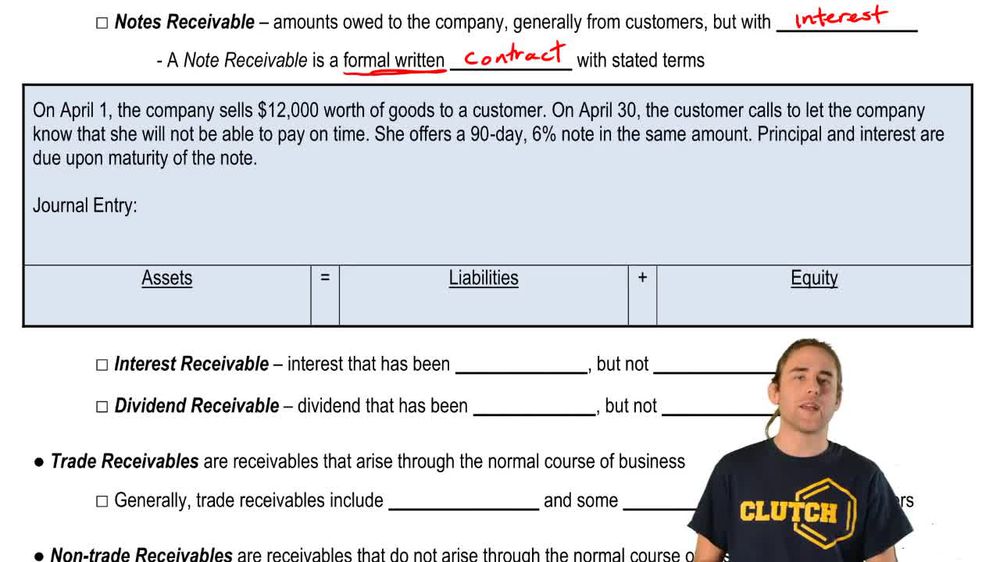
ReceivablesAssets representing amounts owed to a company, typically arising from sales, loans, or other transactions where payment is expected in the future.Accounts ReceivableAmounts owed by customers from day-to-day sales, usually expected to be collected within a short period, such as one to three months.Notes ReceivableFormal written promises for amounts to be received, including interest, often with longer payment terms and a specified maturity date.Interest ReceivableEarned interest not yet collected in cash, typically arising from notes or loans where the interest has accrued but payment is pending.Dividend ReceivableDeclared dividends owed to a company as a shareholder, where payment has been announced but not yet received.Trade ReceivablesAmounts due from customers in the normal course of business, including accounts receivable and certain notes receivable.Non-Trade ReceivablesAmounts owed to a company not related to its main business activities, such as employee advances or loans from surplus cash.Asset AccountA ledger category representing resources owned by a company, such as receivables, that provide future economic benefits.PrincipalThe original amount of money loaned or owed, excluding any interest, especially in the context of notes receivable.Maturity DateThe specific date when the full amount of a note, including principal and interest, is due to be paid.Written ContractA formal document outlining the terms of a note receivable, including payment amount, interest rate, and due date.RevenueIncome earned from selling goods or services, often recognized when a sale is made on account, increasing equity.EquityThe residual interest in the assets of a company after deducting liabilities, increased by earned revenue.