Skip to main content
Financial Accounting
My Course
Learn
Exam Prep
AI Tutor
Study Guides
Flashcards
Explore
Try the app
My Course
Learn
Exam Prep
AI Tutor
Study Guides
Flashcards
Explore
Try the app
Back
Vertical Analysis definitions
You can tap to flip the card.
Vertical Analysis
You can tap to flip the card.
👆
Vertical Analysis
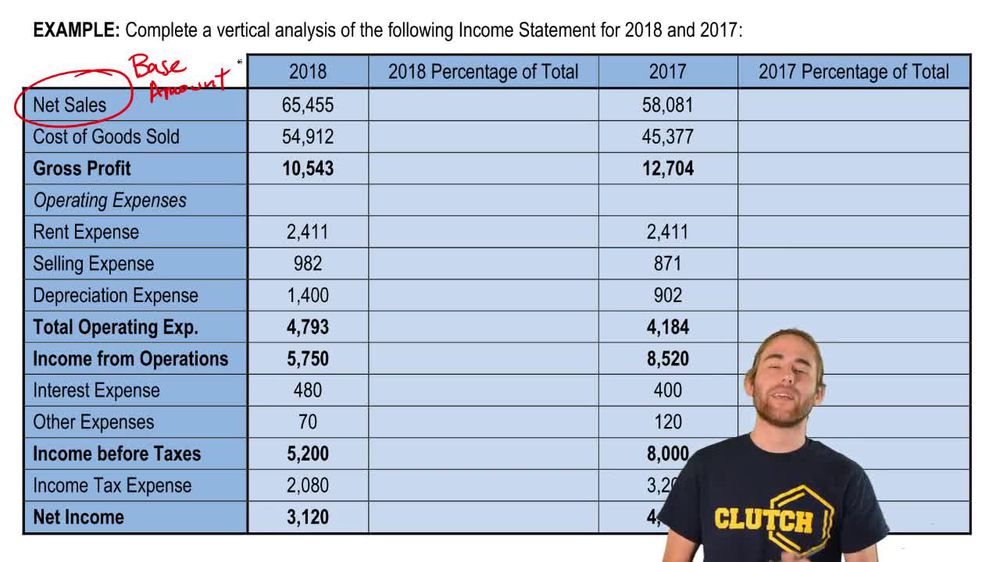
Financial statement evaluation method expressing each item as a percentage of a base amount within the same period.
Track progress
Control buttons has been changed to "navigation" mode.
1/15
Related flashcards
Related practice
Recommended videos
Vertical Analysis quiz #1
Vertical Analysis
11 Terms
Vertical Analysis
14. Financial Statement Analysis
10 problems
Topic
Common-sized Statements
14. Financial Statement Analysis
10 problems
Topic
14. Financial Statement Analysis
15 topics
15 problems
Chapter
Guided course
04:48
Vertical Analysis
795
views
14
rank
Guided course
08:09
Vertical Analysis
1253
views
23
rank
Terms in this set (15)
Hide definitions
Vertical Analysis
Financial statement evaluation method expressing each item as a percentage of a base amount within the same period.
Base Amount
Reference figure used as the denominator in percentage calculations for financial statement analysis.
Income Statement
Financial report summarizing revenues and expenses to show net income over a specific period.
Net Sales
Total sales revenue after deducting returns, allowances, and discounts, serving as the base for income statement analysis.
Balance Sheet
Financial statement presenting a company's assets, liabilities, and equity at a specific point in time.
Total Assets
Sum of all resources owned by a company, used as a base for vertical analysis on the balance sheet.
Total Liabilities and Equity
Combined value of obligations and owners' claims, equaling total assets on the balance sheet.
Cost of Goods Sold
Direct costs attributable to the production of goods sold, often a major percentage of net sales.
Gross Profit
Difference between net sales and cost of goods sold, representing earnings before operating expenses.
Operating Expenses
Costs incurred through normal business operations, such as selling and administrative expenses.
Depreciation Expense
Allocation of the cost of tangible assets over their useful lives, reducing taxable income.
Income from Operations
Earnings generated from core business activities after deducting operating expenses from gross profit.
Interest Expense
Cost incurred from borrowing funds, shown as a percentage of net sales in vertical analysis.
Income Tax Expense
Amount owed to tax authorities based on taxable income, calculated as a percentage of net sales.
Net Income
Final profit remaining after all expenses, taxes, and costs are deducted from total revenue.
 BackBack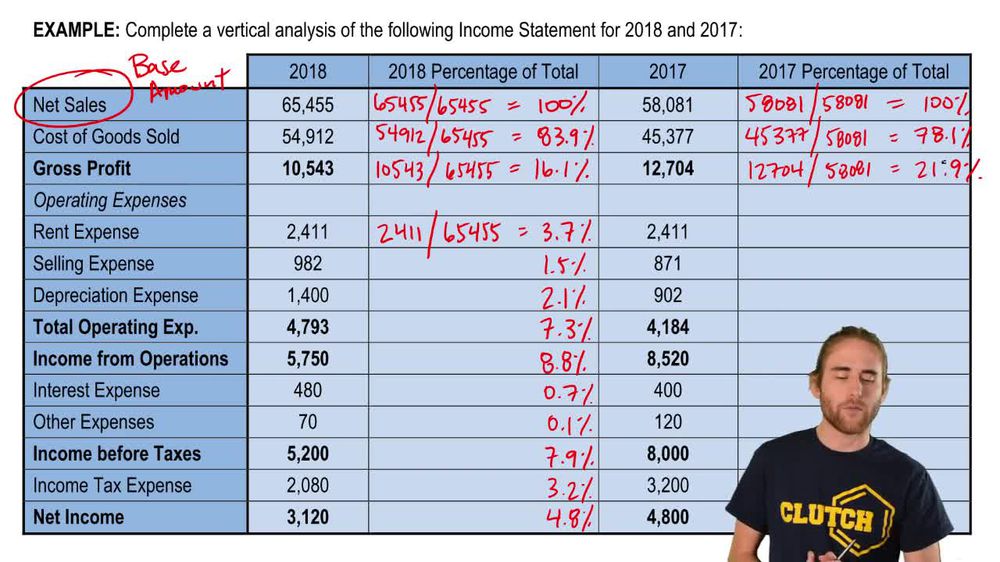
 04:48
04:48