In scientific notation, what is the result of a division operation called, and how is it determined?
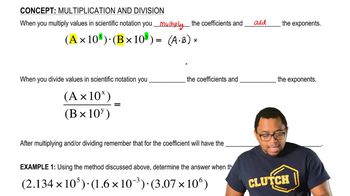
The result of a division operation in scientific notation is called the quotient. It is determined by dividing the coefficients and subtracting the exponents: (A × 10^x) ÷ (B × 10^y) = (A ÷ B) × 10^(x−y). The final answer should have the least number of significant figures from the coefficients used.
What must you do to the exponents when multiplying numbers in scientific notation?
You add the exponents together when multiplying numbers in scientific notation. This is done after multiplying the coefficients.
Why is it important to adjust the coefficient to be between one and less than ten in scientific notation?
The coefficient must be between one and less than ten to ensure the number is in proper scientific notation. If you move the decimal, you must adjust the exponent accordingly.
How do you determine the number of significant figures in your final answer when multiplying or dividing in scientific notation?
The final answer should have the least number of significant figures from any of the coefficients used in the calculation. This rule ensures consistency with measurement precision.
What should you do if your calculated coefficient is not between one and less than ten after performing operations?
You should move the decimal point to adjust the coefficient into the correct range. Then, increase or decrease the exponent to compensate for the decimal movement.
When entering scientific notation calculations into a calculator, what is a recommended practice to avoid errors?
You should put parentheses around each number in scientific notation before multiplying or dividing. This helps the calculator interpret the operations correctly.
What happens to the exponent if you make the coefficient smaller when adjusting scientific notation?
If you make the coefficient smaller, you must increase the exponent by the same number of decimal places moved. This keeps the value of the number unchanged.
How do you count significant figures in a coefficient with a decimal point?
Start counting from the first nonzero digit and include all digits until the end. This method ensures you count all significant figures correctly.
What is the rule for handling exponents when both multiplication and division are present in a scientific notation problem?
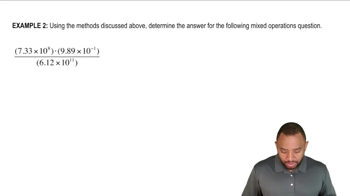
Add exponents for multiplication and subtract exponents for division, following the order of operations. This applies even in mixed operations.
If you multiply three coefficients in scientific notation and get a product greater than ten, what must you do before writing the final answer?
You must adjust the coefficient to be between one and less than ten by moving the decimal point. Then, increase the exponent by the number of places the decimal was moved.
 Back
Back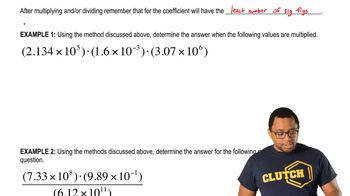
 02:34
02:34