Back

Solubility: Temperature Effect definitions

Control buttons has been changed to "navigation" mode.
1/14
  • Solubility

    Amount of solute that can be dissolved in a solvent, often measured in moles per liter, indicating solution capacity.
  • Concentration

    Measurement of how much solute is present in a given volume of solution, interchangeable with solubility.
  • Molarity

    Unit expressing moles of solute per liter of solution, commonly used to quantify solution strength.
  • Saturated Solution

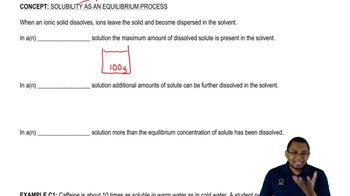
    Mixture where the solvent contains the maximum possible dissolved solute; excess solute remains undissolved.
  • Unsaturated Solution

    Mixture where additional solute can still dissolve; has not reached its dissolving limit.
  • Supersaturated Solution

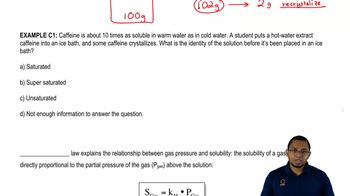
    Unstable mixture containing more dissolved solute than normally possible, achieved by heating and prone to precipitation.
  • Solute

    Substance being dissolved in a solvent to form a solution, such as salt in water.
  • Solvent

    Medium, often a liquid, in which a solute dissolves to form a solution, like water in saltwater.
  • Precipitate

    Solid formed when excess solute separates from a supersaturated solution, often after cooling.
  • Equilibrium Concentration

    Maximum stable amount of solute that can dissolve in a solvent at a given temperature.
  • Recrystallization

    Process where dissolved solute reforms as solid crystals, typically after a supersaturated solution cools.
  • Threshold

    Limit beyond which no additional solute can dissolve in a solvent under given conditions.
  • Stability

    Tendency of a solution to maintain its dissolved state without forming precipitate or changing composition.
  • Heat

    Energy input required to increase solubility and create a supersaturated solution.