 Indietro
Anatomy & Physiology: Anatomical Terms and Body Organization
 05:04

Termini in questo insieme (20)
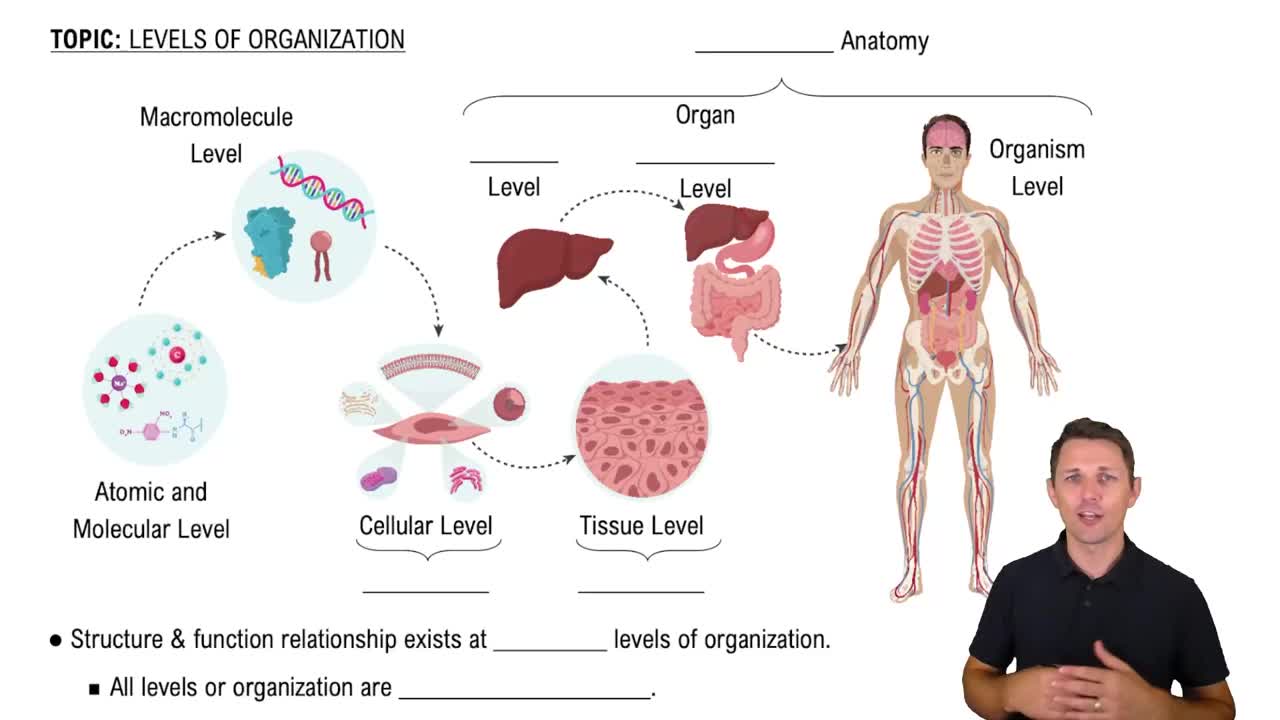
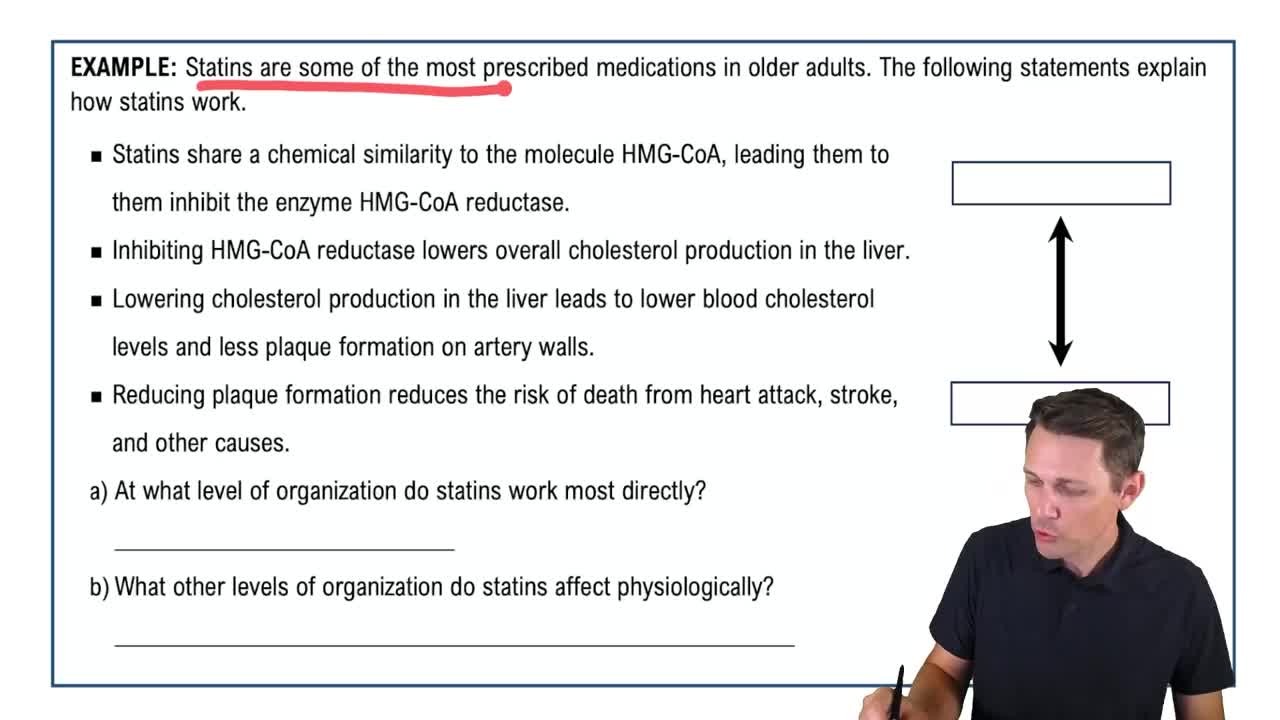
The levels include chemical, cellular, tissue, organ, organ system, and organism levels.
Body standing upright, ventral side facing you, palms up, with right and left referring to the organism's perspective.
Superior means toward the head or upper part of a structure.
Inferior means away from the head or toward the lower part of a structure.
Anterior means toward the front or belly side of the body.
Posterior means toward the back or spine side of the body.
Medial means toward the midline of the body; Lateral means away from the midline.
Proximal means closer to the point of attachment; Distal means farther from the point of attachment.
Superficial means toward or on the surface; Deep means away from the surface, internal.
Axial refers to the head, neck, and trunk; Appendicular refers to the limbs or appendages.
Sagittal, Frontal (coronal), Transverse (horizontal), and Oblique planes.
A vertical plane dividing the body into right and left parts; midsagittal divides equally.
A vertical plane dividing the body into anterior (front) and posterior (back) parts.
A horizontal plane dividing the body into superior (upper) and inferior (lower) parts.
The cranial cavity houses the brain; the vertebral (spinal) cavity houses the spinal cord.
The thoracic cavity (pleural cavities for lungs, mediastinum with pericardial cavity for heart) and the abdominopelvic cavity (abdominal and pelvic cavities).
The serous membrane: pleura lines thoracic cavity; peritoneum lines abdominopelvic cavity.
Right upper, left upper, right lower, and left lower quadrants used to locate organs.
Right and left hypochondriac, epigastric, right and left lumbar, umbilical, right and left iliac (inguinal), and hypogastric (pubic) regions.
Visceral membranes cover organs; parietal membranes line the body cavity walls.