 Indietro
Anatomy & Physiology: Anatomical Terms, Body Planes, and Cavities
 02:40

Termini in questo insieme (23)
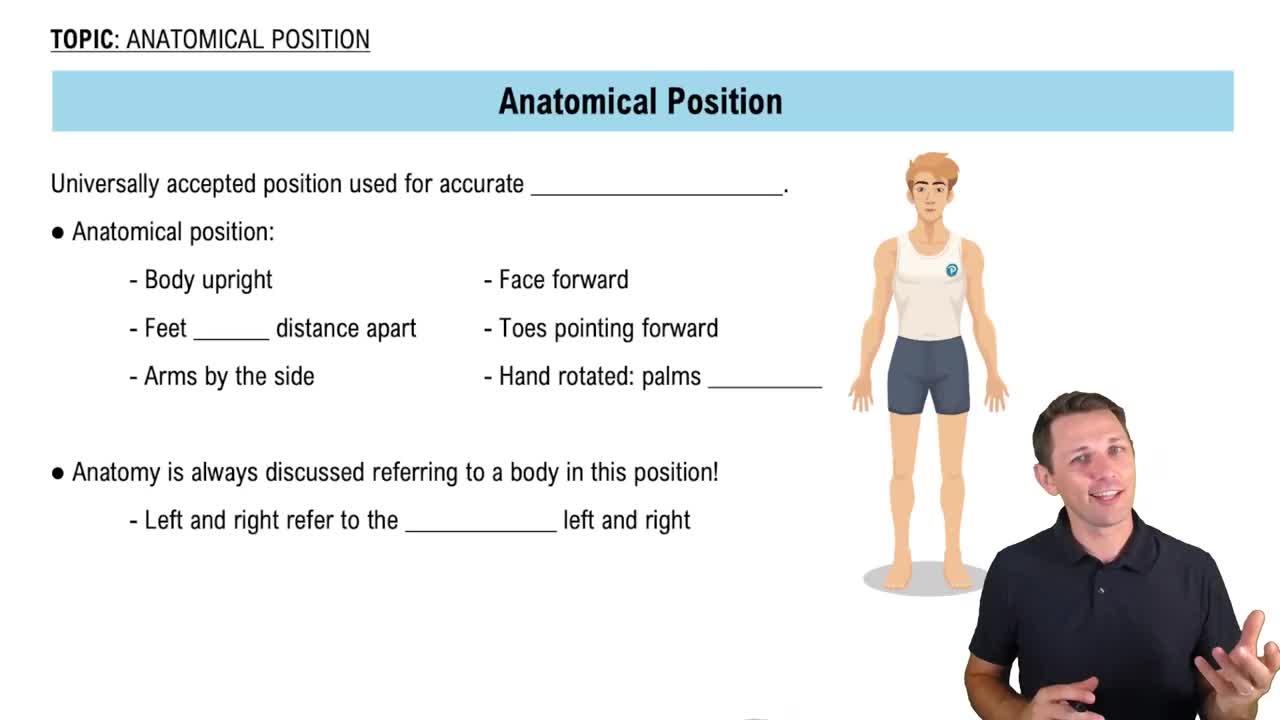
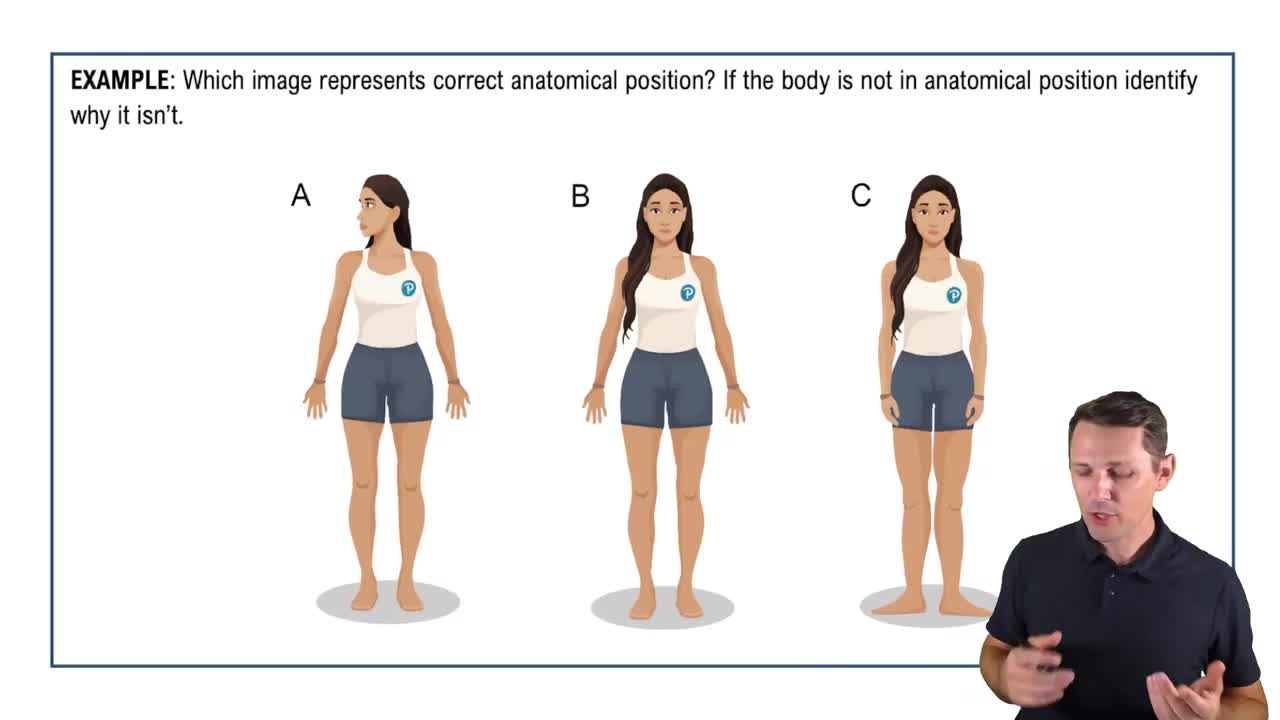
The body is erect, feet slightly apart, palms facing forward, and thumbs pointing away from the body.
Toward the head end or upper part of a structure or the body; above.
Away from the head end or toward the lower part of a structure or the body; below.
Toward or at the front of the body; in front of.
Toward or at the back of the body; behind.
Toward or at the midline of the body, on the inner side of.
Away from the midline of the body, on the outer side of.
Between a more medial and a more lateral structure.
Closer to the origin of the body part or the point of attachment of a limb to the body trunk.
Farther from the origin of a body part or the point of attachment of a limb to the body trunk.
Toward or at the body surface.
Away from the body surface; more internal.
Frontal (coronal), Sagittal (midsagittal or median), and Transverse (horizontal) planes.
Divides the body into right and left parts.
Divides the body into anterior (front) and posterior (back) parts.
Divides the body into superior (upper) and inferior (lower) parts.
Dorsal cavity (cranial and vertebral cavities) and Ventral cavity (thoracic and abdominopelvic cavities).
Protects the nervous system; includes the cranial cavity (brain) and vertebral cavity (spinal cord).
Houses internal organs (viscera); includes thoracic cavity (heart and lungs) and abdominopelvic cavity (digestive, urinary, and reproductive organs).
Parietal serosa lines internal body walls; visceral serosa covers internal organs; serous fluid separates the two layers to reduce friction.
Oral and digestive cavities, nasal cavity, orbital cavity, middle ear cavities, and synovial cavities in joints.
Right and left hypochondriac, epigastric, right and left lumbar, umbilical, right and left iliac (inguinal), and hypogastric (pubic) regions.
Right upper, left upper, right lower, and left lower quadrants.