 Indietro
Anatomy & Physiology: Biochemistry Basics
 02:45

Termini in questo insieme (29)
Biochemistry is the study of the chemical composition and reactions of living matter.
Inorganic compounds lack carbon (e.g., water, salts). Organic compounds contain carbon and include carbohydrates, fats, proteins, and nucleic acids.
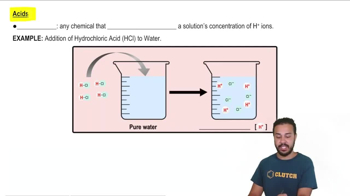
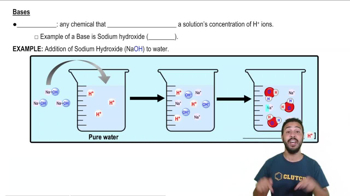
Acids are proton donors releasing H+ ions; bases are proton acceptors that pick up H+ ions and release OH- ions.
The pH scale measures the concentration of hydrogen ions [H+] in a solution; each unit represents a tenfold change in H+ concentration.
Acidic: pH 0–6.99 (high H+), Neutral: pH 7 (equal H+ and OH-), Alkaline: pH 7.01–14 (low H+).
A reaction where acids and bases mix to form water and a salt, balancing pH.
Buffers resist abrupt pH changes by releasing or binding H+ ions, maintaining homeostasis.
The bicarbonate buffer system involves carbonic acid (H2CO3) and bicarbonate (HCO3-) to regulate blood pH.
Contain carbon (except CO2 and CO), form four covalent bonds, often polymers made of monomers.
Polymers are synthesized by dehydration synthesis and broken down by hydrolysis.
Monosaccharides (simple sugars), disaccharides (double sugars), and polysaccharides (many sugars).
Ribose and deoxyribose (pentoses) in nucleic acids; glucose (hexose) is blood sugar.
Sucrose (glucose + fructose), maltose (glucose + glucose), lactose (glucose + galactose).
Starch in plants and glycogen in animals (liver and muscle).
Triglycerides, phospholipids, steroids, and eicosanoids.
Three fatty acids bonded to glycerol; function in energy storage, insulation, and protection.
Saturated: single bonds, solid at room temp; unsaturated: one or more double bonds, liquid at room temp.
Have hydrophilic heads and hydrophobic tails; major components of cell membranes.
Four interlocking hydrocarbon rings; cholesterol is a precursor for vitamin D, steroid hormones, and bile salts.
Structural support, catalysis (enzymes), transport, movement, communication, and defense.
Monomers of proteins with amino group, carboxyl group, and unique R group; 20 types exist.
Primary (sequence), secondary (alpha helices/beta sheets), tertiary (3D folding), quaternary (multiple chains).
Fibrous: strandlike, insoluble, stable (e.g., collagen); Globular: compact, soluble, sensitive (e.g., enzymes).
Loss of protein structure and function due to pH or temperature changes; often reversible.
Globular proteins that catalyze biochemical reactions by lowering activation energy; highly specific.
Polymers of nucleotides, each with nitrogen base, pentose sugar, and phosphate group.
DNA: double-stranded, stores genetic info, bases A, T, G, C; RNA: single-stranded, active outside nucleus, bases A, U, G, C.
Adenosine triphosphate is the primary energy carrier; energy released by hydrolysis of phosphate bonds powers cellular work.
\(\mathrm{ATP} \rightarrow \mathrm{ADP} + \mathrm{P_i} + \text{energy}\)