Transportation of gases, nutrients, and wastes; Regulation of body fluid homeostasis, pH, and temperature; Protection via clotting and immune responses.
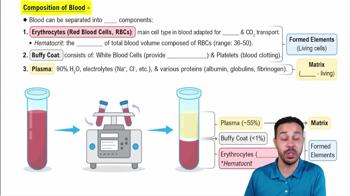
Components of blood plasma
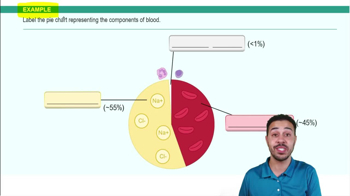
Plasma is 90% water and contains inorganic and organic substances including plasma proteins (albumin, globulins, fibrinogen), electrolytes, nutrients, wastes, gases, and hormones.
Formed elements of blood
Blood cells including erythrocytes (RBCs), leukocytes (WBCs), and platelets (thrombocytes).
Site and process of blood cell formation
Hemopoiesis occurs in red bone marrow from pluripotent stem cells, stimulated by specific hormones.
Structure and function of red blood cells
Biconcave, flexible, anucleate cells containing hemoglobin for O2 and CO2 transport; lack mitochondria and organelles.
Role of hemoglobin in RBCs
Binds oxygen and carbon dioxide for transport in the blood.
Erythropoiesis regulation
Stimulated by erythropoietin from kidneys in response to low blood oxygen levels (hypoxia).
Nutritional requirements for RBC production
Iron (heme component), folic acid, and vitamin B12 are essential for DNA replication and RBC synthesis.
Hematocrit and normal values
Percentage of RBCs in blood; males ~47%, females ~42%.
Anemia types related to blood
Includes iron-deficiency, pernicious (B12 deficiency), hemorrhagic, hemolytic, sickle cell, aplastic, and renal anemia.
Role of spleen in blood filtration
Spleen macrophages phagocytize old RBCs; hemoglobin is catabolized, iron recycled, and heme converted to bilirubin.
Leukocytes classification
Divided into granulocytes (neutrophils, eosinophils, basophils) and agranulocytes (monocytes, lymphocytes).
Functions of neutrophils
Phagocytic cells that increase in number during infections.
Functions of eosinophils
Defend against parasitic worms using toxic granules.
Functions of basophils
Non-phagocytic cells that contribute to allergic reactions by releasing histamine.
Monocytes and macrophages
Monocytes migrate to tissues and differentiate into macrophages for phagocytosis.
Lymphocytes role
Include B cells and T cells involved in adaptive immunity.
Platelets origin and function
Cytoplasmic fragments from megakaryocytes; lack organelles but contain granules; essential for blood clotting.
Three steps of hemostasis
Vascular spasm, platelet plug formation, and blood coagulation.
Coagulation cascade key stages
Formation of prothrombinase, conversion of prothrombin to thrombin, and conversion of fibrinogen to fibrin to form clot.
Common clotting disorders
Hemophilia (factor deficiencies), von Willebrand disease, vitamin K deficiency, thromboembolic and bleeding disorders.
Blood transfusion compatibility systems
ABO blood group system and Rh factor determine compatibility to prevent agglutination.
Universal donor and recipient blood types
Type O is universal donor; Type AB is universal recipient.
Rh factor and pregnancy complications
Rh-negative mother with Rh-positive fetus can cause erythroblastosis fetalis, leading to hemolysis and anemia in fetus.
Consequences of Rh disease in newborns
Jaundice, mental impairment, acute kidney failure, and circulatory shock due to hemolysis.
 Indietro
 2:36