Skip to main content
Anatomy & Physiology
Il mio corso
Impara
Preparazione agli esami
AI Tutor
Guide di studio
Soluzioni per libri di testo
Flashcard
Esplora
Prova l'app
Il mio corso
Impara
Preparazione agli esami
AI Tutor
Guide di studio
Soluzioni per libri di testo
Flashcard
Esplora
Prova l'app
Indietro
Anatomy & Physiology: Body Organization and Terminology
Puoi toccare per girare la carta.
What is the anatomical position?
Puoi toccare per girare la carta.
👆
What is the anatomical position?
The standard position where the body is erect, facing forward, with palms facing forward, used to communicate anatomical information.
Avanzamenti del tracciato
I pulsanti di controllo sono stati cambiati in modalità "navigazione".
1/20
Video consigliati
05:04
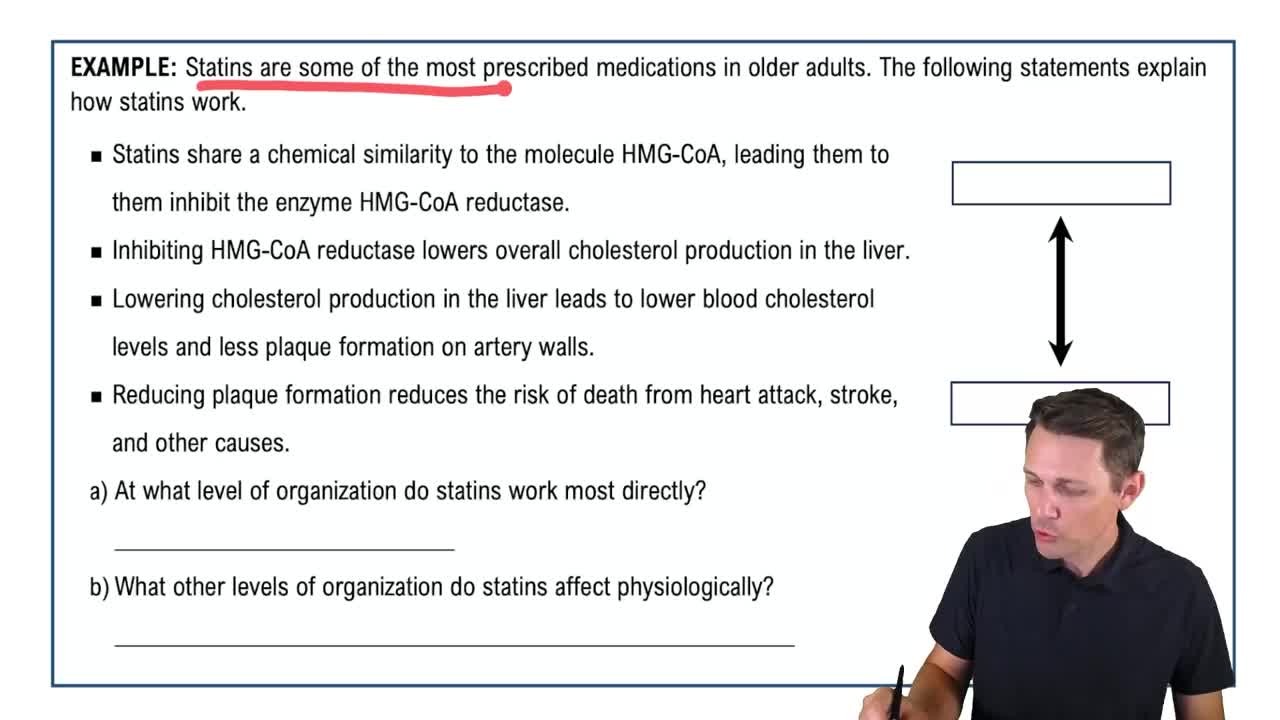
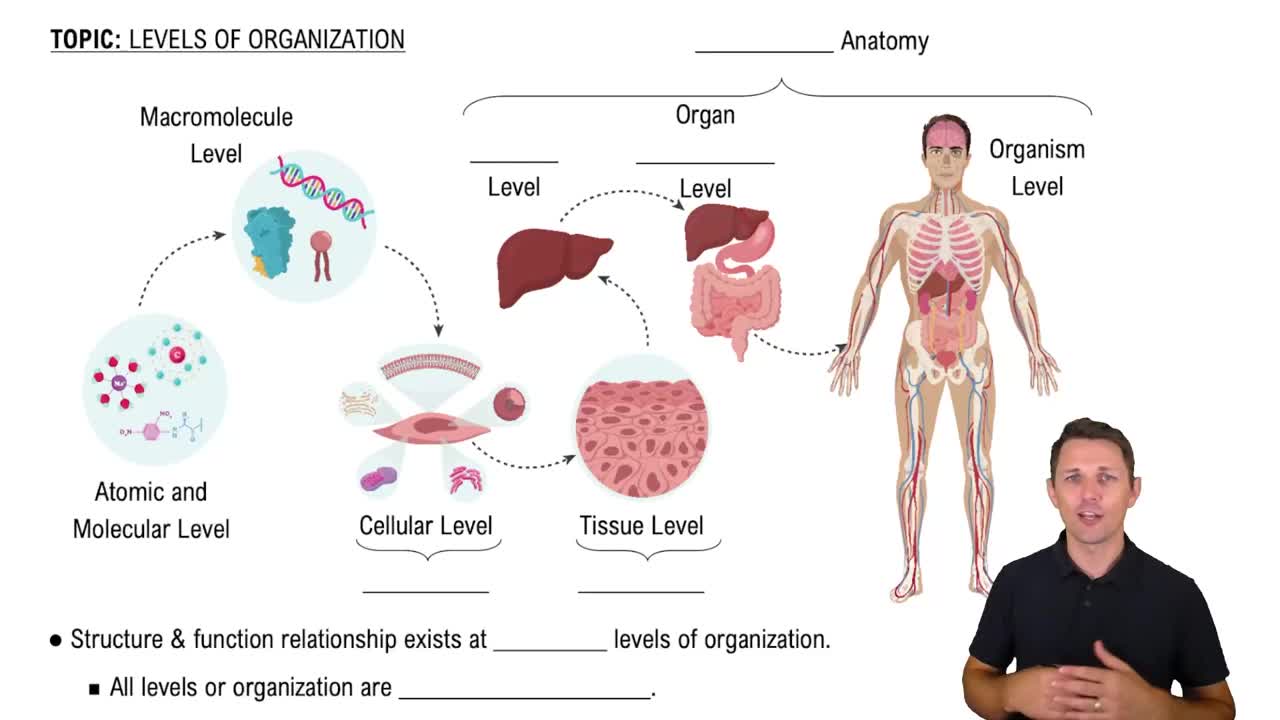
The Levels of Organization
49204
views
1460
rank
5
comments
02:22
Levels of Organization Example 1
27658
views
594
rank
2
comments
Termini in questo insieme (20)
Nascondere definizioni
What is the anatomical position?
The standard position where the body is erect, facing forward, with palms facing forward, used to communicate anatomical information.
Define anterior (ventral) in anatomical terms.
Toward the front of the body. Example: The palms are on the anterior side.
Define posterior (dorsal) in anatomical terms.
Toward the back of the body. Example: The occipital bone is posterior to the cranium.
What does superior (cranial) mean?
Toward the head or upper part of the body. Example: The nose is superior to the mouth.
What does inferior (caudal) mean?
Toward the tail or lower part of the body. Example: The umbilicus is inferior to the chest.
Define proximal in anatomical terms.
Closer to the point of origin, usually the trunk. Example: The knee is proximal to the ankle.
Define distal in anatomical terms.
Farther from the point of origin, usually the trunk. Example: The wrist is distal to the elbow.
What does medial mean?
Closer to the midline of the body or body part. Example: The index finger is medial to the thumb.
What does lateral mean?
Farther from the midline of the body or body part. Example: The thumb is lateral to the index finger.
Define superficial.
Closer to the surface of the body. Example: The skin is superficial to the muscles.
Define deep.
Farther below the surface of the body. Example: Bone is deep to the skin.
What are the two broad regional divisions of the body?
Axial region (head, neck, trunk) and appendicular region (upper and lower limbs).
What is a body cavity?
A space within the body that protects organs and allows them to move.
Name the two main posterior body cavities.
Cranial cavity (protects the brain) and vertebral (spinal) cavity (protects the spinal cord).
What fluid fills the posterior body cavities?
Cerebrospinal fluid (CSF), which bathes the brain and spinal cord.
What are the subdivisions of the thoracic cavity?
Pleural cavity (surrounds lungs), mediastinum (between pleural cavities), and pericardial cavity (inside mediastinum).
What are the subdivisions of the abdominal pelvic cavity?
Abdominal cavity (superior) and pelvic cavity (inferior).
How is the abdominal cavity further divided?
Into four quadrants: RUQ, LUQ, RLQ, LLQ, and nine regions.
What does the term 'left' and 'right' refer to in anatomy?
The sides of the body as seen in the anatomical position.
Give an example of a proximal-distal relationship.
The shoulder is proximal to the elbow; the wrist is distal to the elbow.
 IndietroIndietro
 05:04