 Indietro
Anatomy & Physiology: Brain and Nervous System Basics
 0:50

Termini in questo insieme (20)
Arachnoid granulations are small protrusions of the arachnoid mater into the dural venous sinuses that allow cerebrospinal fluid (CSF) to exit the subarachnoid space and enter the bloodstream.
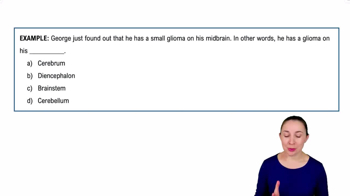
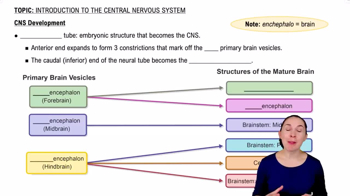
The brain stem consists of the midbrain, pons, and medulla oblongata.
Brain waves are patterns of electrical activity in the brain detected by an electroencephalogram (EEG), reflecting different states of consciousness.
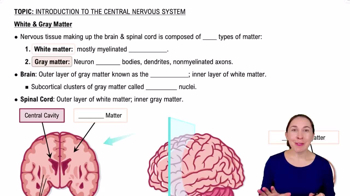
The cerebral cortex is the brain's outer layer of grey matter responsible for higher brain functions like sensation, voluntary movement, reasoning, and memory.
Cerebral white matter consists of myelinated axons that connect different parts of the cerebral cortex and other brain regions for communication.
Basal nuclei are clusters of neurons deep in the brain involved in regulating voluntary motor control and procedural learning.
The choroid plexus is a network of blood vessels in the brain ventricles that produces cerebrospinal fluid (CSF).
Cerebrospinal fluid cushions the brain and spinal cord, removes waste, and provides a stable chemical environment.
The three meninges are the dura mater, arachnoid mater, and pia mater, which protect the brain and spinal cord.
The diencephalon includes the thalamus, hypothalamus, and epithalamus, and it processes sensory information, regulates autonomic functions, and controls endocrine activity.
The thalamus acts as a relay station, directing sensory signals to the appropriate areas of the cerebral cortex.
The hypothalamus regulates body temperature, hunger, thirst, sleep, and controls the pituitary gland.
The limbic system controls emotions, memory formation, and motivation.
Cranial nerves are twelve pairs of nerves that emerge directly from the brain to control sensory and motor functions of the head and neck.
The five types are mechanoreceptors, thermoreceptors, photoreceptors, chemoreceptors, and nociceptors.
Exteroceptors detect external stimuli, interoceptors monitor internal body conditions, and proprioceptors sense body position and movement.
The reticular formation is a network of neurons in the brainstem that regulates arousal and consciousness.
Lateralization refers to the specialization of certain functions in either the left or right hemisphere of the brain.
Spinal nerves carry motor, sensory, and autonomic signals between the spinal cord and the body.
Brain ventricles are interconnected cavities filled with cerebrospinal fluid that cushion the brain and maintain its chemical environment.