Indietro

Anatomy & Physiology: Cardiovascular, Lymphatic, Respiratory, Digestive, Metabolism, Urinary, Fluid Balance, Reproductive, and Development Systems

I pulsanti di controllo sono stati cambiati in modalità "navigazione".
1/24
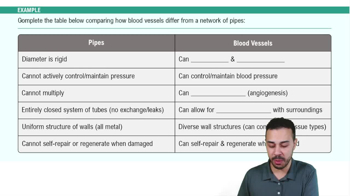
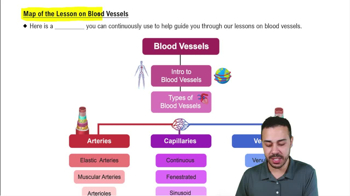
  • Structure and function of arteries, arterioles, capillaries, venules, and veins

    Arteries carry blood away from the heart; arterioles regulate blood flow into capillaries; capillaries allow exchange of gases and nutrients; venules collect blood from capillaries; veins return blood to the heart.
  • Processes of capillary exchange

    Capillary exchange occurs via diffusion, transcytosis, and bulk flow between blood and interstitial fluid.
  • Factors regulating blood flow volume and velocity

    Blood flow is regulated by vessel diameter, blood pressure, blood viscosity, and total vessel length.
  • Mean arterial pressure (MAP) and systemic vascular resistance (SVR)

    MAP is the average arterial pressure during a cardiac cycle; SVR is the resistance offered by systemic blood vessels affecting blood pressure.
  • Relationship between cross-sectional area and velocity of blood flow

    As total cross-sectional area increases (e.g., in capillaries), blood velocity decreases, allowing exchange.
  • Definition of pulse, systolic, diastolic, and pulse pressures

    Pulse is the pressure wave from heartbeats; systolic pressure is peak arterial pressure; diastolic pressure is minimum arterial pressure; pulse pressure is the difference between systolic and diastolic.
  • Definition and types of shock

    Shock is inadequate cardiac output causing poor tissue perfusion; types include hypovolemic, cardiogenic, distributive, and obstructive shock.
  • Systemic circulation and its importance

    Systemic circulation carries oxygenated blood from the heart to body tissues and returns deoxygenated blood to the heart.
  • Four principal divisions of the aorta

    Ascending aorta, aortic arch, thoracic aorta, and abdominal aorta.
  • Primary arterial branches of the ascending aorta

    The two primary branches are the left and right coronary arteries supplying the heart.
  • Three principal arteries branching from the aortic arch

    Brachiocephalic trunk, left common carotid artery, and left subclavian artery.
  • Visceral and parietal branches of the thoracic aorta

    Visceral branches supply organs; parietal branches supply body wall structures.
  • Three systemic veins returning deoxygenated blood to the heart

    Superior vena cava, inferior vena cava, and coronary sinus.
  • Components of the lymphatic system

    Lymph, lymphatic vessels, lymph nodes, tonsils, spleen, and thymus gland.
  • Functions of the lymphatic system

    Returns interstitial fluid to blood, absorbs fats, and provides immune defense.
  • Difference between innate and adaptive immunity

    Innate immunity is nonspecific and immediate; adaptive immunity is specific and involves memory.
  • Role of T cells and B cells in adaptive immunity

    T cells mediate cell-mediated immunity; B cells produce antibodies for antibody-mediated immunity.
  • Steps in pulmonary ventilation

    Inhalation involves diaphragm contraction and thoracic expansion; exhalation involves relaxation and thoracic recoil.
  • Differences among tidal volume, inspiratory reserve volume, expiratory reserve volume, and residual volume

    Tidal volume is normal breath volume; inspiratory reserve is extra air inhaled; expiratory reserve is extra air exhaled; residual volume is air remaining after forced exhalation.
  • Phases of digestion

    Cephalic phase (prepares mouth and stomach), gastric phase (stomach digestion), and intestinal phase (digestion and absorption in intestines).
  • Three stages of urine formation

    Glomerular filtration, tubular reabsorption, and tubular secretion.
  • Fluid compartments of the body

    Intracellular fluid (inside cells), extracellular fluid (outside cells), including plasma and interstitial fluid.
  • Functions of sodium, chloride, potassium, bicarbonate, calcium, phosphate, and magnesium ions

    These electrolytes regulate fluid balance, nerve and muscle function, pH, and bone structure.
  • Major events of prenatal development

    Fertilization, cleavage, blastocyst formation, implantation, embryonic period, and fetal growth.