 Indietro
Anatomy & Physiology: Cell Biology, Tissues, and Molecular Processes
 07:25

Termini in questo insieme (29)
DNA is the molecule that stores genetic information in cells. It consists of nucleotide sequences forming double-stranded helices and serves as the template for transcription.
mRNA (messenger RNA) is a single-stranded RNA that carries the genetic code transcribed from DNA to ribosomes for protein synthesis.
tRNA (transfer RNA) brings specific amino acids to the ribosome during translation by matching its anticodon to mRNA codons.
DNA triplets are three-nucleotide sequences in DNA; mRNA codons are complementary three-nucleotide sequences transcribed from DNA; tRNA anticodons are complementary to mRNA codons and ensure correct amino acid placement during translation.
Helicase unwinds the DNA double helix during transcription, separating the strands to allow RNA polymerase access.
RNA polymerase synthesizes mRNA by reading the DNA template strand during transcription.
The promotor is a DNA sequence where RNA polymerase binds to initiate transcription.
The start codon (usually AUG) signals the beginning of translation and codes for methionine.
Stop codons (UAA, UAG, UGA) signal the end of translation, terminating polypeptide synthesis.
Spliceosomes are complexes that remove introns from pre-mRNA, joining exons to form mature mRNA.
Introns are non-coding sequences removed from pre-mRNA; exons are coding sequences joined to form mature mRNA.
The A site binds incoming tRNA; the P site holds the tRNA with the growing polypeptide; the E site is where tRNA exits after delivering its amino acid.
The Golgi apparatus modifies, folds, and packages proteins made by ribosomes for export or use within the cell.
A nucleotide is the building block of DNA/RNA, consisting of a sugar, phosphate, and nitrogenous base; the nitrogenous base encodes genetic information.
DNA is double-stranded with deoxyribose sugar; mRNA is single-stranded with ribose sugar and uracil instead of thymine.
DNA stores genetic info; mRNA carries code to ribosomes; rRNA forms ribosome structure; tRNA delivers amino acids during translation.
DNA triplets are transcribed into complementary mRNA codons, which are matched by tRNA anticodons during translation to add correct amino acids.
Amino acids are joined by dehydration synthesis, forming peptide bonds and releasing water to build polypeptide chains.
DNA triplets AAT—CCA—GGT transcribe to mRNA codons UUA—GGU—CCA and pair with tRNA anticodons AAU—CCA—GGU.
Amino acids are building blocks of proteins, which are chains of amino acids folded into functional molecules.
A gene is a DNA segment coding for a protein; the genome is the complete set of genes in an organism.
Cytoplasm includes cytosol plus organelles; cytosol is the gel-like fluid inside cells where organelles are suspended.
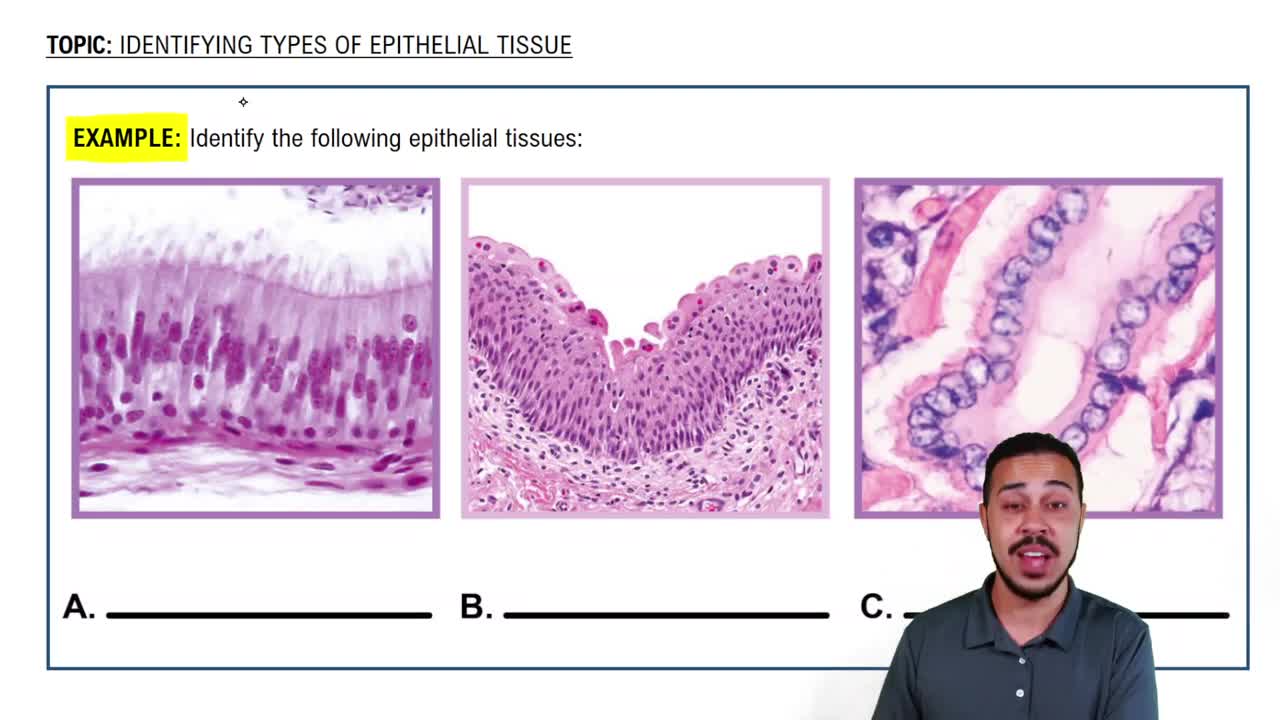
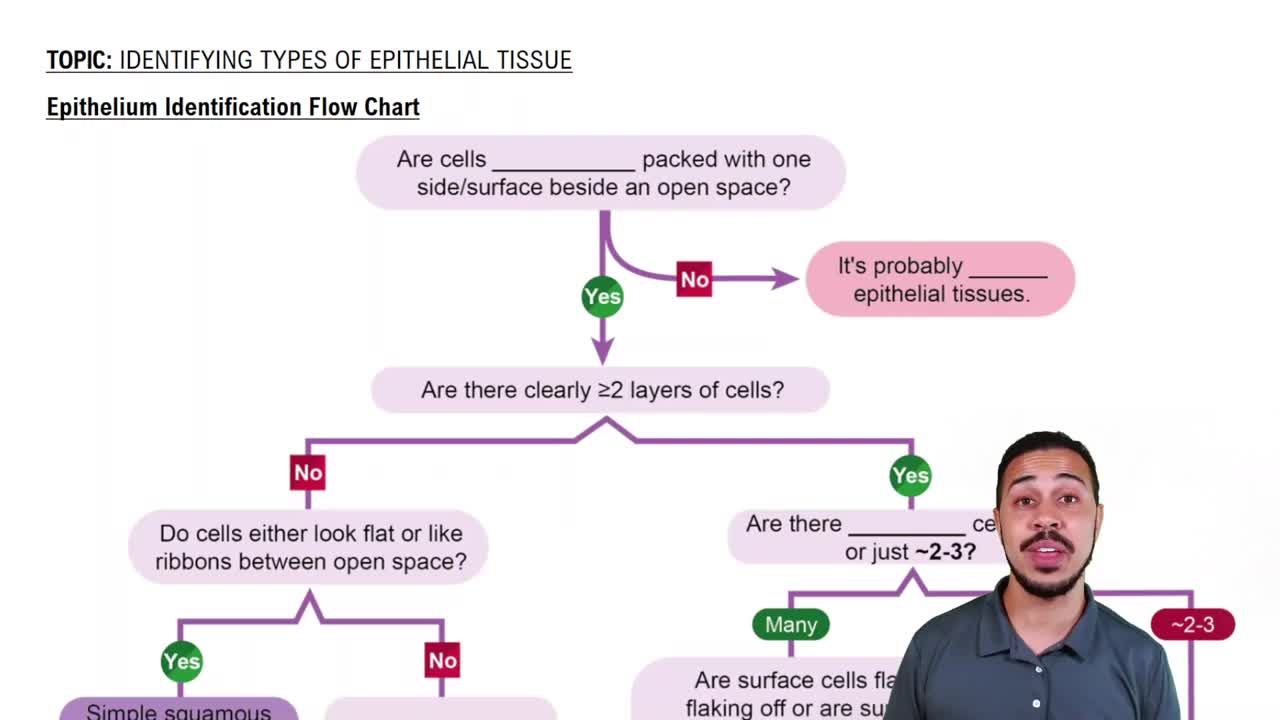
Flat cells with flattened nuclei; found in lung alveoli and capillaries for diffusion of gases and nutrients.
Cube-shaped cells with round nuclei; found in glands and kidney tubules for secretion and absorption.
Tall, column-shaped cells with oval nuclei; found in intestines for nutrient absorption and mucus secretion.
Layered cells that stretch from many layers to one; found in urinary bladder to accommodate volume changes.
Long, multinucleate, striated cells under voluntary control; attached to bones for movement.
Striated, branched cells with intercalated disks; involuntary control for heart contraction.
Spindle-shaped, non-striated cells with gap junctions; involuntary control in hollow organs for movement of contents.