 Indietro
Anatomy & Physiology: Cell Structure and Membrane Transport
 03:45

Termini in questo insieme (20)
From smallest to largest: Atoms → Molecules → Cells → Tissues → Organs → Organ Systems → Organism.
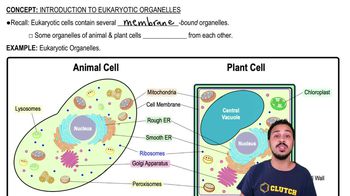
Plasma membrane (flexible outer boundary), cytoplasm (intracellular fluid with organelles), and nucleus (control center).
Membrane is a phospholipid bilayer with embedded proteins that move, creating a fluid mosaic structure.
Integral proteins are embedded in the membrane; peripheral proteins are loosely attached and often enzymes or structural supports.
Include transport, receptors for signal transduction, attachment to cytoskeleton and ECM, enzymatic activity, intercellular joining, and cell-cell recognition.
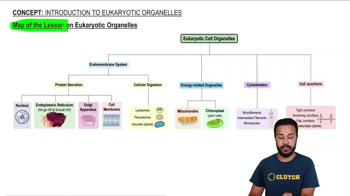
Membrane junctions that prevent fluids and most molecules from passing between cells, creating an impermeable barrier.
Anchoring junctions that act like rivets to bind adjacent cells and reduce tension by linking to intermediate filaments.
Communicating junctions with pores allowing ions and small molecules to pass directly between cells for intercellular communication.
Movement of substances across membranes without energy, usually down concentration gradients (high to low).
Passive movement of nonpolar and lipid-soluble substances directly through the lipid bilayer.
Passive transport of lipid-insoluble solutes via carrier proteins or channel proteins down their concentration gradient.
Passive movement of water across a selectively permeable membrane toward higher solute concentration.
Isotonic: no net water movement; Hypertonic: water leaves cell causing shrinkage; Hypotonic: water enters cell causing swelling or lysis.
Passive process where water and solutes are forced through membranes by hydrostatic pressure, size-selective, important in kidneys.
Energy-requiring process moving solutes against their concentration gradient using carrier proteins (pumps).
Active transport pump that moves 3 Na+ out and 2 K+ into the cell using ATP, maintaining electrochemical gradients.
Active transport of large particles or fluids via vesicles, including exocytosis, endocytosis, and transcytosis.
Type of endocytosis where cells engulf large particles or microorganisms using pseudopods forming a phagosome.
Non-specific endocytosis where cells 'gulp' extracellular fluid and solutes into tiny vesicles.
Selective endocytosis where ligands bind to specific receptors in coated pits, concentrating substances for internalization.