 Indietro
Anatomy & Physiology: Chemistry & Biochemistry Fundamentals
 02:13

Termini in questo insieme (26)
Oxygen (O), Carbon (C), Hydrogen (H), and Nitrogen (N)
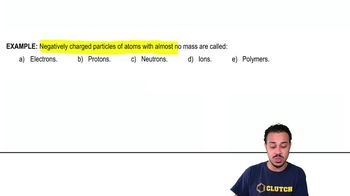
Proton: positive charge (+1), Neutron: no charge, Electron: negative charge (-1)
Cation: positively charged ion (lost electrons), Anion: negatively charged ion (gained electrons)
An energy relationship between valence electrons of two atoms that holds them together.
Ionic, Polar covalent, Non-polar covalent, and Hydrogen bonds
Ionic bonds involve transfer of electrons; covalent bonds involve sharing electrons.
Polar covalent bonds share electrons unequally; non-polar covalent bonds share electrons equally.
Anabolic: build complex molecules, energy-consuming; Catabolic: break down molecules, energy-releasing.
Solvent: substance in greatest amount; Solute: dissolved substance; Concentration: amount of solute per volume.
High heat capacity, high heat of vaporization, polar solvent properties, reactivity, and cushioning.
Acid: releases H+ ions; Base: removes H+ ions from solution.
Measures H+ concentration; 7 is neutral, <7 acidic, >7 alkaline; vital for homeostasis.
Carbohydrates, Lipids, Proteins, and Nucleic acids
Polymers are large molecules made of monomers; formed by dehydration synthesis, broken by hydrolysis.
Simple carbohydrate monomers like glucose, fructose, galactose, deoxyribose, and ribose.
Two monosaccharides joined by dehydration synthesis; examples include sucrose, maltose, lactose.
A polysaccharide made of glucose units; stores energy in liver and skeletal muscle.
One glycerol + three fatty acids; stores energy, insulates, cushions tissues.
One glycerol, one phosphate group, two fatty acids; form bilayers making up cell membranes.
A steroid with 4 hydrocarbon rings; basis for all steroids, part of cell membranes, precursor for hormones.
Building blocks of proteins; contain amine group, acid group, hydrogen, and variable R group.
By peptide bonds formed via dehydration synthesis between amine and acid groups.
Determines protein folding and function; mutations can alter structure and function.
Monomers of nucleic acids; consist of a pentose sugar, nitrogenous base, and phosphate group.
Double helix of two nucleotide polymers; bases pair complementarily (A-T, G-C); stores genetic info.
Single nucleotide polymer; sugar is ribose; uracil replaces thymine; builds proteins using DNA info.