 Indietro
Anatomy & Physiology: Endocrine System and Blood Components
 7:06

Termini in questo insieme (20)
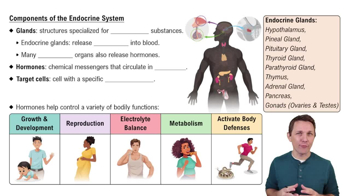
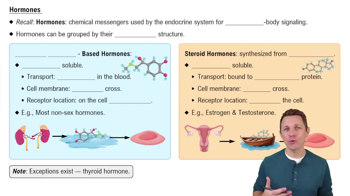
Endocrine glands are glands that secrete hormones directly into the bloodstream to regulate body functions.
The pancreas secretes insulin, which lowers blood glucose levels by facilitating cellular glucose uptake.
The thyroid gland secretes thyroxine (T4), which regulates metabolism and energy use.
The adrenal medulla secretes epinephrine, which increases heart rate and prepares the body for 'fight or flight'.
Blood is composed of plasma, red blood cells, white blood cells, and platelets.
Red blood cells transport oxygen from the lungs to body tissues and carry carbon dioxide back to the lungs.
The five types of WBCs are neutrophils, lymphocytes, monocytes, eosinophils, and basophils.
Neutrophils are the first responders to infection and perform phagocytosis to destroy bacteria.
Lymphocytes are involved in adaptive immunity, including producing antibodies and killing infected cells.
Monocytes differentiate into macrophages and dendritic cells to engulf pathogens and present antigens.
Eosinophils combat parasitic infections and modulate allergic inflammatory responses.
Basophils release histamine and other chemicals during allergic reactions and inflammation.
Blood type is determined by the presence or absence of specific antigens on red blood cells and corresponding antibodies in plasma.
Type A blood has A antigens on RBCs and anti-B antibodies in plasma.
Type B blood has B antigens on RBCs and anti-A antibodies in plasma.
Type AB blood has both A and B antigens on RBCs and no anti-A or anti-B antibodies in plasma.
Type O blood has no A or B antigens on RBCs but has both anti-A and anti-B antibodies in plasma.
The Rh factor is a protein antigen; blood is Rh-positive if present and Rh-negative if absent.
Matching blood types prevents immune reactions caused by antibodies attacking incompatible antigens during transfusions.
Platelets help in blood clotting by aggregating at injury sites to prevent bleeding.