 Indietro
Anatomy & Physiology: Endocrine System and Blood Components
 7:06

Termini in questo insieme (20)
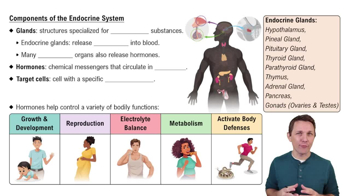
The major endocrine glands include the pituitary, thyroid, parathyroid, adrenal, pineal, pancreas, ovaries, and testes.
The pancreas secretes insulin, which lowers blood glucose levels by facilitating cellular glucose uptake.
The thyroid gland secretes thyroxine (T4) and triiodothyronine (T3), which regulate metabolism and energy production.
Blood is composed of plasma, red blood cells (erythrocytes), white blood cells (leukocytes), and platelets (thrombocytes).
Red blood cells transport oxygen from the lungs to body tissues and carry carbon dioxide back to the lungs.
The white blood cells include neutrophils, lymphocytes, monocytes, eosinophils, and basophils.
Neutrophils are the first responders to infection and perform phagocytosis to destroy pathogens.
Lymphocytes are responsible for adaptive immunity, including B cells producing antibodies and T cells destroying infected cells.
Eosinophils combat parasitic infections and modulate allergic inflammatory responses.
Basophils release histamine and other chemicals during allergic reactions and inflammation.
Monocytes migrate into tissues to become macrophages, which phagocytize pathogens and debris.
Platelets are cell fragments that initiate blood clotting to prevent bleeding.
Blood type is determined by the presence or absence of specific antigens on red blood cells, mainly A, B, and Rh antigens.
Type A blood plasma contains anti-B antibodies that react against B antigens.
Type AB blood has both A and B antigens on red cells and no anti-A or anti-B antibodies in plasma.
The Rh factor is an antigen; if present, blood is Rh-positive, if absent, Rh-negative. It is important for blood transfusions and pregnancy compatibility.
Agglutination with anti-A serum indicates the presence of A antigens, so the blood type is either A positive or A negative depending on Rh status.
Their anti-B antibodies will cause agglutination and hemolysis, leading to a dangerous transfusion reaction.
Plasma is the liquid component of blood containing water, electrolytes, nutrients, hormones, and plasma proteins like albumin and clotting factors.
Different white blood cells indicate specific immune responses or infections, helping diagnose diseases and monitor immune health.