 Indietro
Anatomy & Physiology: Epithelial Tissue and Histology
 03:00

Termini in questo insieme (20)
Histology is the study of tissue structure and function at the tissue level of structural organization.
Connective, epithelial, muscle, and nervous tissues are the four primary tissue types.
Apical-basal polarity, specialized contacts, supported by connective tissue, avascular but innervated, and high regenerative capacity.
It means epithelial cells have two surfaces: an apical surface exposed to the environment or organ cavity, and a basal surface attached to the basement membrane.
The basement membrane anchors epithelial tissue to underlying connective tissue and separates the two.
Epithelial tissues are avascular (lack blood vessels) but are innervated (supplied by nerve fibers).
Simple squamous, simple cuboidal, simple columnar, pseudostratified columnar, stratified squamous (keratinized and non-keratinized), and transitional epithelia.
Allows rapid diffusion and filtration; found in alveoli of lungs and lining blood vessels.
Found in kidney tubules; functions in secretion and absorption.
Single layer of tall cells; absorbs nutrients and secretes mucus; located in the small intestine lining.
Appears layered but all cells contact the basement membrane; lines the trachea and respiratory tract; functions in secretion and movement of mucus.
Multiple layers of cells; protects underlying tissues; can be keratinized (skin) or non-keratinized (esophagus).
Allows stretching and recoiling; found lining the urinary bladder.
Cilia for movement and microvilli for absorption.
Non-keratinized stratified squamous epithelium lines the esophagus to protect against abrasion.
Keratinized stratified squamous epithelium forms the outer layer of the skin.
They form specialized contacts that hold epithelial cells tightly together to maintain tissue integrity.
It receives nutrients by diffusion from the underlying connective tissue through the basement membrane.
Epithelial cells rapidly replace damaged or lost cells to maintain protective and functional barriers.
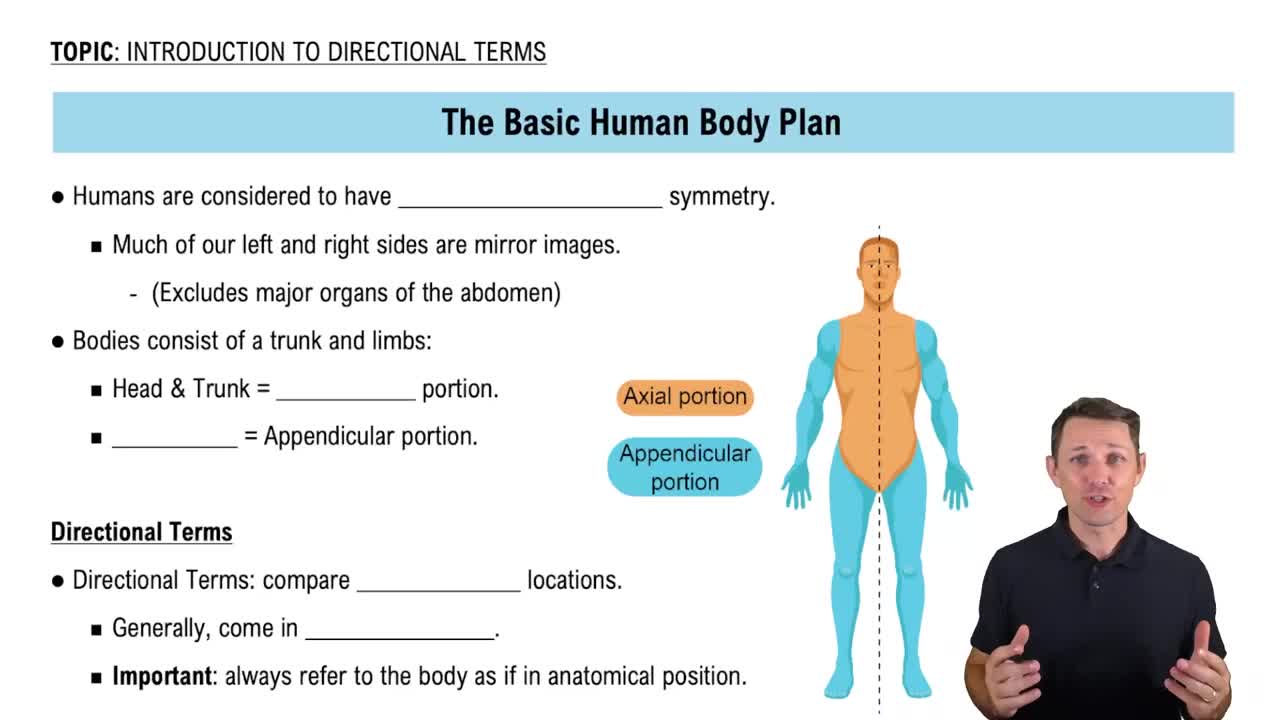
The midsagittal plane divides the body into equal right and left halves.