Skip to main content
Anatomy & Physiology
Il mio corso
Impara
Preparazione agli esami
AI Tutor
Guide di studio
Soluzioni per libri di testo
Flashcard
Esplora
Prova l'app
Il mio corso
Impara
Preparazione agli esami
AI Tutor
Guide di studio
Soluzioni per libri di testo
Flashcard
Esplora
Prova l'app
Indietro
Anatomy & Physiology Exam 1 Review
Puoi toccare per girare la carta.
Scientific Method
Puoi toccare per girare la carta.
👆
Scientific Method
A six-step process used to investigate phenomena, acquire new knowledge, or correct previous knowledge.
Avanzamenti del tracciato
I pulsanti di controllo sono stati cambiati in modalità "navigazione".
1/28
Video consigliati
3:06
What is Anatomy & Physiology? Example 3
34352
views
844
rank
8
comments
01:58
What is Anatomy & Physiology? Example 2
46300
views
2563
rank
03:04
The Difference Between Anatomy and Physiology
89095
views
4375
rank
11
comments
Termini in questo insieme (28)
Nascondere definizioni
Scientific Method
A six-step process used to investigate phenomena, acquire new knowledge, or correct previous knowledge.
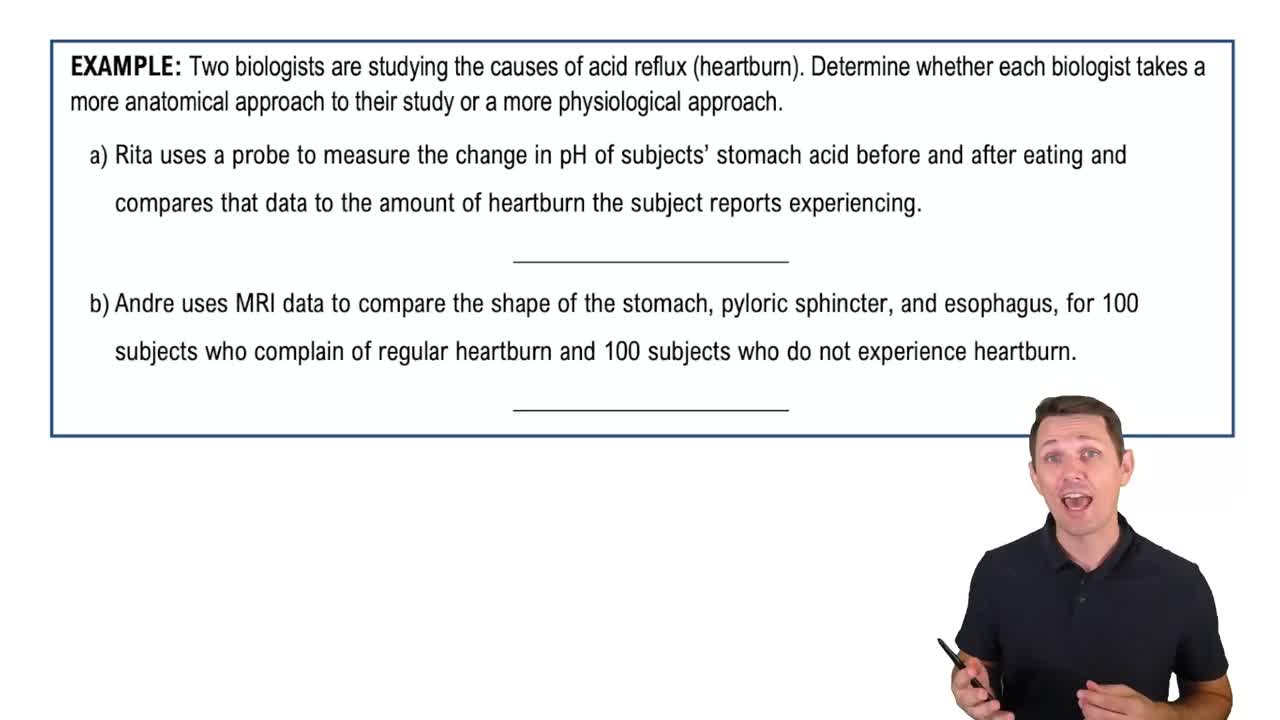
Definition of Anatomy
Anatomy
is the study of the structure of body parts and their relationships to one another.
Definition of Physiology
Physiology
is the study of the function of the body parts and the body as a whole.
Levels of Organization in the Human Body
Chemical, Cellular, Tissue, Organ, Organ System, Organism.
Anatomical Position
Body standing upright, facing forward, feet flat, arms at sides with palms facing forward.
Homeostasis
The maintenance of a stable internal environment despite external changes.
Negative Feedback
A control mechanism that reverses a change in a controlled condition to maintain homeostasis.
Positive Feedback
A control mechanism that amplifies a change in a controlled condition, often leading to a specific outcome.
Definition of Cell
The basic structural and functional unit of all living organisms.
Selective Permeability of Cell Membrane
Allows some substances to pass through while blocking others.
Diffusion
The passive movement of molecules from an area of higher concentration to an area of lower concentration.
Osmosis
The diffusion of water across a selectively permeable membrane.
Isotonic Solution
A solution with the same solute concentration as the cell, causing no net water movement.
Hypertonic Solution
A solution with higher solute concentration than the cell, causing water to leave the cell.
Hypotonic Solution
A solution with lower solute concentration than the cell, causing water to enter the cell.
Mitosis
A type of cell division producing two identical daughter cells with the same number of chromosomes as the parent.
Transcription
The process of copying DNA into mRNA in the nucleus.
Translation
The process of synthesizing proteins from mRNA at the ribosome.
Difference between Coding Strand and Template Strand
The coding strand has the same sequence as mRNA (except T instead of U), while the template strand is used to make mRNA.
Function of Ribosomes
Sites of protein synthesis where translation occurs.
Major Functions of the Circulatory System
Transport of nutrients, gases, hormones, and waste products throughout the body.
Characteristics of Mammalia
Warm-blooded vertebrates with hair and mammary glands.
Definition of Enzymes
Proteins that act as biological catalysts to speed up chemical reactions.
Four Levels of Protein Structure
Primary, Secondary, Tertiary, and Quaternary structures.
Properties of Water Important to Physiology
High heat capacity, solvent properties, lubrication, and chemical reactivity.
Difference between Anions and Cations
Anions are negatively charged ions; cations are positively charged ions.
Definition of pH
A measure of hydrogen ion concentration; indicates acidity or alkalinity of a solution.
Definition of ATP
Adenosine triphosphate, the primary energy carrier in cells.
 IndietroIndietro
 3:06
3:06